The monohull battles unfolding across the 51st Rolex Fastnet Race are proving every bit as compelling as the headline-grabbing multihull charge that opened the event. With SVR Lazartigue claiming multihull line honours in just under two days, the foiling Ultims drew the early attention, but the grinding tactical contest among the monohull divisions, particularly in IRC and the Admiral's Cup classes, is now defining this year's race.
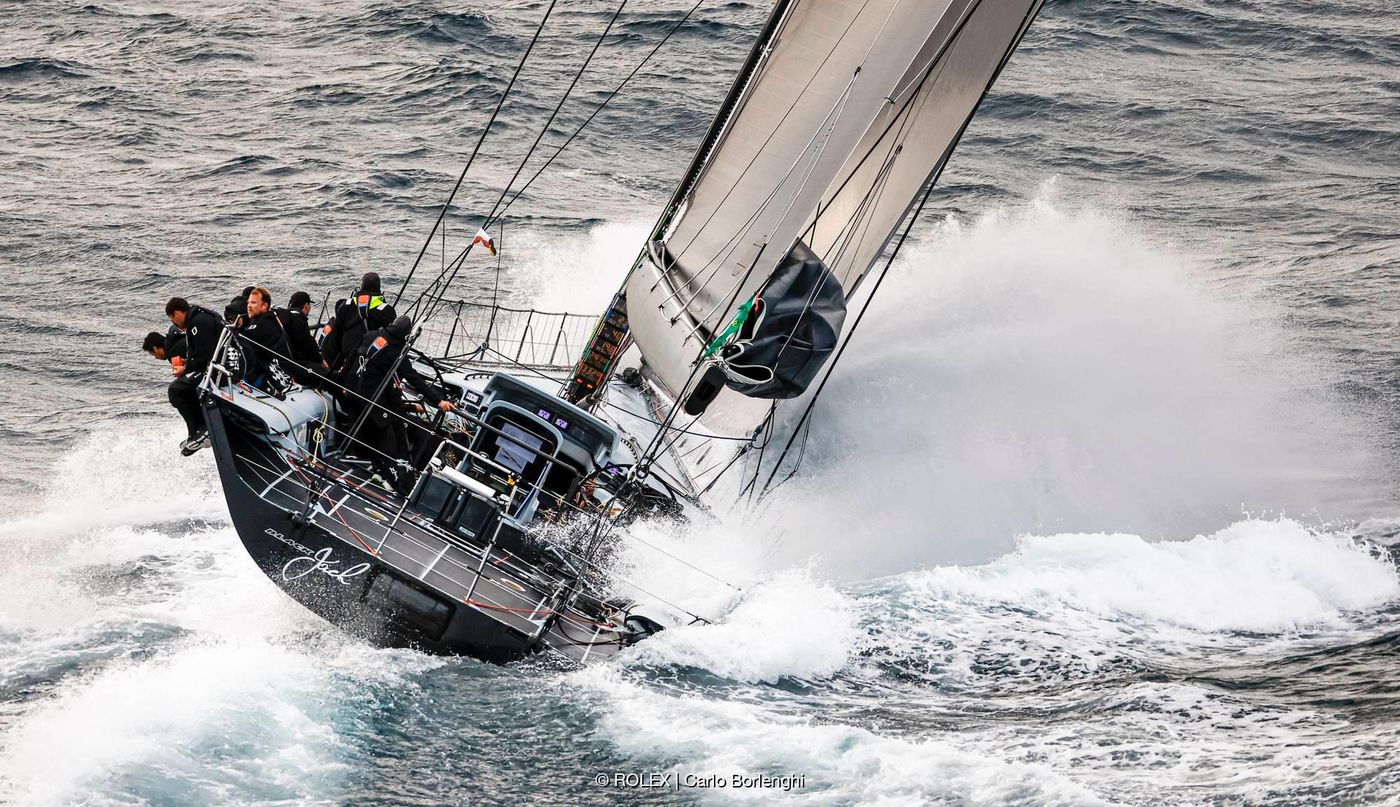
Among the monohulls, the 100-foot Black Jack, sailing under the Royal Prince Alfred Yacht Club of Australia, was first across the finish line in Cherbourg, completing the course in an elapsed time of 2 days, 12 hours, 31 minutes. SHK Scallywag 100 and Leopard 3 followed closely, both finishing within 90 minutes of Black Jack. On corrected time under IRC, however, the standings tell a different story.
Leopard 3, the Farr-designed maxi from 2007 skippered by Chris Sherlock, has moved to the head of the IRC rankings on handicap, a result that reflects disciplined tactical decision-making rather than raw pace. Black Jack sits second on corrected time, with Hong Kong's SHK Scallywag, under the command of David Witt, in third. Where Black Jack committed to an aggressive gybing approach on the return leg from Fastnet Rock to Cherbourg, Leopard 3's cleaner layline strategy appears to have been the more rewarding choice.
Navigator Will Best explained the thinking behind a key call made after rounding the Rock. "We could see Black Jack going for the gybe early, but we stuck with our angle longer and found better pressure later on. That made the difference," he said.
Whisper, a Judel/Vrolijk 60 crewed by Australians racing under the burgee of the Royal Ocean Racing Club of Australia, leads IRC Zero on corrected time ahead of Palanad 4, a quick Sam Manuard-designed 50-footer that had been widely anticipated as a contender. Having rounded Fastnet Rock just behind the maxis, Whisper's heavier displacement and offshore pedigree have served her well on the upwind sections of the varied opening half of the course. Warrior Won, an American entry, has posted solid numbers across the Celtic Sea return leg. The leading boats are past the Scilly Isles now, weighing up their final Channel routing, where the tidal gates off Alderney and the wind holes near Cap de la Hague remain capable of reshuffling the order at the last moment.
The Admiral's Cup contest has genuine international depth. Black Pearl, skippered by Stefan Jentzsch for Germany, was the first of these boats around the Rock, but on corrected time it is Beau Geste, representing the Royal Hong Kong Yacht Club, and Jolt 3 from the Yacht Club de Monaco who currently lead. The close grouping of these modern raceboats reflects the quality of competition that has returned to the Admiral's Cup format after its long absence from the offshore calendar.
In IRC One, Swan 53 Bedouin, skippered by Linda Goddard, holds the division lead on corrected time. Despite carrying more age and displacement than many of her rivals, Bedouin has made her rating work through measured, consistent sailing. "We're not chasing line honours, our race is against the clock, and we've sailed conservatively but consistently," Goddard confirmed via satellite phone. Immediate challengers include Yes!, a JPK 1080, and Dawn Treader, an HH42 that overcame an early OCS penalty to work its way back into contention.
IRC Two has become a test of route selection, with the inshore and offshore options producing markedly different outcomes. Aurelia, a Ker 46 from Ireland, and Corazon, a J/122, backed the inshore tack past the Scilly Isles early and are currently seeing those gains materialise in the standings. Desperado took a more conservative central route and risks being left behind if the inshore breeze builds as forecast.
The racing in IRC Three and Four has been equally absorbing. Bellino, skippered by Rob Craigie with RORC Commodore Deb Fish co-skippering, leads IRC Three on corrected time, though the lead has changed hands repeatedly with Fujitsu British Soldier and Mzungu! as the wind fluctuates. IRC Four has split broadly along an east-west axis, with Hakuna Matata and Zephyrin moving clear after timing their turn north from the Scillies well.
The Doublehanded fleet deserves particular mention. Crews of just two are competing directly within IRC Three and Four, and several such entries remain in the top five of their respective divisions, showing that shorthanded offshore sailing has matured into a genuinely competitive discipline rather than a token category.
For those with an interest in New Zealand's sailing connections, Beau Geste's strong Admiral's Cup performance under the Royal Hong Kong Yacht Club flag, and the boat's links to the local sailing scene, provide a worthwhile thread to follow as the fleet converges on Cherbourg.
While the Ultim trimarans continue to generate headlines with speeds exceeding 40 knots, the texture of the 51st Rolex Fastnet Race lies in these slower, more considered divisions where a single poorly timed tack or sail change can undo hours of careful positioning. With a 444-strong fleet and favourable winds forecast into Cherbourg, the next 24 hours will settle most of the key battles. For the monohull crews, the prize is not the fastest elapsed time but the best corrected time, and winning it demands endurance, sharp navigation, and the discipline to take calculated rather than impulsive risks.