Held from 1 to 5 July, the Monaco Energy Boat Challenge once again transformed the Yacht Club de Monaco into one of the world's most compelling venues for sustainable marine technology. Forty-two teams representing 20 countries brought with them more than 1,000 engineering and naval architecture students drawn from 29 universities. Backed by the Prince Albert II Foundation, UBS, BMW, and SBM Offshore, the event long ago outgrew its origins as a student regatta. It now functions as a genuine technology incubator, and the message coming from every corner of the paddock was consistent: the transition to clean marine propulsion is no longer a future ambition. It is happening now.
His Serene Highness Prince Albert II moved through the paddock during the event, pausing to speak with competing teams and take a close look at the vessels being prepared for the final heats. The mood combined competitive intensity with a shared sense of purpose. Each successive edition of the challenge makes it clearer just how quickly the technical sophistication of these boats is advancing.
The competition is structured across four distinct classes. The Energy Class, which has grown into the event's largest division, uses standardised catamaran hulls and challenges teams to push propulsion and energy systems as far as they will go. The SeaLab Class encourages more experimental approaches, with this year's entries leaning heavily into hydrogen fuel cells, solid and liquid storage technologies, and AI-assisted control systems. The Open Sea Class is reserved for CE-certified vessels able to carry at least three passengers over meaningful distances, tested in a 21-nautical-mile rally running between Monaco and Ventimiglia. These boats are close to commercial readiness. Making its debut in 2025 was the AI Class, in which fully autonomous vessels completed missions without any human input, relying entirely on onboard artificial intelligence and sophisticated sensor arrays.
Across all four classes, competitors faced endurance trials, slalom courses, speed runs, manoeuvrability challenges, and autonomous navigation tasks. Raw speed mattered, but the deeper measure of success was how well each system performed under real-world conditions.
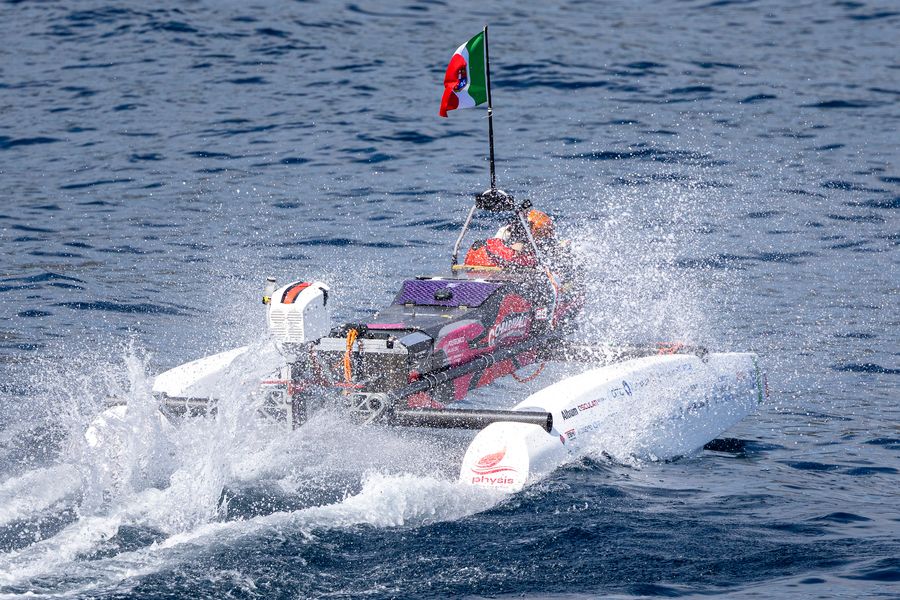
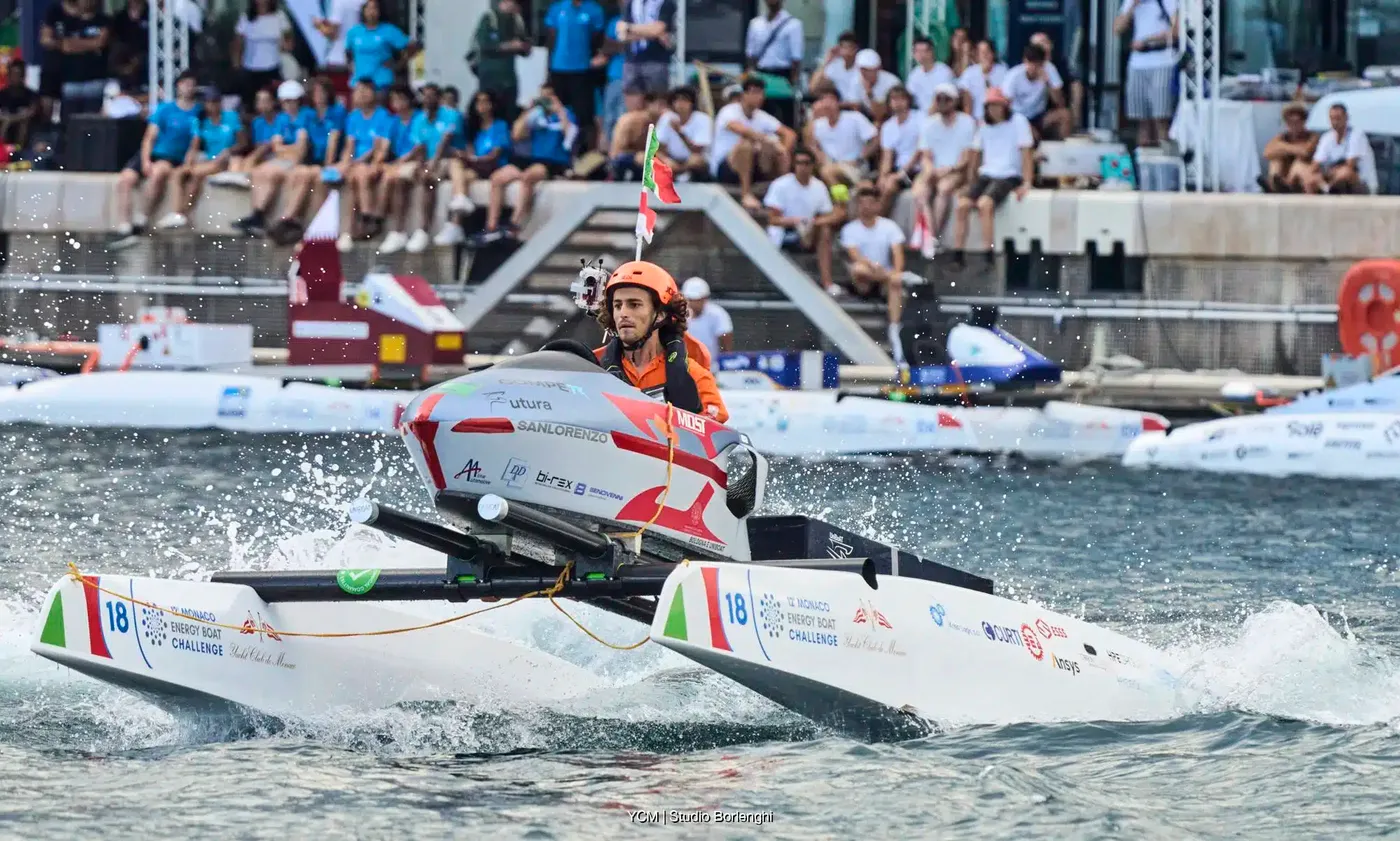
Italy's UniBoAT team from the University of Bologna arrived as contenders and left as champions. They won the Energy Class outright and took the overall title, with a campaign built around a counter-rotating electric drive system, a high-performance battery, purpose-built transmission components, and a hull tuned for both lightness and hydrodynamic efficiency. The Design and Innovation Prizes also went to UniBoAT, completing a sweep that reflected both engineering rigour and creative ambition.
Records fell across several classes during the week. Frauscher Boats set a new Open Sea Class benchmark with a run of 49.84 knots. Inocel completed a 16-nautical-mile SeaLab Class run in just over 30 minutes. UniBoAT added a new Energy Class speed record of 26.63 knots, a figure 28% higher than the class-leading speed from 2024.

Antwerp's Solar Boat Team claimed the AI Class with a fully autonomous electric vessel, while Red Wave, another Bologna-based project, won the SeaLab Class. The Communication Prize was awarded to Team Sea Sakthi of India, and the Jury's Coup de Coeur went to Spain's DHAMMA BLUE.
Hydrogen remained the most talked-about propulsion technology throughout the week, with 12 hydrogen-powered boats competing across a range of configurations including fuel cells, internal combustion conversions, and solid-state storage systems. INOCEL's 8-metre hydrogen-powered boat drew particular attention, combining a 490hp fuel cell system with a top speed of 90km/h. The system weighs no more than a conventional combustion engine and delivers a comparable range.
Both liquid and solid-state hydrogen storage approaches were represented. TU Delft demonstrated a foiling boat running on cryogenic liquid hydrogen, while PlusZero from Scotland presented hand-portable solid-state hydrogen packs designed to be safer and more energy-dense than lithium batteries. Chart Industries, Linde Gas Maritime, and Forvia all presented working storage solutions already entering commercial markets.
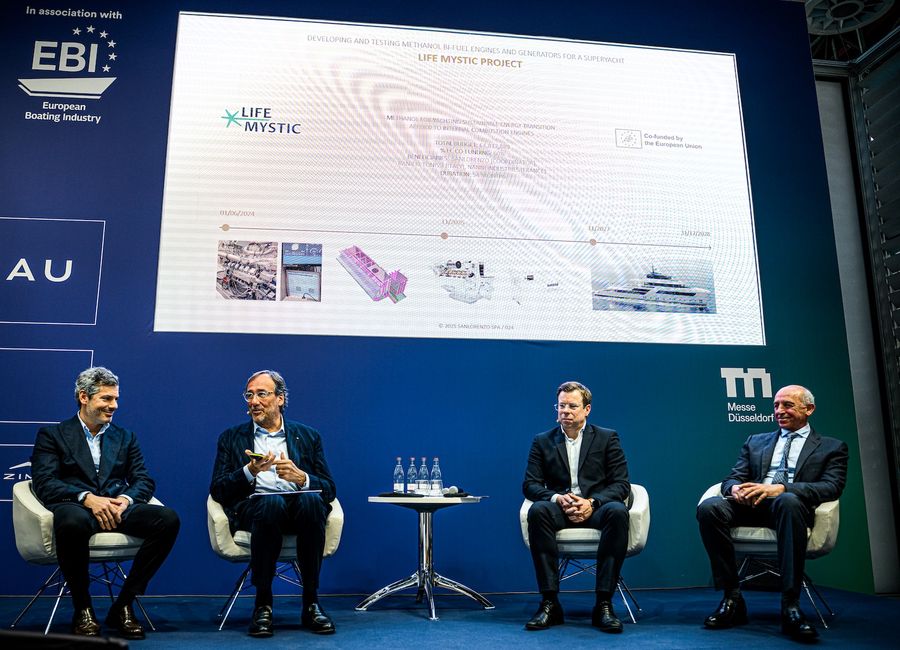
Methanol attracted significant interest, particularly in discussions around vessels exceeding 50 metres. Its energy density, compatibility with existing fuel logistics, and suitability for both combustion engines and reforming-based fuel cells position it as a strong candidate for the superyacht sector. Sanlorenzo and Lürssen are already incorporating methanol into dual-fuel systems and hospitality-oriented fuel cell applications.
Dual-fuel engine technology also received sustained attention. Dumarey, Wärtsilä, and Rolls-Royce each presented engines capable of operating on diesel alongside either hydrogen or methanol. For owners and operators navigating a transition period marked by inconsistent fuelling infrastructure, these systems offer practical flexibility and meaningful retrofit potential.

One of the most widely noticed hardware trends of the week was the adoption of toroidal propellers, which appeared on more than half the competing vessels. These looped, donut-shaped propellers eliminate sharp blade tips, producing smoother water flow, reduced cavitation, and significantly quieter operation. Originally developed for aerial drones, the design has been adapted for marine use with underwater noise pollution in mind. Testing at Monaco demonstrated noise reductions of up to 80% compared with conventional marine propellers, a result with clear ecological implications for marine life sensitive to underwater sound.
The Advanced Yachting Technology Conference broadened the conversation beyond mechanical engineering. Underwater noise pollution drew sustained discussion, with Quiet Oceans presenting its SMART URN buoy, currently deployed in Genoa and Fos-sur-Mer, with North Sea installations to follow. The SEA Index® and Bureau Veritas unveiled plans for a voluntary underwater noise rating system for yachts over 24 metres, sitting alongside existing CO₂ metrics.
Cybersecurity emerged as another pressing concern. EY's Maritime Cybersecurity Hub noted that most contemporary yachts contain dozens of interconnected processors and network systems, and that intrusions arriving via crew smartphones or entertainment platforms can compromise navigation and vessel control. The recommended response was hard digital separation between passenger-facing and operational networks, built in from the design phase rather than retrofitted.
Carbon capture research is continuing, though not yet at scale. Langh Tech presented a soda ash system in which onboard CO₂ reacts to produce a usable by-product, though the technology currently suits shorter voyages and port-based operations more readily than extended offshore passages. Syrocco presented a digital twin and route optimisation platform that draws on real-time weather and operational data to cut fuel consumption by up to 25%. The European Space Agency outlined how satellite technology can contribute to decarbonisation through emissions monitoring and port automation, a crossover already moving from concept into operational use.

Infrastructure was a recurring concern at the Hydrogen and Alternative Fuels Conference. The consensus was clear: hydrogen's commercial potential in marine applications depends directly on the availability of refuelling facilities. NatPower H announced that 40 Italian marinas have committed to hosting hydrogen stations. In Marseille, Ephyra has already established a functioning boat-and-station ecosystem, and Linde has built more than 200 hydrogen refuelling points worldwide.
Cost remains a significant barrier. Green hydrogen in Europe currently trades at four to five times the price of grey hydrogen. As one speaker put it at the conference, the technical problems have largely been solved. The economics and regulatory frameworks are the challenges that now need to catch up.
The Energy Observer catamaran, a hydrogen-powered vessel with more than 68,000 nautical miles logged since 2017, served both as an exhibit and an educational resource during the week. Running on solar, hydrogen, and hydro systems that include onboard electrolysis, it gave students direct access to proven, scalable technology. Work is already underway on Energy Observer 2, conceived as a liquid hydrogen-powered cargo vessel, while Energy Observer 3 will explore ammonia as both a fuel source and a hydrogen carrier. Both projects are supported by €40 million in European funding and represent a deliberate step from prototype development toward commercial production.
Alongside the engineering and the racing, the event carried a clear human dimension. Through the Corporate Mentoring Programme, major shipbuilders including Sanlorenzo and Azimut|Benetti provided student teams with technical expertise, access to facilities, and guidance on career pathways. The Job Forum held during the week produced 90 internship and employment interviews, a concrete measure of the event's role in connecting emerging talent with the marine industry.

With each passing year the Monaco Energy Boat Challenge assumes a larger role in the broader conversation about where marine technology is headed. It functions now as a testbed for emerging regulations, a forum for industry and policy to work through common challenges, and a launchpad for technologies approaching commercial readiness. What Monaco 2025 made plain is that the future of yachting is not waiting to be invented. It is already being built, quietly and cleanly, one carefully engineered vessel at a time.