
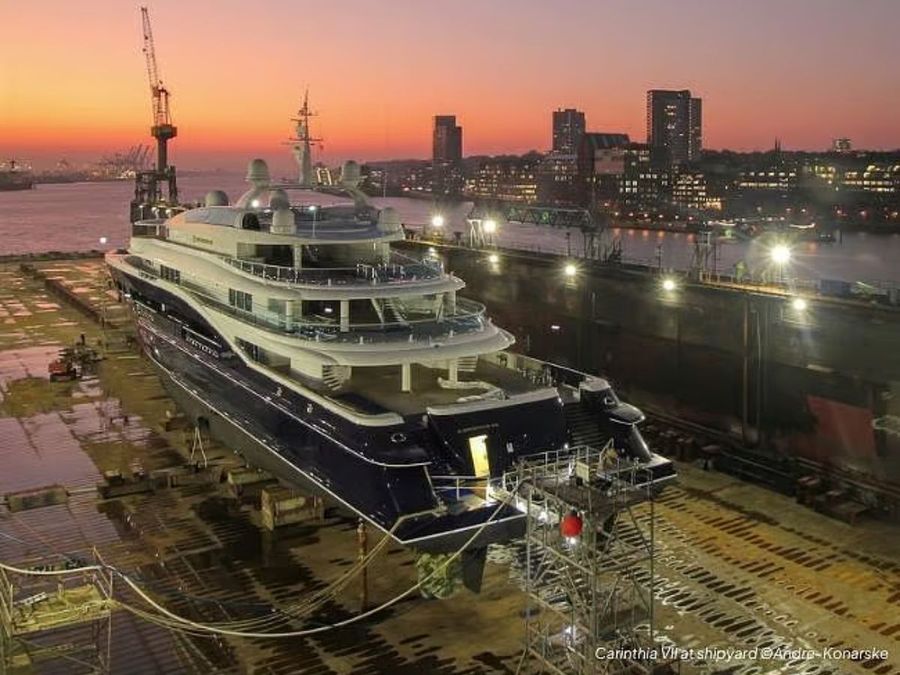
METSTRADE 2025 arrived in Amsterdam from 17 to 19 November with a message that needed no interpretation. The refit sector, long treated as a supporting player in the marine industry's story, has stepped into the lead role.
The three-day show delivered far more than the usual cycle of product announcements. It positioned refit and lifecycle work as the defining commercial conversation in global marine right now. With a growing proportion of superyachts moving through their middle years and owner expectations continuing to rise, the industry is recognising refit not as a maintenance obligation but as a genuine strategic growth engine.
Fresh research released during the event reinforced that shift. Data from the show pointed to strengthening refit demand across multiple regions, with owners directing significant investment toward modernisation programmes. Hybrid propulsion conversions, stabiliser upgrades, smart-system retrofits and interior overhauls all featured prominently in what owners are commissioning. Shipyards, meanwhile, are navigating tighter capacity against a backdrop of a larger global fleet requiring attention and faster turnaround expectations. Even as new-build markets move through their fluctuations, the refit pipeline remains consistent.
The most visible structural change at the 2025 event was the introduction of Refit Clusters inside the Superyacht Pavilion. These dedicated zones brought together regional shipyards alongside their full supply chains, marinas, contractors, technology providers and tourism boards, presenting each destination as a complete refit ecosystem rather than a collection of individual businesses. For captains, owner representatives and charter managers, the format offered a far cleaner picture of global refit options. Australia made a particularly strong impression, standing up a national cluster that showcased its yards and suppliers as a unified offering.
Refit's influence was not contained within a single pavilion. The theme threaded through the show's broader innovation areas covering materials, propulsion, electronics and digital systems. Director Niels Klarenbeek framed the event's evolving purpose in those terms, describing METSTRADE as an ecosystem connector linking continents, suppliers, yards and owners, rather than simply a trade floor for product transactions.
Sustainability and refit proved inseparable throughout the show. Builders and yards presented retrofit projects as the ideal moment to cut emissions, modernise power systems and introduce circular materials into ageing vessels. Life-Cycle Assessments were increasingly visible, and environmental credentials came attached to project presentations as a matter of course. The signal was plain: a yard's capacity to deliver responsible refit work has become a genuine competitive differentiator, not an optional credential.
New Zealand's marine industry also registered clearly within this environment. Kiwi innovation across lightweight electrified drives, advanced composite structures, durable coatings and smart hardware made a notable impression at the show. The areas where New Zealand's supply chain excels map closely onto the direction the global marketplace is heading, with smarter, cleaner and modular systems suited to refit and lifecycle refresh now defining what buyers want. The country's presence at METSTRADE 2025 confirmed that its marine supply chain operates at a global grade and carries growing influence.
By the close of the final day, a single conclusion had formed across the show floor. The refit market is expanding quickly and has established itself as a primary growth area within the marine sector. Regional networks, demonstrable sustainability credentials and sophisticated modernisation capability are now the markers of competitiveness. For New Zealand builders, designers and equipment suppliers, that direction carries obvious opportunity. The era in which scale alone determined success is losing ground, with tomorrow's leaders likely to combine engineering capability, retrofit agility and credible environmental claims.
For the yards, suppliers and designers watching from the Southern Hemisphere, METSTRADE 2025 set out a clear challenge. The future will favour those who treat refit not as upkeep, but as transformation.