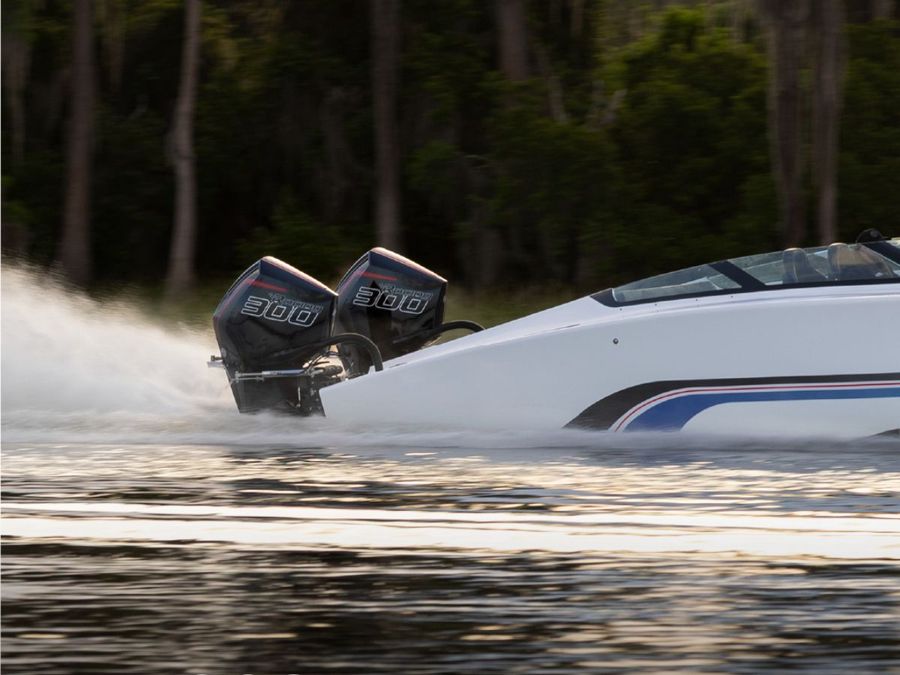
Two Mercury Racing outboards share the same 4.6-litre V8 heart and identical 300-horsepower output, yet they exist in entirely separate worlds. The 300R is a thoroughbred for performance-minded boaters who want genuine speed without surrendering everyday usability. The 300 ROS, unveiled just last week, is a purpose-built race weapon with no apologies for what it is. Knowing what separates them matters if you're shopping for serious power in New Zealand or Australian waters.
Mercury Racing launched the 300R in May 2018, retiring the two-stroke 300XS in the process. The naturally aspirated 4.6-litre DOHC V8 operates between 5,800 and 6,400 rpm and runs comfortably on 91-octane fuel in New Zealand. Buyers can choose between Torque Master and Sport Master gearcases and opt for either mechanical or Digital Throttle and Shift controls, giving the engine genuine flexibility across a wide range of hull types.
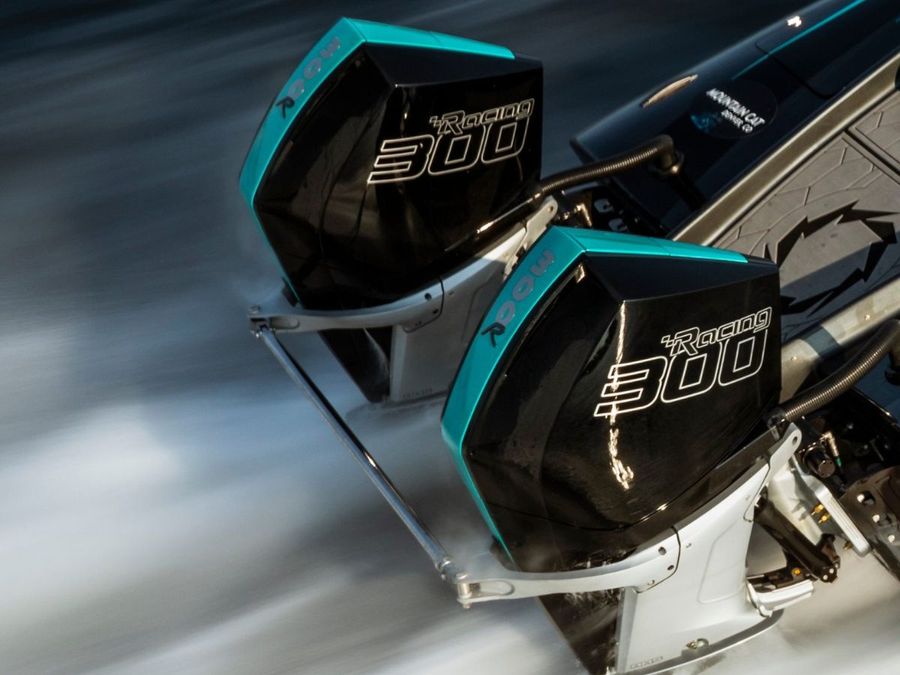
On 7 August 2025, Mercury Racing announced an updated 300R alongside the brand-new 300 ROS, which stands for Racing Outboard System. The 300 ROS carries the same powerhead as the 300R but adds factory above-water exhaust, a racing trim cylinder, and the 5.4-inch Sport Master gearcase as standard equipment. The two engines share a common platform but are calibrated and equipped for very different purposes.
The single development connecting both models most significantly is the new 15-inch Heavy-Duty Conventional Midsection, or HD CMS. Engineered to deliver sharper handling, reduced flex, and improved stability at speed, it is built to absorb the punishment of high-speed cornering and the repeated load changes that racing generates. Heavy-duty solid mounts, a reinforced swivel bracket, and a clamp bracket assembly are all part of the package. The practical result is a noticeably tighter feel at the helm, particularly when driving hard through choppy water.
For the performance recreational boater, the 300R has long occupied an enviable position. It works on a fishing cat, a multi-engine game boat, a ski-day runabout, or a high-speed centre console with equal willingness. A short-runner intake manifold and high-lift intake camshaft combine to produce sharp, punchy acceleration, while through-prop exhaust keeps things acceptably quiet at idle and under way. The 85-amp alternator handles electronics, pumps, and lighting loads without complaint.
Until the current update, the 300R ran a standard midsection. Capable as it was, that midsection was never optimised for the kind of loading that hard recreational driving or competition can generate. The arrival of the 15-inch HD CMS changes that. The 300R now shares the structural stiffness and responsiveness previously associated with race-grade hardware, making it a more compelling option for New Zealand boaters who push their craft in demanding coastal conditions. Better cornering and greater control at speed are not minor improvements in those environments.
The 300 ROS operates on different terms entirely. Built for sanctioned closed-course competition, every component choice reflects that single priority. Race-specific calibration, lightweight rigging, and the 15-inch HD CMS all come standard. Above-water exhaust promotes quicker breathing, generates the sound profile that suits racing, and simplifies servicing. A racing trim cylinder allows immediate adjustment of bow attitude. The Sport Master gearcase brings low-water pick-ups and compatibility with surfacing propellers. Forged brackets, solid mounts, and a lower centre of gravity round out a specification list designed around maximum acceleration, sustained wide-open-throttle running, and the reliability that competition demands.
Mercury Racing's Jeff Broman put the engineering intent plainly: "We've incorporated upgraded components designed to best withstand the rigors of offshore racing… giving both competition and high-performance recreational boats extreme durability and the handling benefits of a lower center of gravity."
READ ABOUT TRAVIS PASTRANA MAXES OUT NEWEST 300R AND 300 ROS OUTBOARDS
With this generation of both engines, Mercury Racing has brought competition-derived technology to a wider audience. The HD CMS no longer belongs exclusively to the race dock. Any boater who specifies a 300R now gets access to it, which means the gap between weekend performance boating and organised racing has narrowed in a real and practical way. For New Zealand's offshore racing community and the broader fast-boating culture along the country's coastline, that is a development worth paying attention to.