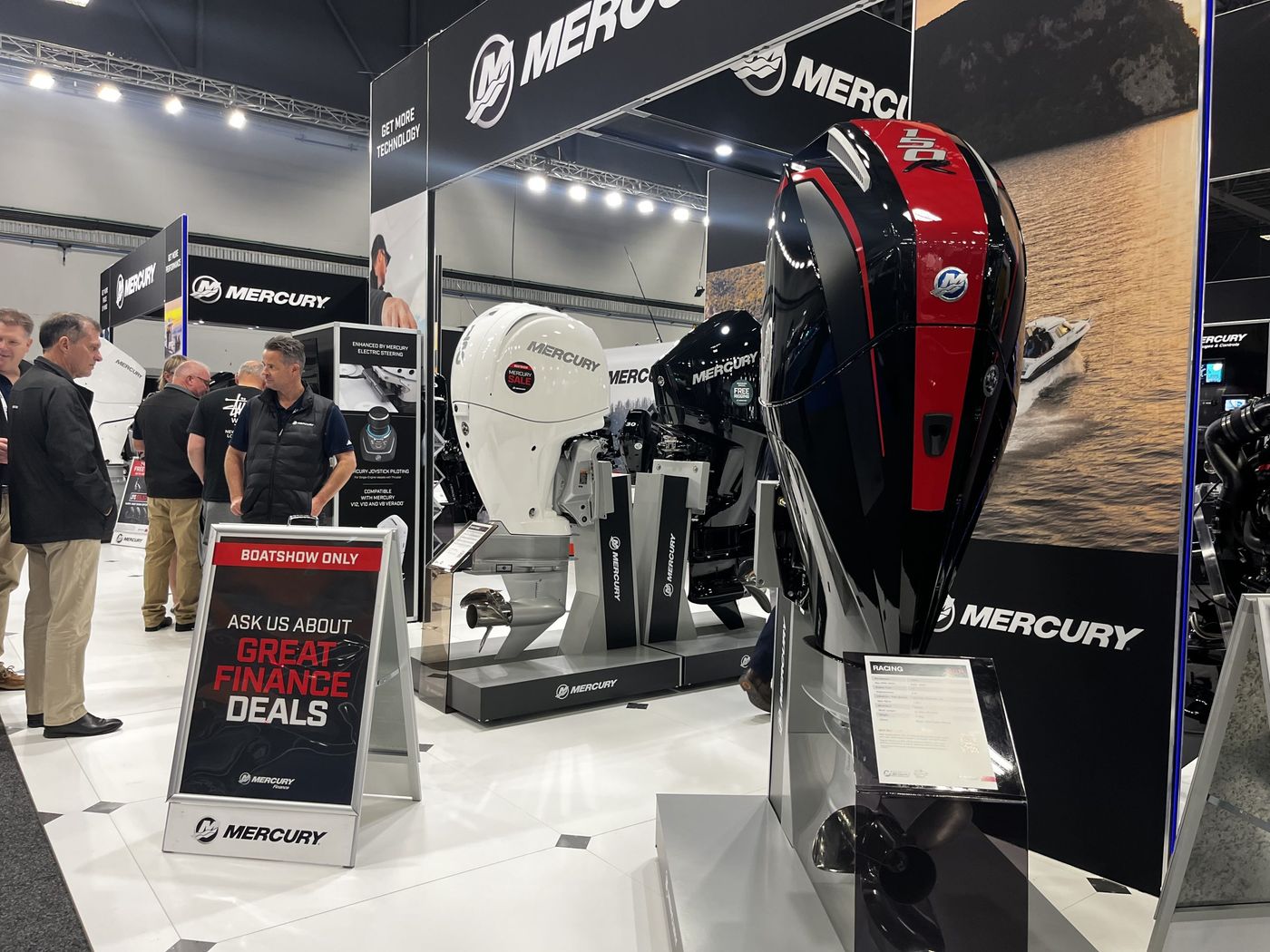
Walking into the Hutchwilco Boat Show and making straight for the boats rather than the food hall says plenty about where your priorities lie. The Mercury pavilion is one of the first places worth stopping.
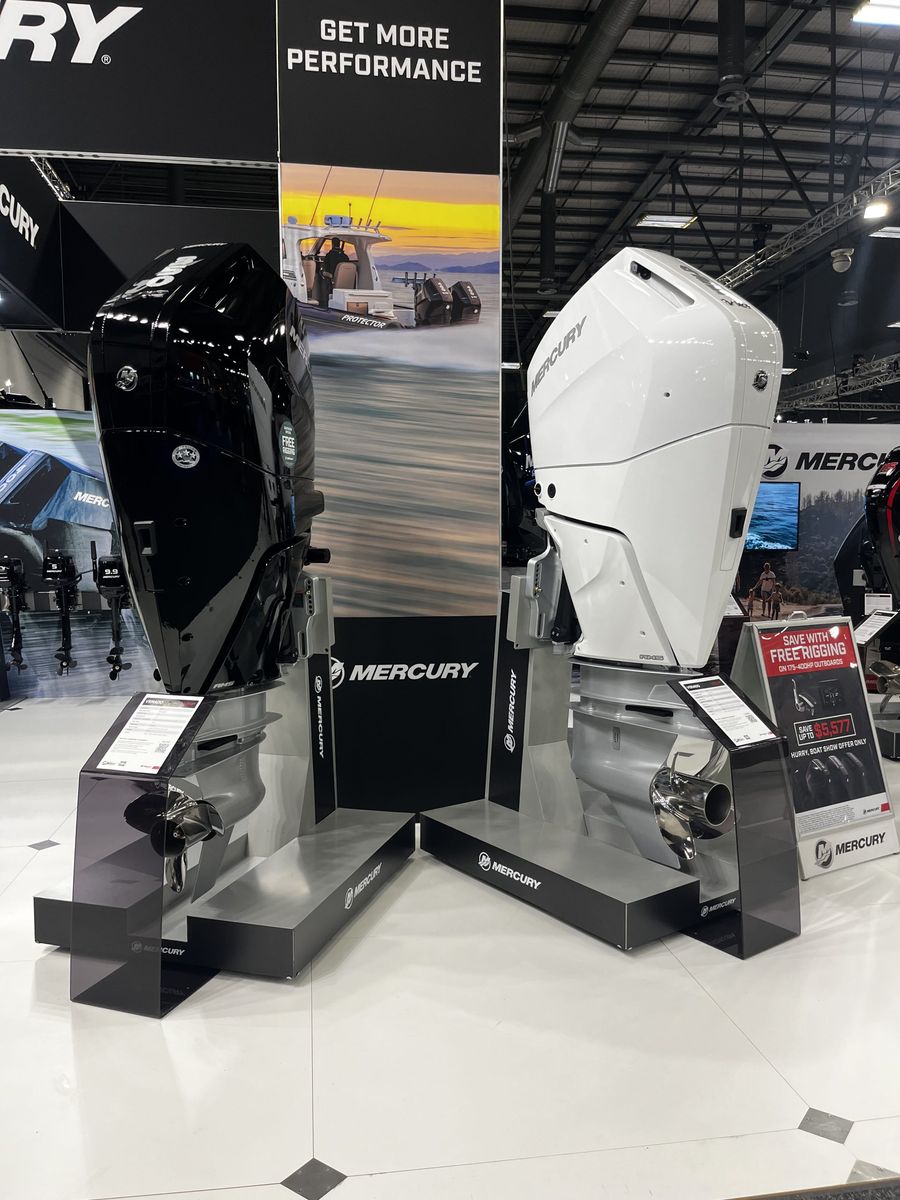
The stand covers the full range from one end to the other. A 3.5hp petrol motor anchors the smaller end alongside the rest of the petrol lineup, while the Verado 425hp commands its corner with an unmistakable presence. Standing next to it makes the scale impossible to overlook. The 350hp Verado sits right beside it, equally commanding, and the two together tend to spark the kind of calculations about hull size and budget that can derail an otherwise pleasant afternoon.
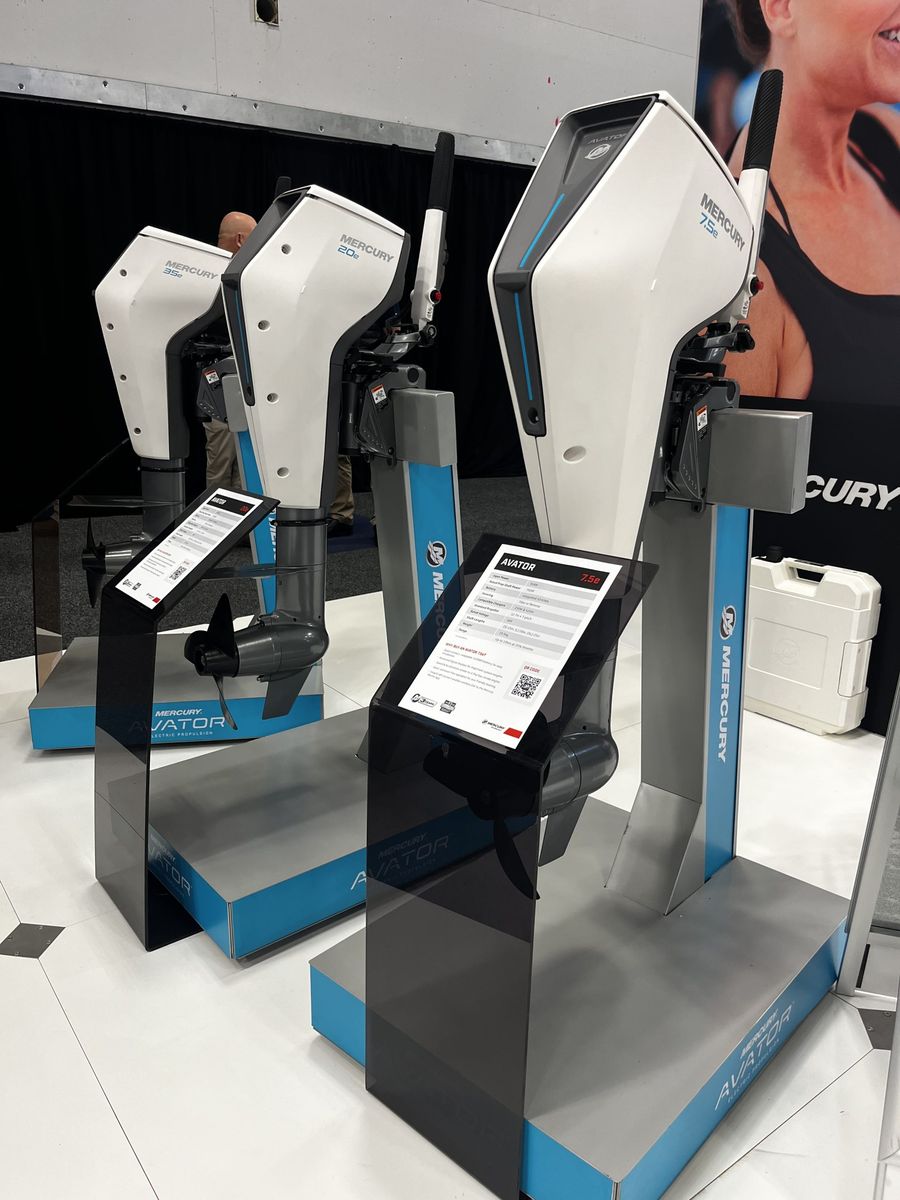
Mercury's electric lineup also makes a substantial appearance. The Avator motors run on a 48-volt system, producing 3,700 watts at the prop shaft with up to 18 hours of runtime on a single charge. The props are genuinely working-sized, which is not something every electric outboard can claim. The 35E is the equivalent of a 9.9hp four-stroke, the 20E lines up with a 5hp, and the 7.5E corresponds to a 3.5hp. Those equivalents make them well suited to dinghies, tenders, and light fishing applications.
The joystick piloting system on the stand is the most current version, having made its first public appearance at a US boat show before arriving in New Zealand. Mercury's automated docking technology is also represented. For anyone who has spent time fighting a crosswind while trying to squeeze a boat into a berth, it deserves more than a passing glance.
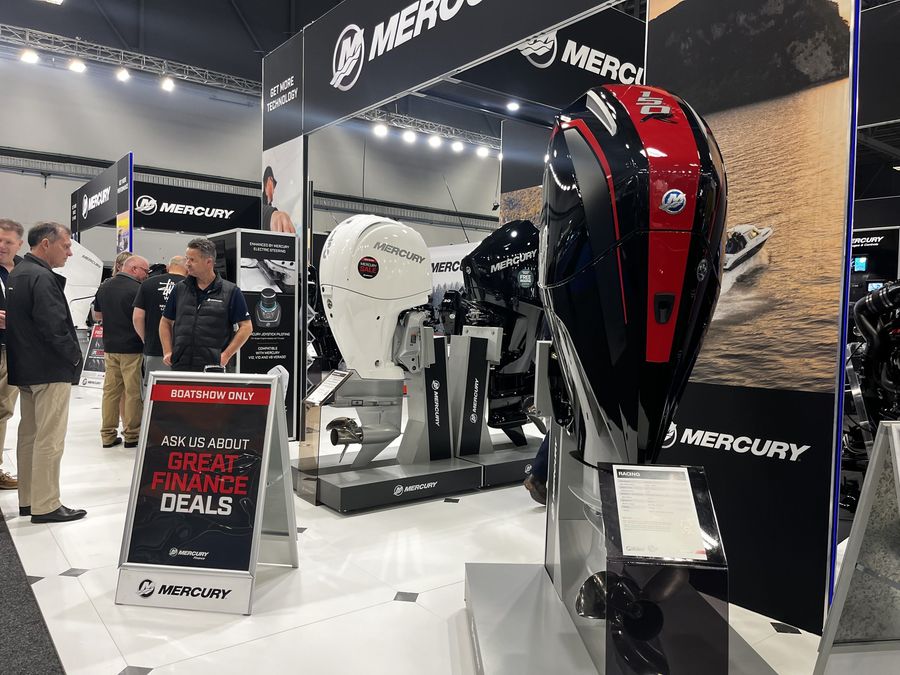
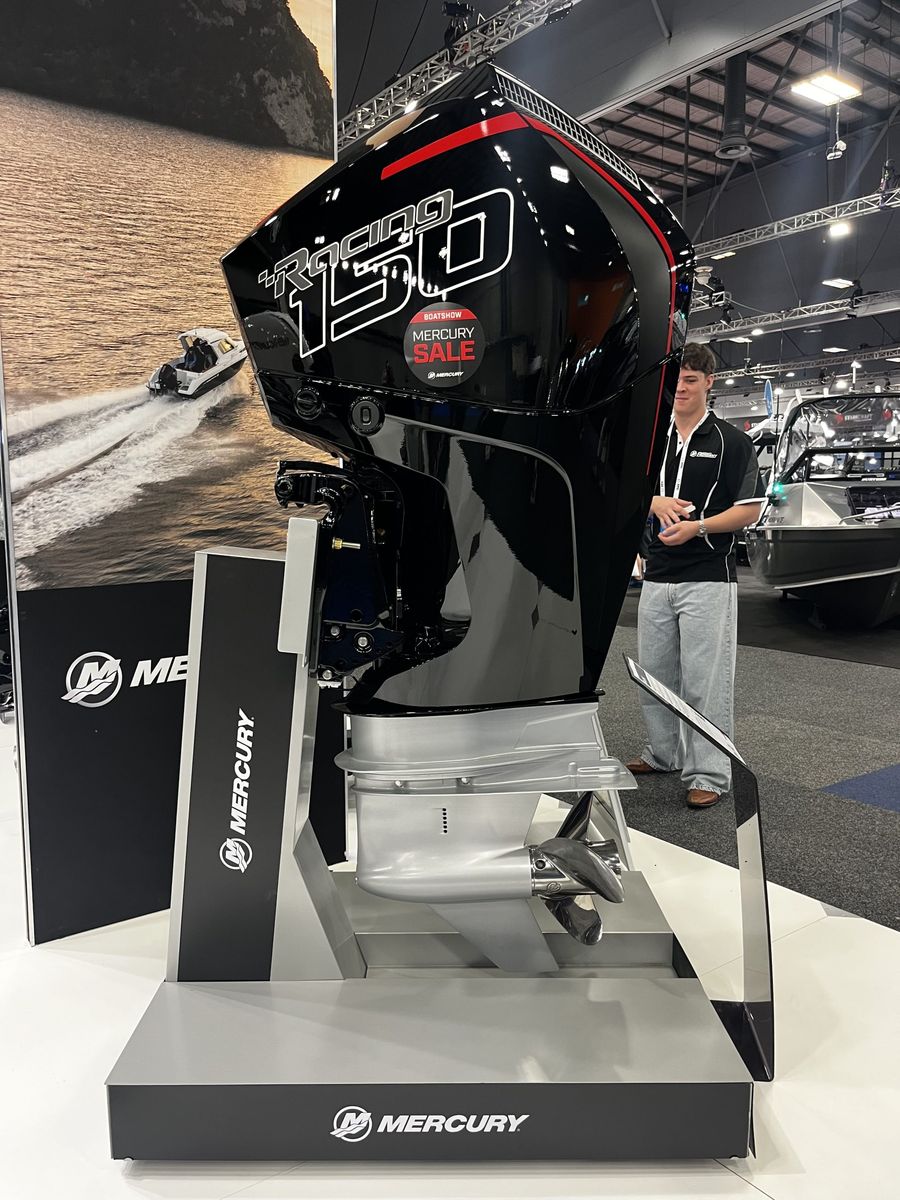
Boat show specials are running across the range, with free kit included on selected purchases. Of everything on display, the Mercury 150R is generating the most conversation, and not for the reasons you might expect from a racing motor. The questions centre on DTS, Digital Throttle and Shift, and what it means for mid-size trailer boats to have access to it for the first time.
Cable throttle and shift has been the default since outboard motors first came onto the market. Move the binnacle and the cable carries that action mechanically through to the gearbox. It does the job, but it comes with real limitations. Routing cables through a hull requires careful attention to bend radii, prolonged periods without use can cause deterioration, and steady wear from regular operation gradually accumulates.
The 150R replaces all of that. A shift actuator sits just above the gearbox, and moving the binnacle sends an electronic signal to handle the shift rather than pulling a cable through. When a Mercury representative demonstrates this on the stand, the difference in binnacle feel is obvious straight away. Engaging gear takes almost no physical effort.
Because the system runs a wiring loom instead of a cable, routing it through a hull is considerably more straightforward. A loom can go where it needs to without the constraints that cable installations impose, producing a noticeably cleaner finished rigging job.
DTS is not a new technology for Mercury. The Verado line and the V10 range have carried it for some time. What the 150R changes is who can access it. Until now, a buyer wanting digital throttle and shift had to commit to 200hp or more. The 150R brings that threshold down, and it does so with V6 displacement, a meaningful step beyond the three-litre four-cylinder that has typically been the standard for that power bracket.
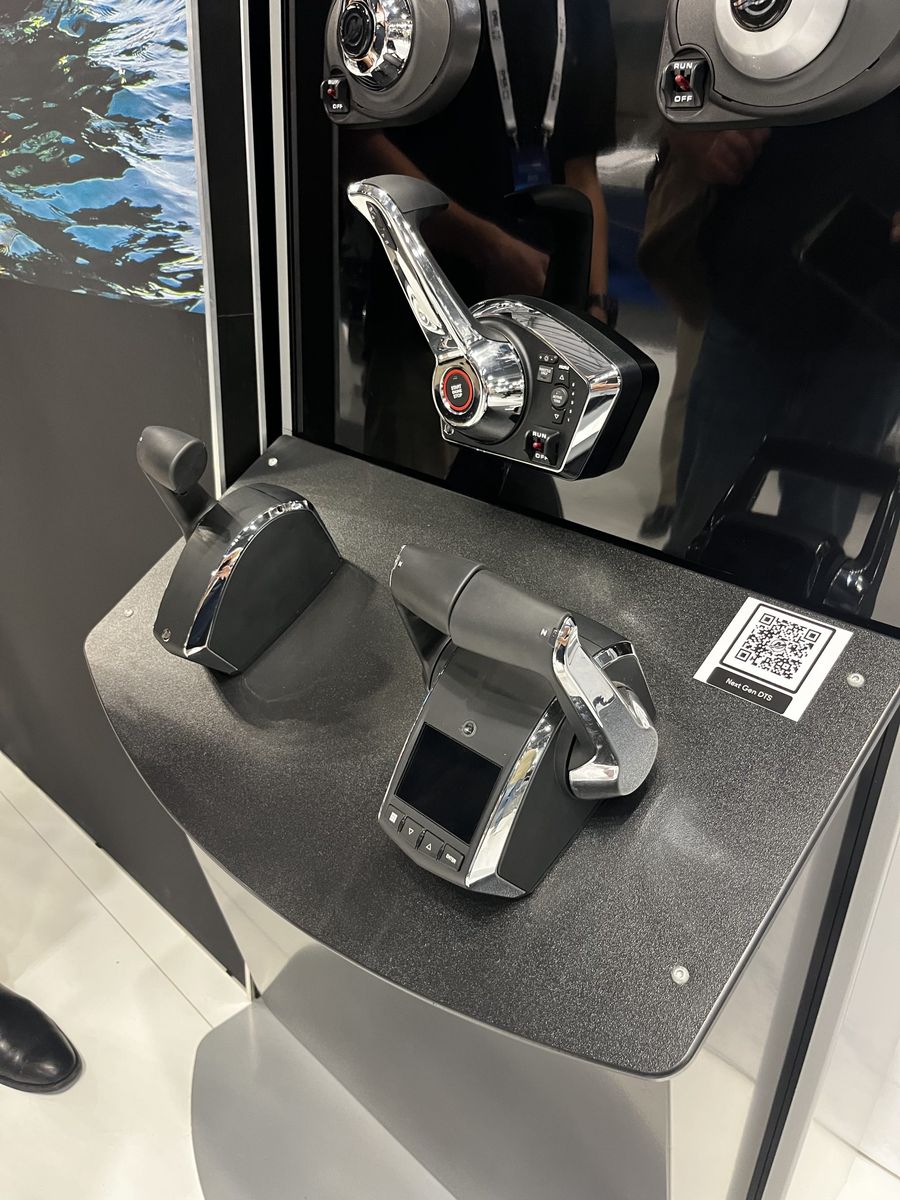
The binnacle itself brings several useful refinements beyond the throttle and shift function. A start/stop button built into the unit means the key can stay behind the dash once the ignition is on. A throttle-only mode lets the engine build rpm in neutral without engaging gear. Brightness controls are linked to the dash display. On twin-engine installations, individual start/stop and trim controls sit on the face of the binnacle, with a single controller managing both engines. Quad configurations are handled as port and starboard pairs. The DTS system also incorporates active trim, adjusting automatically based on a sea state profile the owner sets up beforehand. The principle is similar to Mercury's ZipWake integration, though in this case it operates directly from the engine side.
Mercury has arrived at the show with a wide-ranging stand, competitive specials across the full product lineup, and a considerable amount of horsepower on display. The 150R remains the motor drawing the most questions.