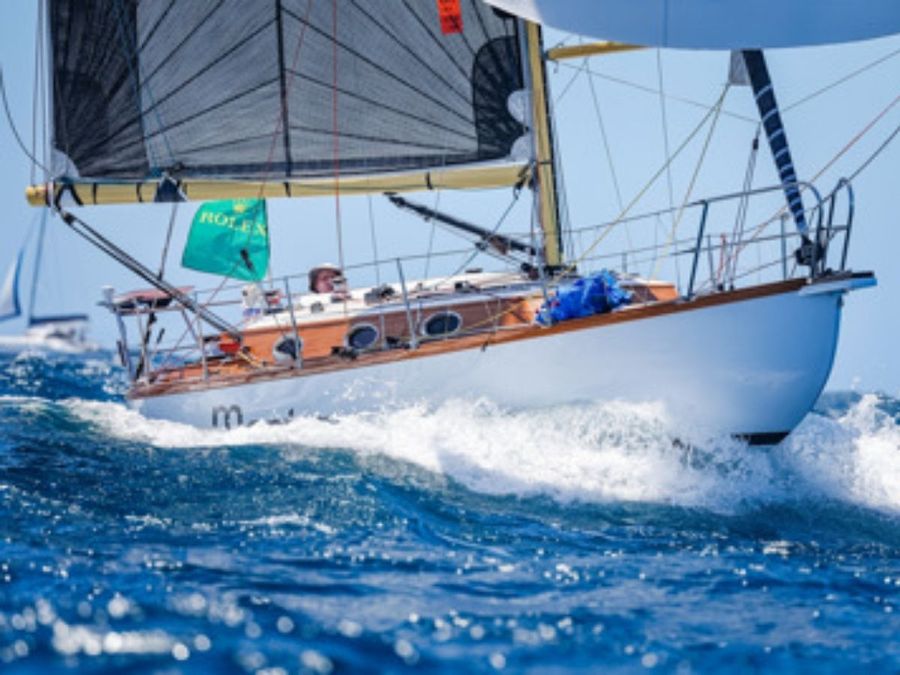
Bill Barry-Cotter's 121-year-old ketch is not a museum piece. She is a prepared, crewed, offshore racing yacht, and she is back on the Sydney to Hobart start line.
Maritimo Katwinchar is a 32-foot ketch built in London around 1904, making her the oldest confirmed entry in the history of the Rolex Sydney to Hobart Yacht Race. At 121 years old, she predates most of the race's institutional memory by decades, yet she is here not as a tribute act or a floating exhibit, but as a working yacht with a crew, a skipper, and genuine offshore intent.
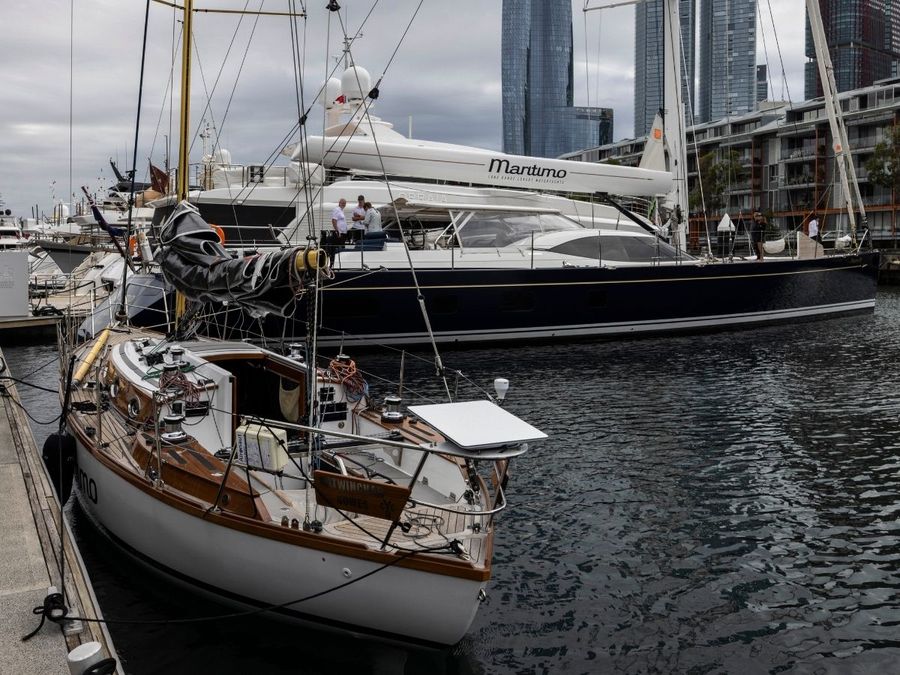
Her origins trace back to the Watney Brewery in London, where she was constructed for the brewery's proprietor, W. Watney. She was a private yacht from the beginning, built in an era when materials were overbuilt as a matter of course, craftsmanship was heavy and exacting, and longevity was simply assumed. Those qualities have proved useful.
Katwinchar's first connection to the Sydney to Hobart came in 1951, when E. J. Mossop sailed her from England to Australia and entered her in the race. She retired that year, but her place in the event's early record was established.
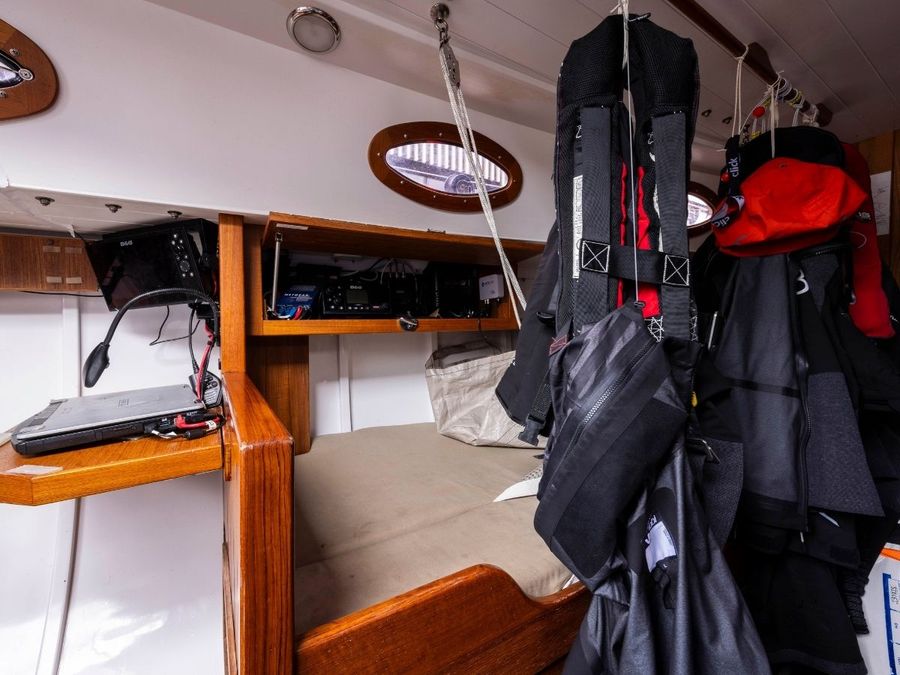
Long before Maritimo became one of Australia's most recognised motor yacht builders, Katwinchar was simply the Barry-Cotter family boat. Bill Barry-Cotter acquired her after finding her in a dilapidated state, and both he and his brother Kendal grew up sailing her around Sydney's Northern Beaches. She was a demanding boat for children to learn on, heavy and honest, one that required genuine seamanship rather than forgiving lapses in it.
Bringing her back to racing condition was a serious undertaking. More than 15,000 hours of work were invested over two years, carried out at Maritimo's facility in Coomera on the Gold Coast. The restoration was never aimed at making her faster. It was aimed at making her sound. Hull, structure, rig, and systems were all rebuilt with care, with an eye to preserving her original character. The result is a yacht that carries her age visibly, yet is fully capable of crossing Bass Strait.
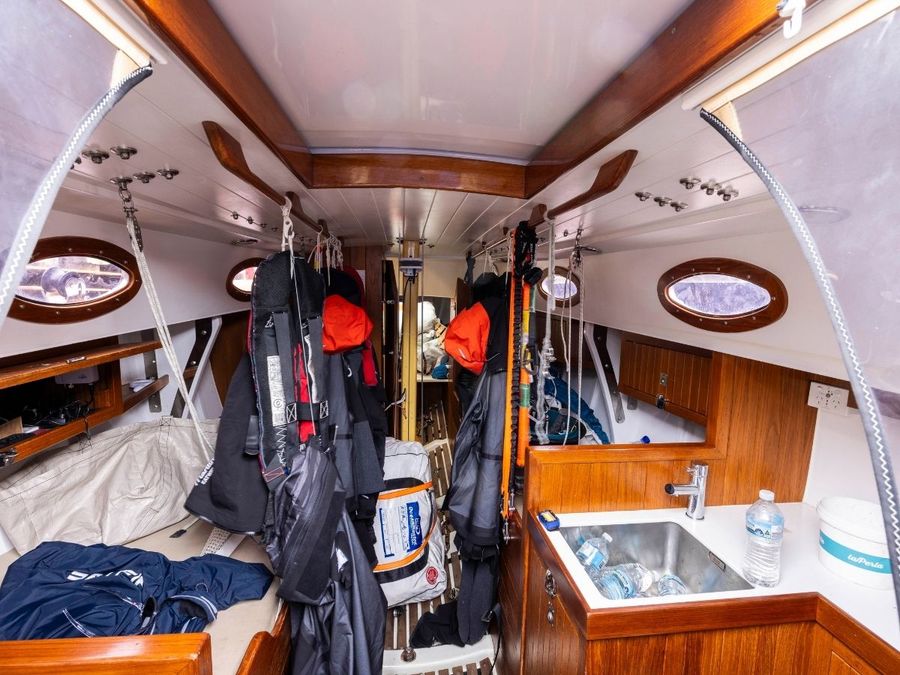
Her modern Sydney Hobart chapter began with the 75th edition of the race in 2019, when she competed under the command of Michael Spies and won the Grand Veterans division. Her time for that passage was 4 days, 6 hours, 27 minutes, and 47 seconds.
Spies, known throughout Australian sailing as Spiesy, needs little introduction. This year's race marks his 47th start to Hobart. His record includes Line Honours and the race record aboard Nokia in 1999, overall victory in 2003 sailing First National Real Estate, and world titles in both the 18-foot skiff class and the 11 Metre One Design. He is among the most experienced offshore sailors ever to have made the trip south.
After that 2019 campaign with Katwinchar, Spies returned last year for a double-handed attempt alongside Peter Vaicuirgis. That edition ended in retirement, but it added another layer to the yacht's modern offshore record and sharpened the crew's understanding of how she performs in open water.
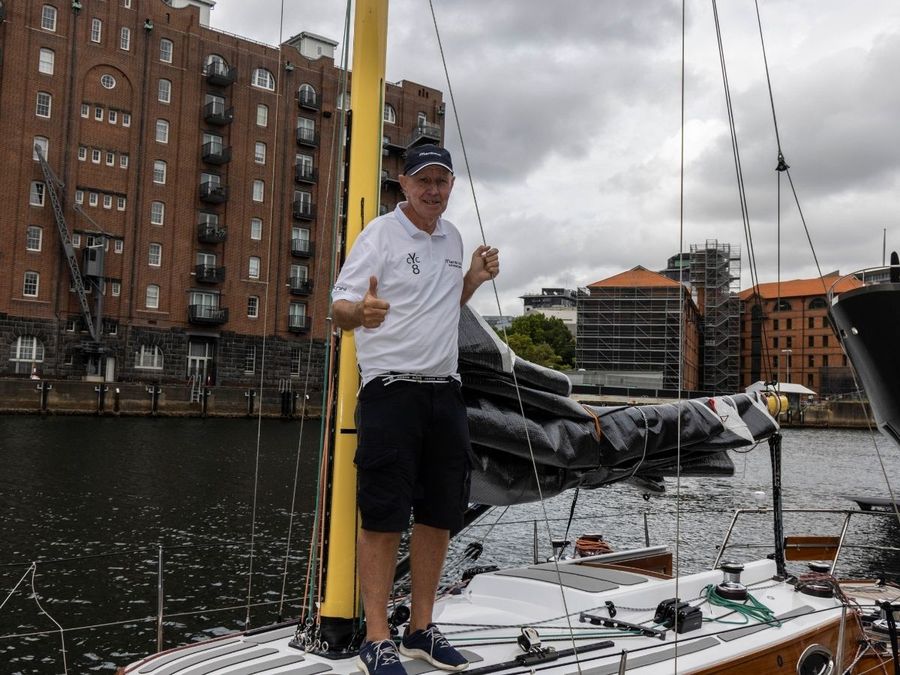
This year she carries a full crew. Scott Kaufman, a highly regarded Australian designer and sailor now based in New York, joins Courtney Macris and Emma Rankin aboard. Navigator is Max Herscovics, with Bill Barry-Cotter as owner and Spies once again at the helm.
Katwinchar is not a yacht that benefits from flat conditions and a rating system working in her favour. A hard blow suits her. When seamanship and judgement carry more weight than raw boat speed, she comes into her own, and that has been the story of her racing life from the outset.
Her specifications reflect her era. At 10.0 metres overall, with a beam of 2.5 metres and a draft of 1.6 metres, she is compact by contemporary standards. Her hull weight is 4.847 tonnes, total displacement 290 kg, and her total sail area 98 square metres. She races under sail number CYC8, representing the Cruising Yacht Club of Australia.
Sharing the start line with Katwinchar is a yacht that could scarcely be more different. Maritimo 100, also owned by Bill Barry-Cotter, is an Oyster 100 representing Southport Yacht Club, skippered by Peter Jones. She measures 30.4 metres in length, carries a beam of 7.4 metres, and draws 4.0 metres. Her total sail area is 1,670 square metres, her total displacement 103 tonnes, and her hull weight 31 tonnes. She is capable of 20 knots and a daily average run of 250 nautical miles.
Between Katwinchar and Maritimo 100 lies more than a century of yacht design, compressed onto a single start line. The contrast is stark, and it is also a measure of how profoundly the sport has changed across the span of one boat's life.
Katwinchar carries her history without fanfare. She sails with restraint, rewards careful hands, and continues to make the argument, quietly and persistently, that presence on the water demands no justification from newness.