New Zealand's North Island coastline belongs in any serious conversation about the world's great cruising destinations. Sheltered anchorages, outstanding fishing, marine life in abundance, historic sites and genuine wilderness all sit within reasonable reach of one another, creating a coastline that suits everything from a brief weekend escape to an extended blue-water passage.
For most motor yacht owners, the journey begins in the Hauraki Gulf, the broad body of water stretching east of Auckland. Its islands are plentiful enough to fill weeks of exploring, yet close enough to the city that a two-night getaway is entirely practical. Kingfish, kahawai, trevally and snapper are available year-round, dolphins are a near-constant presence, and those who keep a watchful eye on the deeper channels may be rewarded with a sighting of the endangered Bryde's whale.
Waiheke Island tends to be the first stop on most itineraries, and its reputation is well earned. Anchorages at Man O' War Bay or Oneroa Bay put visitors within easy reach of sandy beaches, calm bays and some of the finest dining and wine experiences in the country. The Mudbrick Vineyard and Restaurant, Tantalus Estate and the Oyster Inn, which has earned a loyal following for its seafood, are all natural inclusions on any Waiheke agenda. Each fills quickly, and reservations made well ahead of time are strongly recommended.
Further north, Bon Accord Harbour on Kawau Island holds a deserved reputation as one of New Zealand's finest natural harbours. Its calm, well-sheltered waters are ideal for swimming and snorkelling, and the absence of public roads on the island gives the place a quietness that has become increasingly hard to find. Visitors can explore the historic estate of Sir George Grey, which features exotic gardens and a rich layering of colonial history, or spend time on the island's extensive network of walking tracks.

The Bay of Islands offers a cruising experience that stands entirely apart from the Hauraki Gulf, though it is no less rewarding. More than 140 islands are scattered across warm, clear water, all connected by anchorages that provide reasonable shelter across a wide range of conditions. The marina at Opua functions as a well-equipped base for provisioning and maintenance, and the nearby townships of Russell and Paihia offer good dining, a strong sense of history and a deep connection to New Zealand's maritime heritage.
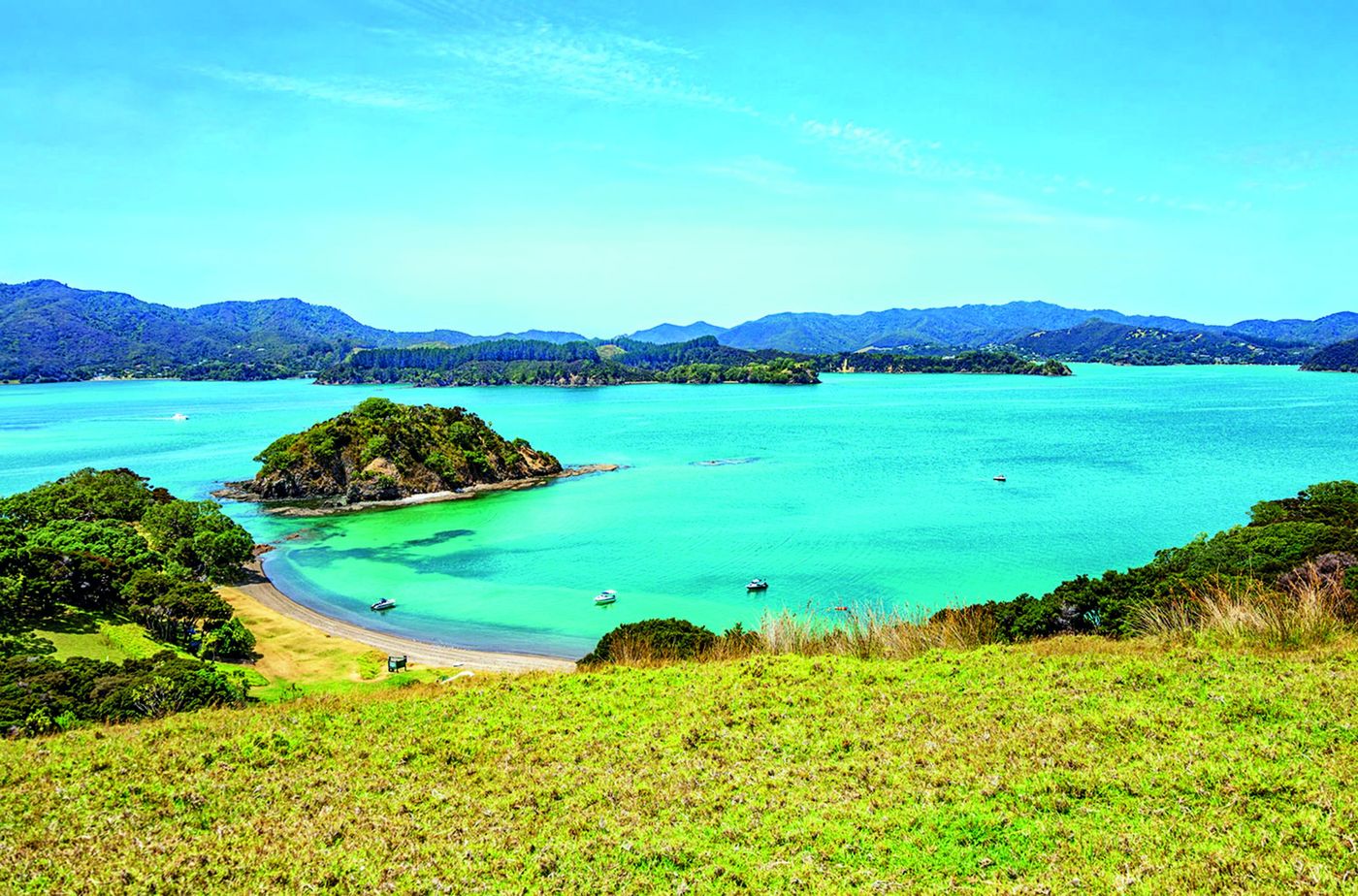
Within the Bay itself, there is no shortage of worthwhile destinations. Urupukapuka Island draws consistent praise for its protected bays and walking tracks, easily filling a full day ashore. Roberton Island's lagoon anchorage, bounded by white sand and native bush, comes close to the ideal of a perfect Pacific setting. The Waewaetorea Passage delivers some of the region's most scenic cruising, and when conditions allow, many skippers push on to Piercy Island's Hole in the Rock, arguably the most recognisable maritime landmark in the country. Passing through the archway when the sea is calm enough is the kind of experience that tends to stay with those who make it. Dolphins, orcas, seals and native birdlife are present throughout the surrounding waters, and migrating whales move through the area during June and July.
The Bay of Islands has long carried the title of the Angler's El Dorado, and the fishing more than justifies the label. Striped marlin, yellowtail kingfish, snapper and tuna attract serious anglers from around the country, and the area consistently ranks among New Zealand's premier saltwater fishing grounds.
For those seeking something quieter, Whangamumu Harbour rewards the effort of a detour. The water is deep and exceptionally clear, pohutukawa trees provide shade along bronze sandy beaches, and the ruins of an old shore-based whaling station, reached via coastal forest walking trails, lend the anchorage a genuine sense of history that few others can match.

Sitting roughly 50 nautical miles from Auckland, Great Barrier Island is the most remote of the three main destinations examined here, and for many who make the passage, the most memorable. Despite its proximity to a major city, the island feels genuinely wild. More than 60 percent of its land is covered in native forest, which supports rare species including the black petrel, brown teal and chevron skink.
The western harbours, Port Fitzroy and Whangaparapara Harbour in particular, rank among the finest natural anchorages anywhere in New Zealand. Both offer deep, well-sheltered water that keeps vessels comfortable across a broad range of conditions, making extended stays as practical as they are appealing. Port Fitzroy has become something of an essential call for New Zealand cruisers, with multiple bays, reliable holding ground and the nearby Kaitoke Hot Springs providing a compelling reason to linger. Soaking in natural thermal pools at the end of a day on the water is an experience that is difficult to improve on. Further south, Tryphena Harbour connects visitors to walking tracks, small cafés and the island's communities, while Kaiaraara Bay is the usual starting point for those attempting the climb to Mount Hobson, the island's highest peak. Provisioning options on Great Barrier are limited, so careful planning and a well-stocked vessel before departure are essential.

The season chosen for a North Island cruise has a significant bearing on how the experience unfolds. The summer months from December through March bring warmer temperatures, longer daylight hours, more settled weather patterns and water temperatures that make swimming genuinely pleasant. Demand peaks during this window too, and berths across the Hauraki Gulf and the Bay of Islands are claimed quickly, making advance booking advisable. The shoulder periods, October to November and April to May, can offer experienced skippers uncrowded anchorages and often stable conditions, though the weather becomes less consistent as the seasons transition.
Winter, covering June through September, requires a more measured approach. Low-pressure systems track through more frequently, winds build, temperatures fall, and longer passages to exposed destinations such as the eastern Coromandel coast or Great Barrier Island carry added complexity. Passage plans that lean toward the conservative and itineraries with enough flexibility to absorb weather-related delays are sensible foundations for any cruise undertaken at this time of year.

Whatever the season, careful preparation is the point from which every successful North Island passage begins. Conditions across this coastline can shift quickly, and localised effects around headlands and islands are capable of producing sea states that differ markedly from the broader forecast. Dependable forecasting tools, thorough route planning and a genuine readiness to alter the schedule when the weather demands it are the habits that separate enjoyable trips from difficult ones. Anchorage selection deserves careful thought as well, since seabed conditions vary considerably and tidal ranges affect both swinging room and the depth available at any given time. The further a cruise extends from major centres, the greater the importance of managing fuel and provisions with precision.
The sheer range of the North Island means there is no single way to approach a cruising itinerary. Short coastal hops, leisurely circuits of island groups and ambitious passages to remote anchorages well clear of the crowds are all viable, often on the same trip. With thorough planning and an honest respect for local conditions, the full extent of what New Zealand's northern waters have to offer becomes accessible, and the cruising that results is genuinely difficult to surpass.