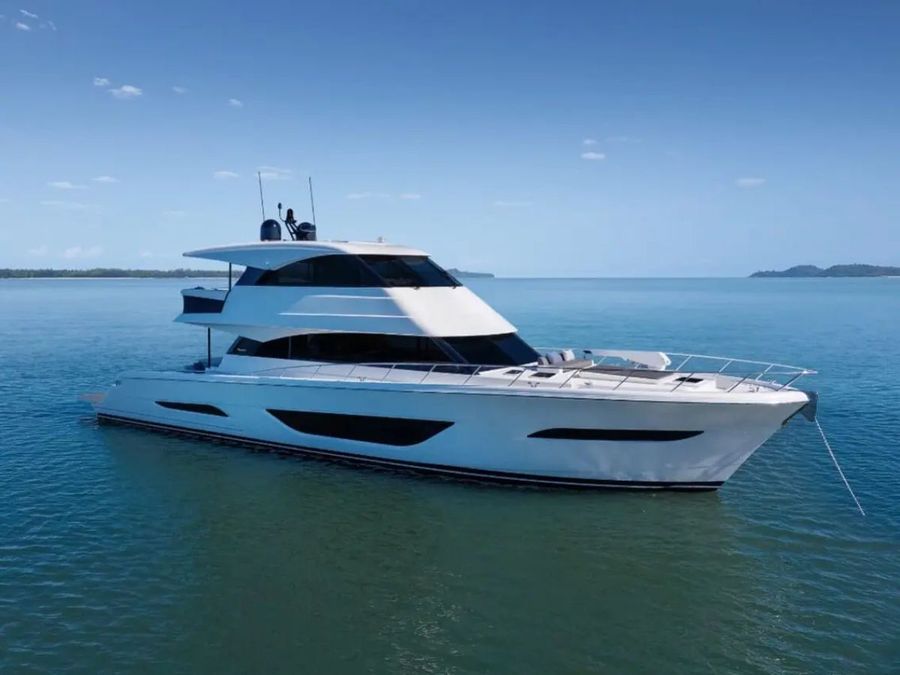
Getting to grips with anchoring a luxury motor yacht takes more than just throwing the pick overboard and hoping for the best. Ross Willaton, known to most as Rossco and Maritimo's Senior Marine Engineer, has put together a body of practical advice for skippers of Maritimo vessels and other luxury motor yachts, covering everything from reading the conditions before you drop anchor through to getting the hook back aboard without drama.
The first priority, Willaton emphasises, is preparation. Wind strength, tidal movement, and the nature of the seabed all shape how a boat will sit and behave once anchored. Planning around high tide is essential, and so is leaving adequate swing room. As the water deepens and the wind picks up, the circle your boat sweeps through increases considerably, so maintaining a sensible distance from the shoreline from the outset will save headaches later.
Depth is a fundamental consideration. The minimum Willaton recommends at low tide is three metres beneath the keel, a figure that becomes particularly relevant if you intend to run a generator overnight. On Maritimo yachts, and comparable luxury vessels, depth sounders are calibrated with keel offsets built in. Add to this the total distance from keel to bow winch, which comes to approximately four metres, and that full measurement needs to be part of your chain-length calculation.
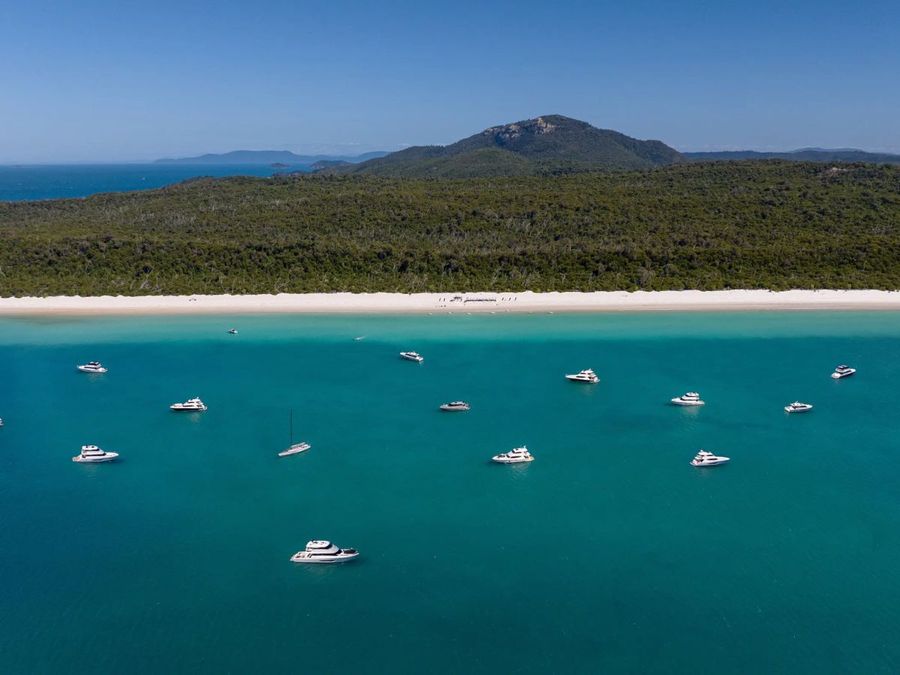
For overnight anchoring, the guidance is a minimum ratio of 7:1, meaning chain length to water depth. If rope forms part of your rode, that ratio climbs to 10:1. To put it concretely: anchored in five metres of water, you should have at least 35 metres of chain out, and a few extra metres beyond the minimum adds a useful margin of security. Most Maritimo models are fitted with between 60 and 100 metres of chain, which gives skippers genuine flexibility across a range of conditions and depths.
A snubber line is something Willaton rates highly. Fitted with a chain hook or claw and run out until it nearly touches the water, a snubber absorbs shock loading, takes strain off the winch, and quietens the whole rig considerably. For anyone sleeping aboard, the difference in comfort is noticeable, and the reduction in wear on anchor gear is a practical bonus.
Setting the anchor correctly makes a real difference to how confidently it will hold. The technique is to allow a free-fall deployment, then apply gentle reverse power to let the anchor bed in naturally rather than forcing it. The plough-style anchor fitted as standard to many Maritimo models is well-suited to this approach, embedding reliably when given time and a steady, measured load.
Once anchored, technology and old-fashioned vigilance work well together. Willaton recommends setting a GPS anchor alarm, a radar guard zone, and a depth alarm to give early warning if the boat drags or swings into trouble. He also advocates for straightforward visual checks through the night, simply looking out a hatch and assessing your surroundings periodically, because no alarm replaces a pair of eyes.
Swing angle deserves careful thought, particularly in shallower anchorages. A wind shift overnight can push a boat uncomfortably close to shore in surprisingly short order. Willaton's advice is to anchor as near as practical to deeper water, with a clear exit route identified before you turn in. If you do need to move out of a shallow area, take it gently on the throttles to avoid drawing sand up through the sea strainers.
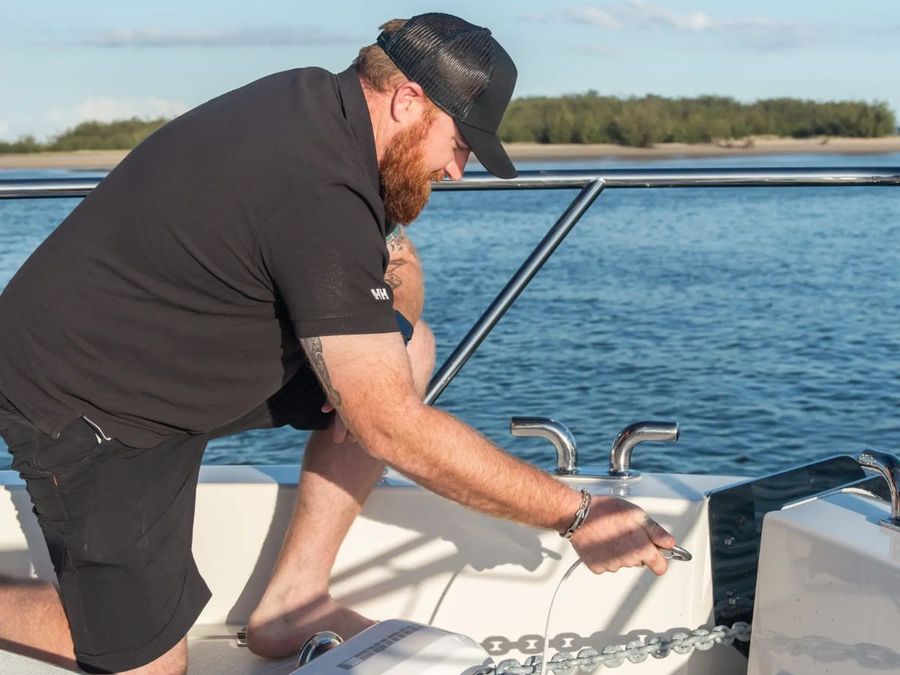
Retrieving the anchor calls for good communication between whoever is at the helm and whoever is working the bow. The person forward uses the foot switches to control the winch, keeps an eye on the chain's angle, and watches for any sign of snagging. The boat should be moved slowly ahead as the chain comes in, taking the load off the winch progressively. The winch is designed to lift the anchor rather than drag the boat forward, so the engine should be doing that work.
When the anchor refuses to break free, the solution is not to keep winching. Instead, let the chain drop back to an angle and apply a gentle burst of forward power to work the anchor loose. Forcing the winch or snatching at the chain risks damage to gear and is rarely effective.
Newer Maritimo models equipped with wireless remote controls offer a practical advantage here. A single person can manage the entire retrieval from the bow, with a clear view of the chain and the anchor's position throughout the process, and full control without needing to communicate back to the helm.
Anchoring well is ultimately an exercise in understanding the combined effect of your environment, your equipment, and the physics pulling them together. Getting depth and scope right, using a snubber, setting proper alarms, and approaching retrieval methodically all contribute to protecting your gear and making remote anchorages genuinely relaxing rather than a source of anxiety.
As a handy summary, the core principles break down like this: before dropping anchor, check wind, tide, and seabed conditions, and confirm you will have a minimum of three metres under the keel at low tide. While anchoring, deploy at least a 7:1 chain ratio, set the anchor using controlled reverse thrust, and rig a snubber to manage chain load. Overnight, run depth, GPS, and radar alarms alongside regular visual checks. For retrieval, bring the boat up over the anchor using the engine, have someone on the bow to guide the winch, and use forward power rather than the winch to free a stuck anchor.