The European shore crab is a serious biosecurity concern for New Zealand, and understanding what makes it so damaging is the first step in keeping it out.
In regions where it has taken hold, this species can reach population densities of up to 200 individuals per square metre. It feeds on a broad range of other organisms, including crabs and shellfish, giving it the potential to cause significant harm to native wildlife in estuarine and marine ecosystems. Beyond the ecological threat, it has already caused measurable economic damage to shellfish industries in countries where it has established itself.
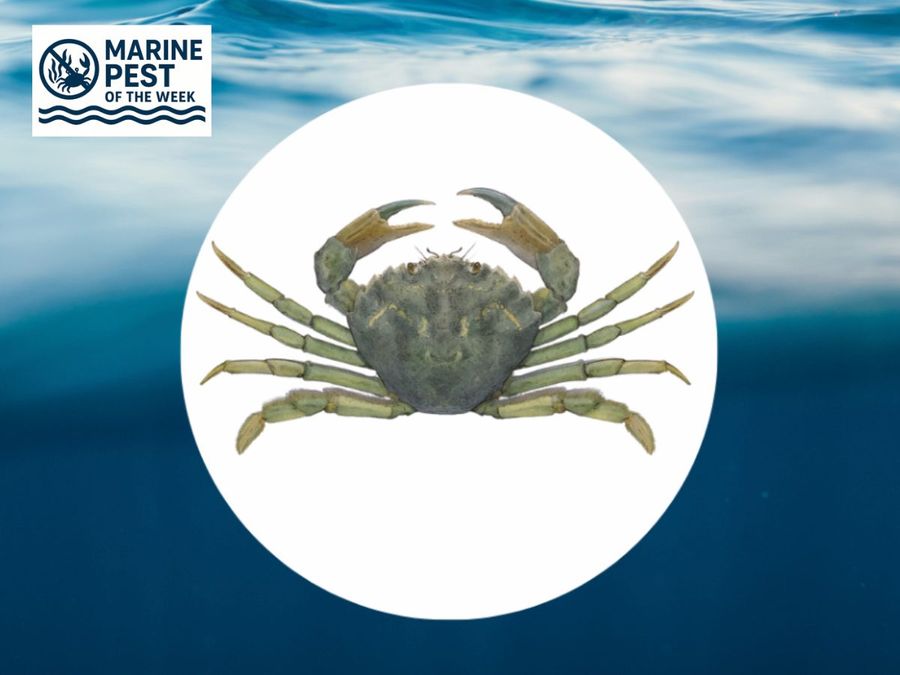
Knowing how to identify it is useful. The European shore crab is a medium-sized species, with a body (carapace) width of up to 9 cm. Adults have a mottled upper surface ranging from dark brown through to green, marked with small yellow patches, while the underside can vary from green to orange to red. Juveniles look quite different, typically presenting as a light sandy colour. A reliable identifying feature is the five pointed spines found on each side of the eyes, along with three rounded lobes positioned between the eyes. It is related to the paddle crab but can be distinguished by the absence of swimming paddles on its hind legs.
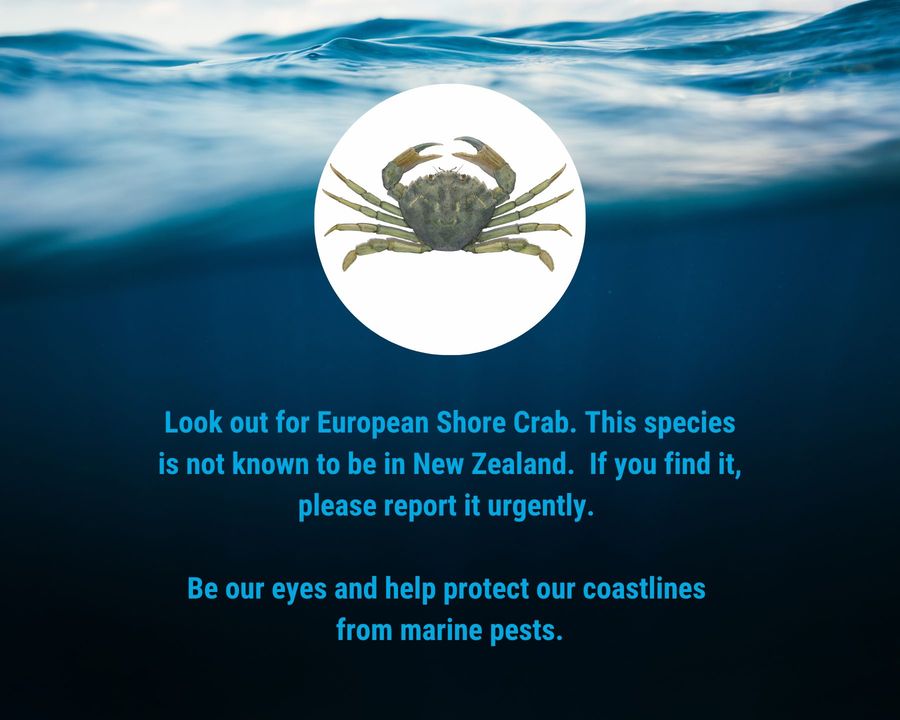
This pest has not been detected in New Zealand. Anyone who spots something suspicious is encouraged to report it to the Ministry for Primary Industries.
For further information on this species, the Marine Biosecurity Porthole is a recommended resource.