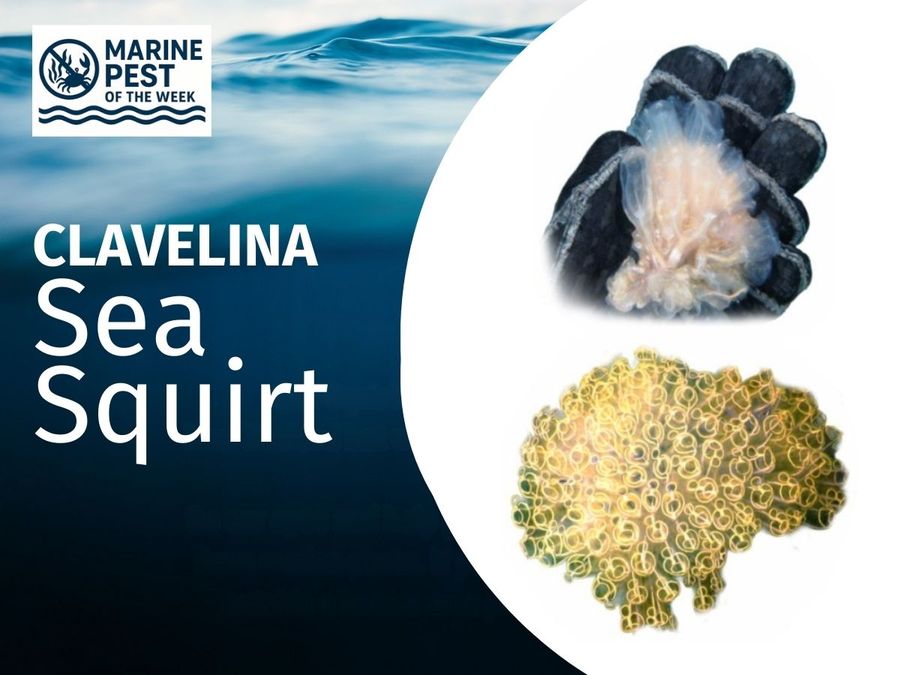
Two species of sea squirt (also known as ascidians) have recently established themselves in New Zealand waters: Clavelina oblonga and Clavelina lepadiformis. Boaters can play a valuable part in tracking their spread, helping researchers learn more about the impact these organisms are having on local marine environments. Clavelina oblonga has so far been recorded only at Aotea Great Barrier Island.
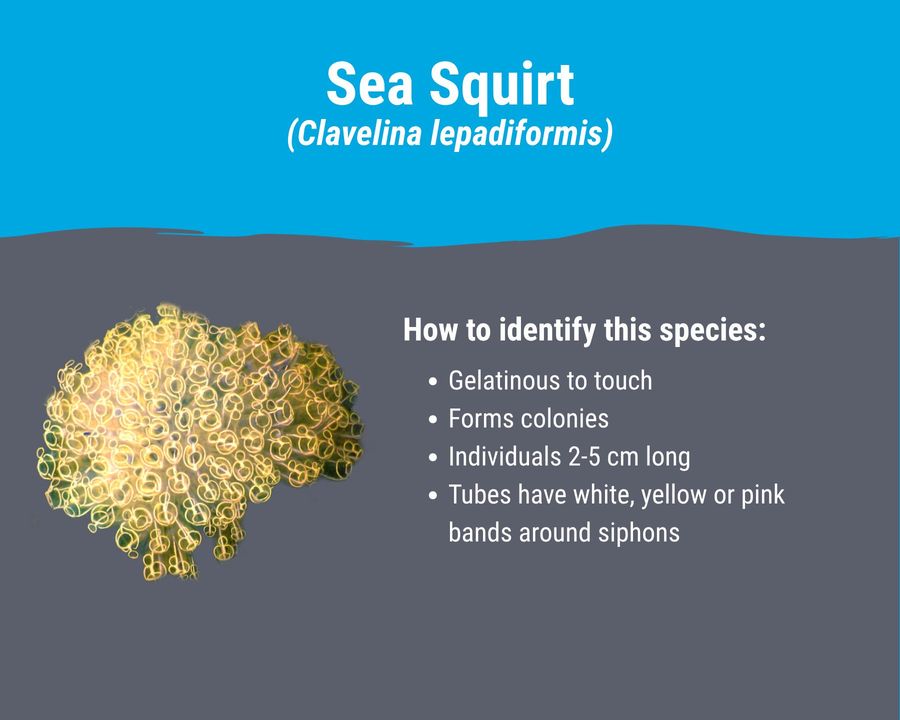
Identifying these creatures in the field is straightforward once you know what to look for. Both species are gelatinous to the touch and live in colonies rather than as solitary individuals. Each individual typically grows to between 2 and 5 centimetres long, and the tubes carry distinctive white, yellow, or pink bands around the siphons.
Photos supplied by: Auckland Council and Northland Regional Council
Clavelina oblonga
Within the Auckland and Hauraki Gulf region, Clavelina oblonga has been confirmed at two sites on Aotea Great Barrier Island: Port Fitzroy and Smokehouse Bay. Any sighting of this species outside those locations should be reported.


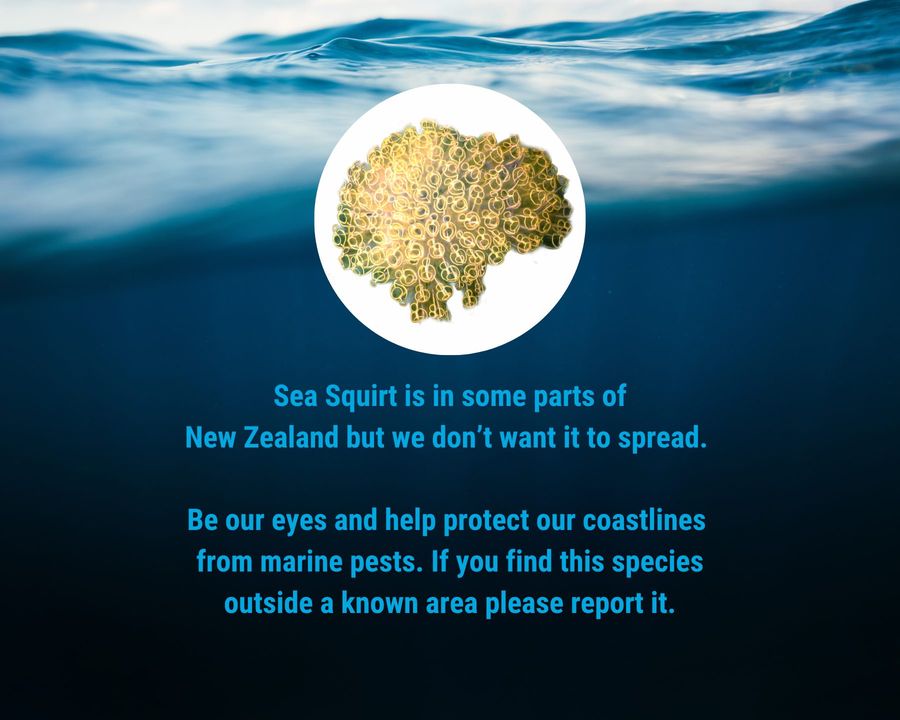
Clavelina lepadiformis
Clavelina lepadiformis has a considerably wider presence, with confirmed records across Northland, Auckland, Marlborough, and Nelson. Known locations include Whangārei Harbour, Whangaparāoa, Waitematā Harbour, Tauranga Harbour, Napier, Wellington Harbour, Porirua Harbour, Picton Harbour, Nelson Harbour, Lyttelton Harbour, and Otago Harbour. As with Clavelina oblonga, sightings beyond these recorded areas should be reported promptly.
This list is correct to the best of our knowledge at the time of publishing. For a full list of marine pest locations, visit the Marine Biosecurity Porthole.