The clubbed tunicate is a persistent nuisance for boat owners. It readily colonises marine structures and vessel hulls, dragging down performance and using boat movements to spread itself to new locations. The aquaculture industry has particular cause to dislike it, as it establishes itself in dense masses on oyster and mussel lines, smothering shellfish, competing aggressively for space and food, and driving up processing costs.
Identifying Styela clava
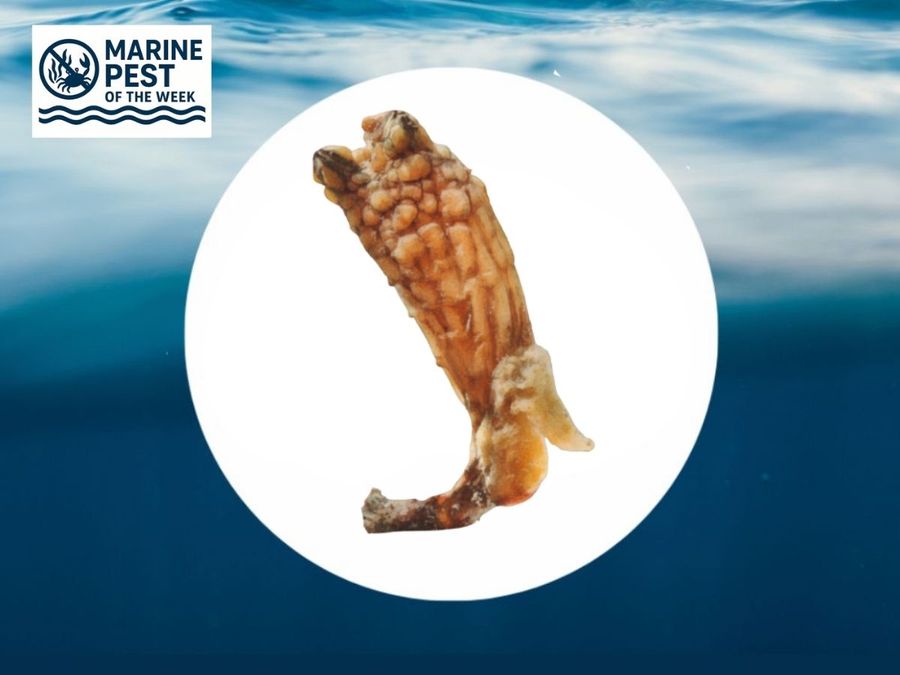
The clubbed tunicate has a distinctive long, club-shaped body attached to surfaces by a short, tough stalk. Two siphons sit at the top, and the surface is warty and uneven, with a leathery feel. Colouring ranges from brownish-white through to reddish-brown.


This species has an established presence across a number of regions: Northland, Auckland, Nelson, Tasman, Marlborough, Canterbury, and Wellington. If you come across it anywhere outside these areas, please report the sighting.
Known locations include Bay of Islands, Whangārei Harbour, Waitematā Harbour, the wider Hauraki Gulf, Port Fitzroy on Great Barrier Island, Port Taranaki, Porirua Harbour, Nelson Marina, Picton Marina, Marlborough Sounds, Lyttelton Harbour, and Otago Harbour.
This list reflects the best available information at the time of publishing. For a comprehensive and up-to-date record of marine pest locations, the Marine Biosecurity Porthole is the place to go.