Marine pest or native look-alike?
Know the difference and help protect our best boating spots.
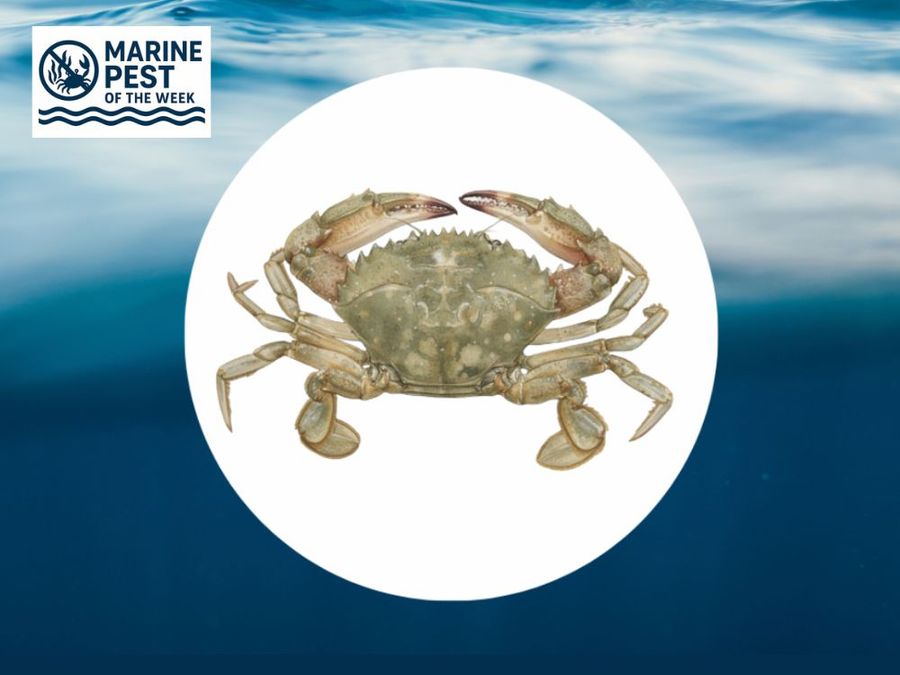
The Asian paddle crab is a marine pest worth knowing well. Aggressive, adaptable, and a strong swimmer, it causes real damage wherever it establishes itself.
Wherever Asian paddle crabs move in, native paddle crabs tend to move out. This species competes hard for both food and territory, and it wins. Adults can give a vicious bite if handled or disturbed, so treat any suspect crab with care.
Spreading is something this species does efficiently. Larvae can survive for up to a month in sea chests or ballast water, making vessel movement a genuine pathway for new infestations. Adults travel too, attaching to hull fouling as boats move between locations.
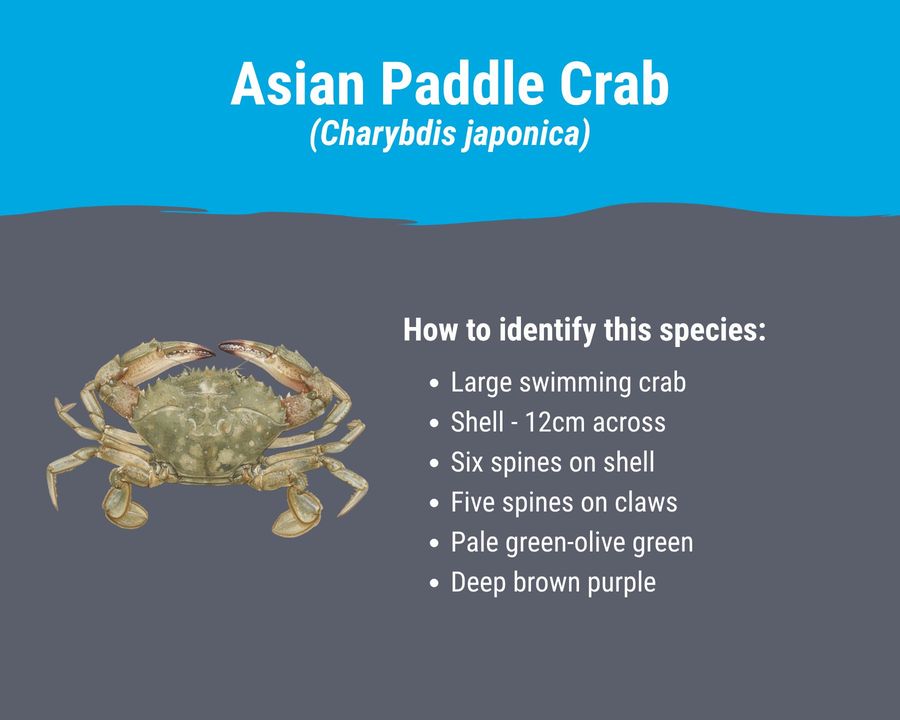
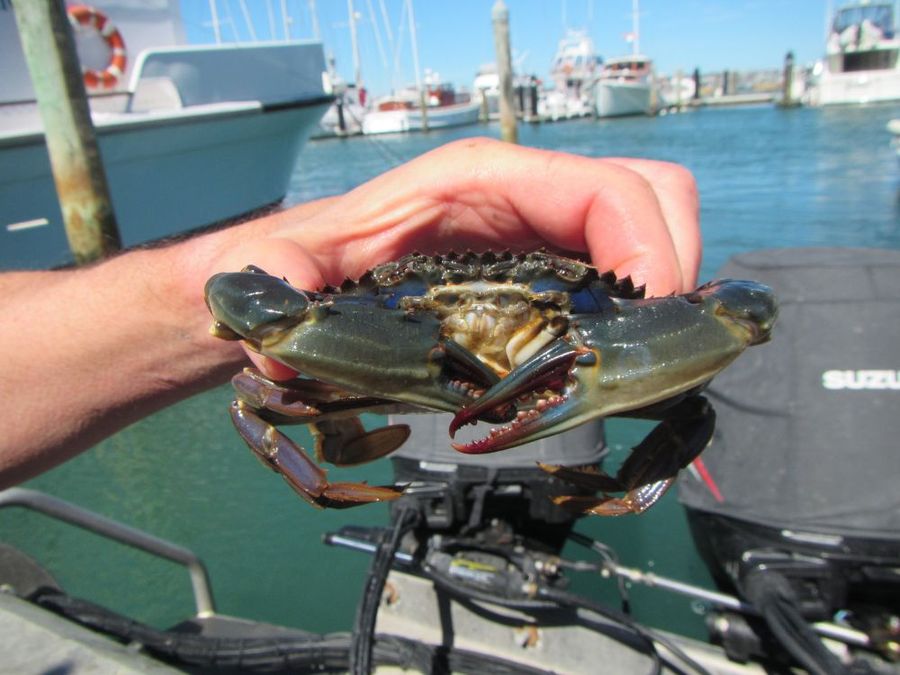
The Asian paddle crab is a large swimming crab capable of growing to 12cm across its shell, so it is not easily missed once you know what you are looking for.
This species is already known in several parts of New Zealand, and the priority now is stopping it from spreading further. Confirmed locations span Northland, Auckland, and the Bay of Plenty, including Hokianga Harbour, Houhora Harbour, Waikare Inlet, Ngunguru, Tutukaka, Whangārei Harbour, the Hauraki Gulf, Waitematā Harbour, Tamaki Estuary, Aotea, Great Barrier Island, Kaipara Harbour, Manukau Harbour, Tauranga Harbour, Ohiwa Harbour, and Raglan Harbour.
If you spot one outside those known areas, take a photo, record the location as precisely as you can, and report it to the Ministry for Primary Industries.
Learning to tell an Asian paddle crab from a native look-alike is part of looking after the places we love to boat. The more eyes on the water, the better the chance of catching new incursions early.