The Asian clam can reach population densities of over 25,000 individuals per square metre. In parts of San Francisco Bay estuary, it accounts for the majority of biomass found within the sediments. The species is a filter feeder, drawing plankton and suspended organic material out of the water column. At high densities, this feeding activity can deplete plankton levels, reducing the food supply available to other organisms in the same environment. In San Francisco, the clam is believed to have played an indirect role in a sharp decline in the catch rate of some fish species. There is also concern that, by filtering toxins from the water column, the clam may increase exposure to those substances for any animals that consume them.
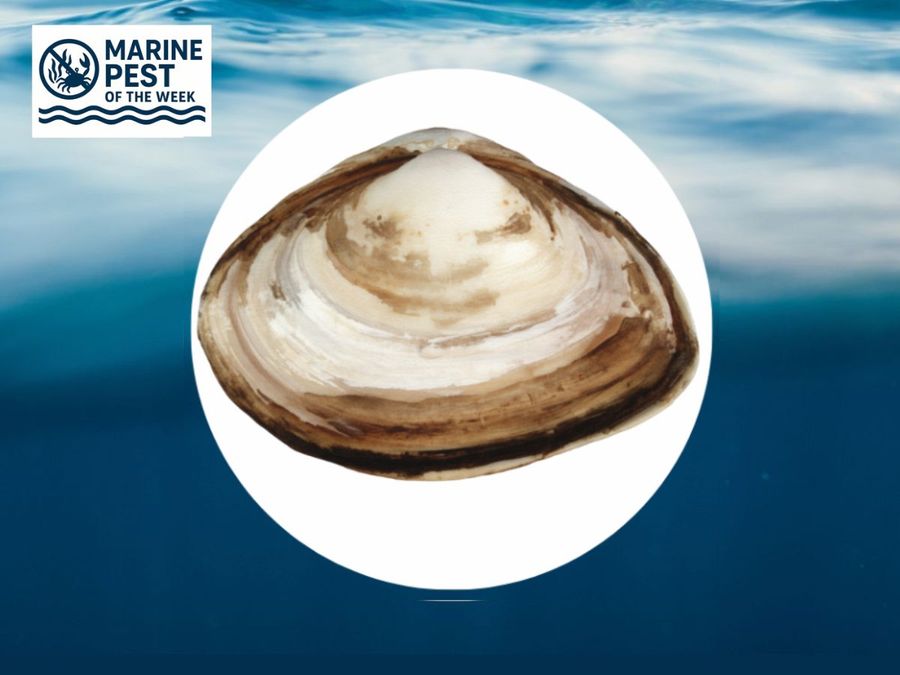
Identifying the Asian clam involves looking for several distinguishing features:
- The shell can be yellow, tan or dirty white, often with brown staining. - Shells measure up to 3 cm in length. - One side of the shell is larger than the other, producing a distinctive "overbite" appearance. - On older specimens, the shell edges may appear wrinkled.
This pest has not been detected in New Zealand. Anyone who spots something suspicious should report it to the Ministry for Primary Industries.