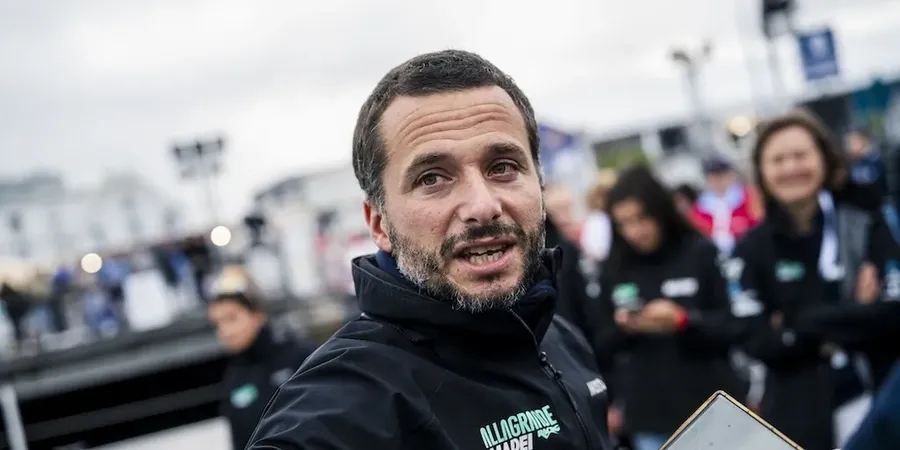
For 13 days, 21 hours and 8 minutes, Manu Cousin refused to quit. Crossing the finish line of the Vendée Arctique on Sunday in eighth place, he did more than collect a result. He ticked a qualification box for the 2028 Vendée Globe, and he did it aboard a boat that had barely touched the water before the race started.
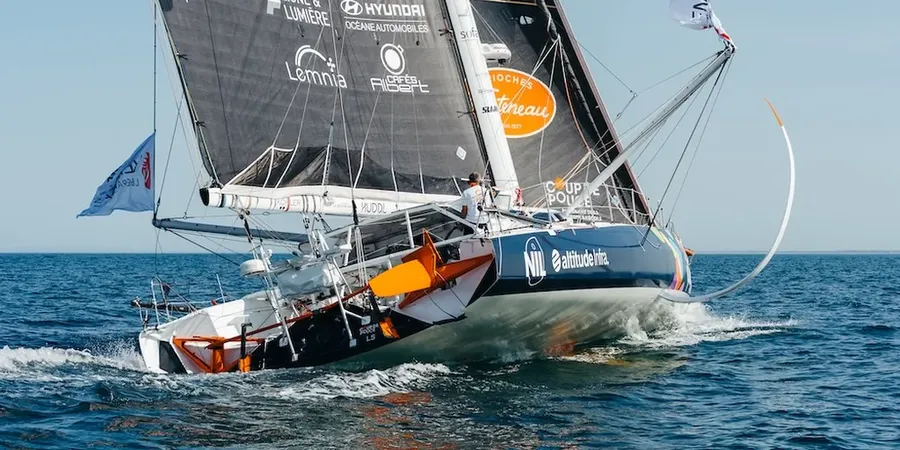
The vessel in question was Coup de Pouce, an older IMOCA previously campaigned by Arnaud Boissières. Cousin's team had spent the winter in intensive workshop mode after taking possession of the boat, and it was only launched days before the race began. Most campaigns would have pushed for a delay. Cousin pushed off the dock instead. "We expected difficulties because the boat was relaunched late and we worked intensively on it all winter," he said during the race. "There have been quite a few technical dramas, especially heading up toward the Arctic Circle."
That was an understatement. The catalogue of problems Cousin dealt with across those 13 days would have broken many campaigns: fuel leaks, a failing motor, GPS failures. Each fault, when you are hundreds of miles from any assistance, carries a weight that bears no comparison to a problem solved in a marina with a full crew around you. The most alarming moment came when Cousin, dozing in his watch seat, noticed smoke curling near the chart table. The carbon was glowing red. For a moment it looked as though Coup de Pouce might be lost entirely. He dropped the sails, sat down, and worked through it. The smoke cleared. A hydrogenerator had overheated and failed. Crisis managed. Next problem.
What held everything together, in Cousin's telling, was the fundamental soundness of a boat that had been deeply modified through the winter. The modifications mattered. So did the man at the helm, a skipper who has completed two previous Vendée Globes and knows exactly what it takes to keep moving when things go sideways.
At the prize-giving, Cousin offered the crowd a typically measured account. "It wasn't easy. I picked up quite a few problems," he said. The Arctic conditions, he noted, had carried echoes of the Southern Ocean, sailing's most demanding proving ground, and there was something fitting in that comparison. The final miles to the finish brought rough weather and punishing windward work, the kind of hard slog that offers no reward except the line itself.
He found the line. The qualification stands. Coup de Pouce is proven. Now the preparation for 2028 begins, armed with a winter's worth of hard lessons and a race's worth of hard sailing.