Few trophies in world motorsport carry the historical weight of the E.C. Griffith Cup. Recognised as the second oldest competitive motorsport trophy on the planet, behind only the APBA's Gold Cup, it has been contested since 1910, when the inaugural race was run at Rose Bay, Sydney. The event is now held on the Yarrawonga Foreshore on Lake Mulwala, forming the centrepiece of the Yarrawonga Powerboat Spectacular alongside Round 1 of the Battery World National Driver Championship. This year, one New Zealander has crossed the Tasman with his sights firmly set on bringing the Cup home.
The story of competitive powerboating itself stretches back to 1886, when German Friedrich Lürrsen built a six metre timber hull around an experimental petrol engine. Just over two decades later, the E.C. Griffith Cup came into existence. New Zealand's relationship with this trophy runs deeper than many people appreciate. Len Southward first brought it across the Tasman in 1949 and then refused to let it go, holding the Cup for eleven consecutive years. That sustained run of dominance remains one of the most extraordinary achievements in the competition's long history. Bill Stevenson added another Kiwi win in 1960, and after an extended period of Australian ownership, Peter Knight reasserted New Zealand's claim with four consecutive victories from 1989 through to 1992.
The next significant chapter belonged to Warwick Lupton, a two-time world champion and one of New Zealand's most celebrated names in powerboat racing. Warwick claimed the E.C. Griffith Cup twice, in 2001 and 2008, on both occasions at the wheel of Annihilator. His 2001 campaign was striking in its sweep, taking in not only the Griffith Cup but also the AE Baker Championship and the Paynesville Gold Cup on the same Australian trip. The hydroplane instincts he built over that career have clearly passed to his sons.
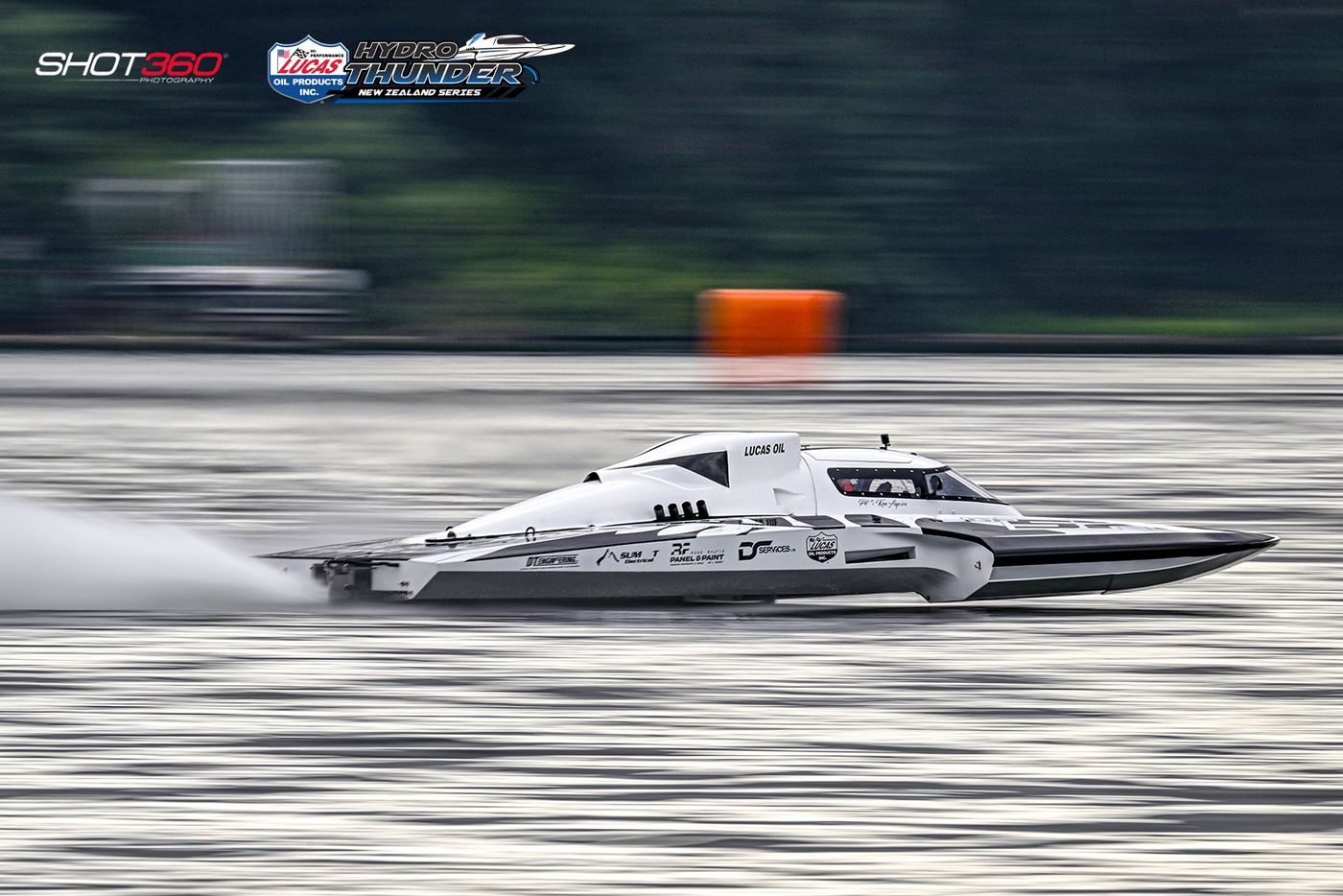
Ken Lupton arrives at Yarrawonga carrying a record that needs little embellishment. The 2024 and 2005 HRL Champion, the 2025 Masport Cup winner, the 2024-2025 NZ Hydro Thunder Series Champion, and the holder of multiple NZPBA titles, he ranks among the most decorated hydroplane drivers in the world. He makes the trip aboard his boat Lucas Oil GP-577. The A.E. Baker Cup also features on his résumé, though this year that particular honour went to his brother Jack. The Lupton family, it seems, keeps its competitive instincts firmly within the household.
The field Ken Lupton is entering is not short of quality. Fifteen drivers are competing for the Cup, and the defending champion Ricky Howard, who took victory in 2025 at the wheel of Whitenoise, will not be back to defend his title. That absence leaves the contest genuinely open, though it does not mean Lupton will have things his own way.
Grant Harrison, campaigning Melton Toyota GP1, represents the most formidable Australian challenge. With nine E.C. Griffith Cup victories to his name, Harrison is the most successful driver in the trophy's modern era and the clear favourite among the home contingent. Russell Jones, running Aussie Connection, brings the experience and proven pace of a past winner in the GP class. Ben Clark in GP101 adds another dimension to the contest. Coming off a strong season that included victory at the 2025 ANZAC Day Cup, Clark is seen as a genuine disruptor, capable of cutting across the expected Lupton-Harrison battle at the front.
Yarrawonga is a fast, tight circuit. New Zealand's hydroplane venues are themselves known for compact, technical layouts, and Ken Lupton has shown throughout his career that he can read and adapt to a range of courses without losing pace.
The 2026 E.C. Griffith Cup forms part of the Australian Thunder Boat Grand Prix and carries real significance as a major Australasian championship event. When the racing concludes, the question that has defined this competition's trans-Tasman history will reassert itself once again: does the Cup make the journey back to New Zealand, or does it remain on Australian soil?