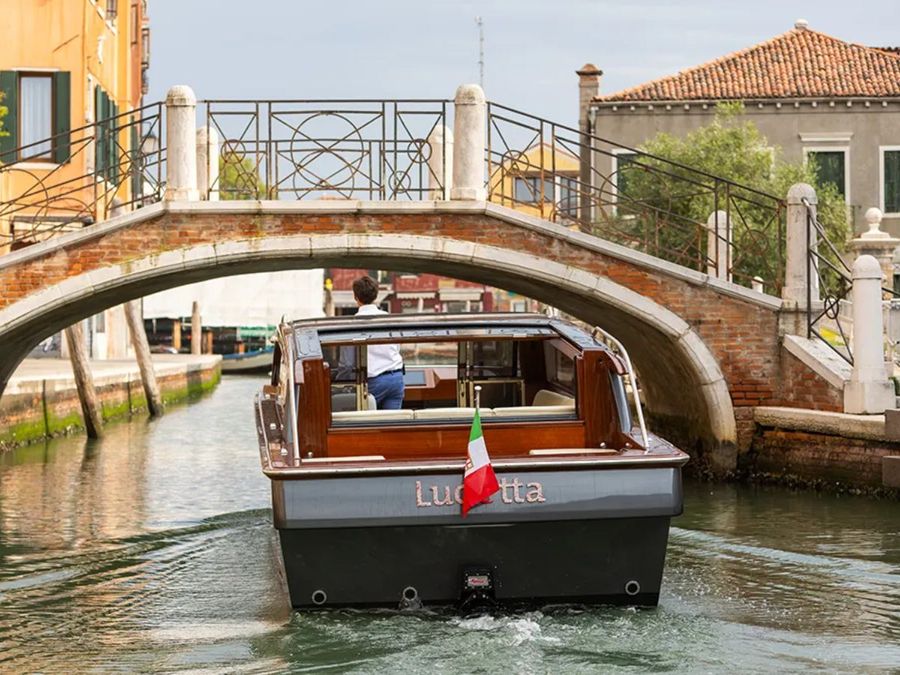
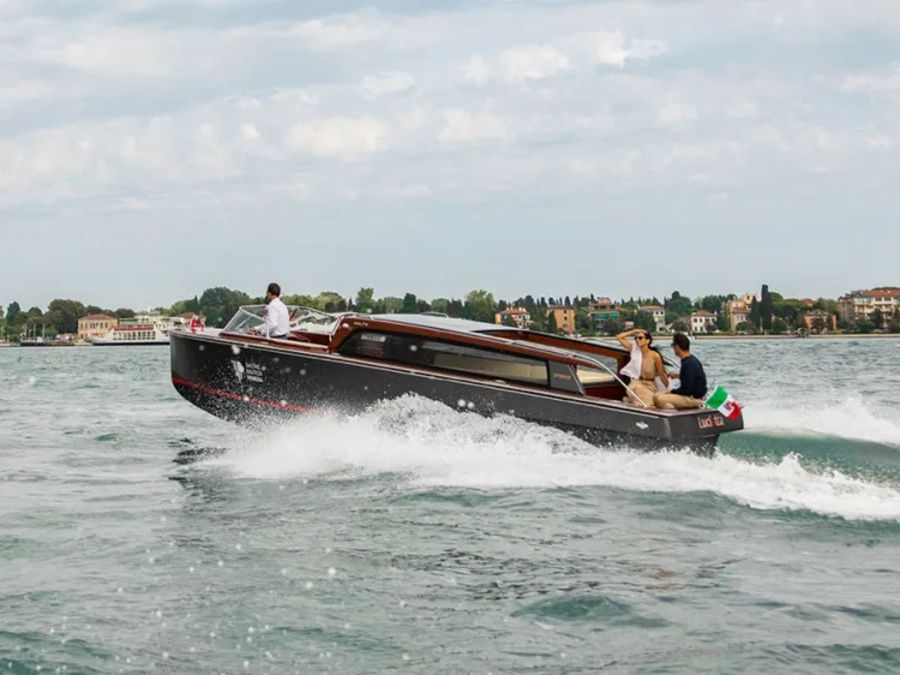
Venice has always been defined by water. The splash of a hull, the groan of an engine, the diesel tang hanging over the canals at rush hour: these are the sounds and smells the city has lived with for generations. At the 2025 Venice Boat Show, something moved quietly along the Arsenale's ancient piers that suggested those days may be numbered. Carbon-hulled, nearly silent, leaving barely a trace on the water's surface, Lucietta announced herself as the city's first fully electric Venetian water taxi.
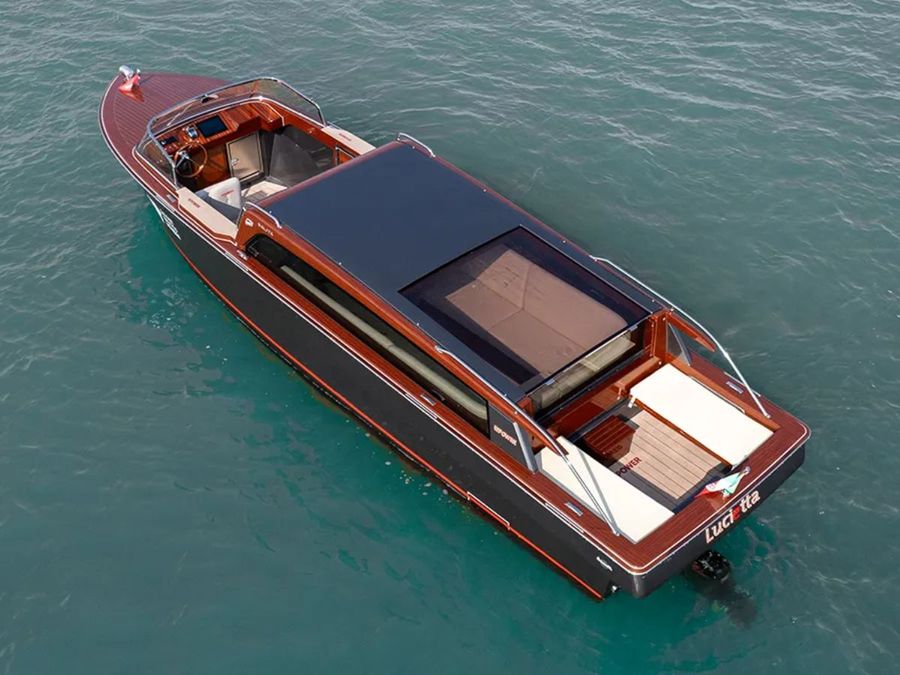
Behind Lucietta is a partnership built on complementary expertise. Nauta Yachts, the Milan-based design studio, drew the lines. Cantiere Serenella, an artisanal shipyard on the island of Murano, constructed her by hand. Swiss energy company Repower provided the financial and technological backing. The result is a 9.3-metre vessel that treats the traditional lagoon water taxi not as a relic to be discarded but as a form worth honouring, then quietly surpassing.
Venice places strict demands on anything that moves through it. Narrow canals, low-clearance bridges, and cramped moorings leave designers very little room to manoeuvre, in every sense. Lucietta conforms precisely to the dimensions the city's geography imposes: 9.3 metres in length, 2.25 metres in beam, and 2.1 metres in height. Working within those constraints, her creators have produced something that feels both deeply familiar and genuinely new.
“She was designed with the city’s DNA in mind,” says Massimo Gino of Nauta Yachts. “We started from original drawings of vintage water taxis, consulted active drivers, and reimagined what a modern vessel could be — one that’s instantly recognisable as electric, but still unmistakably Venetian.”
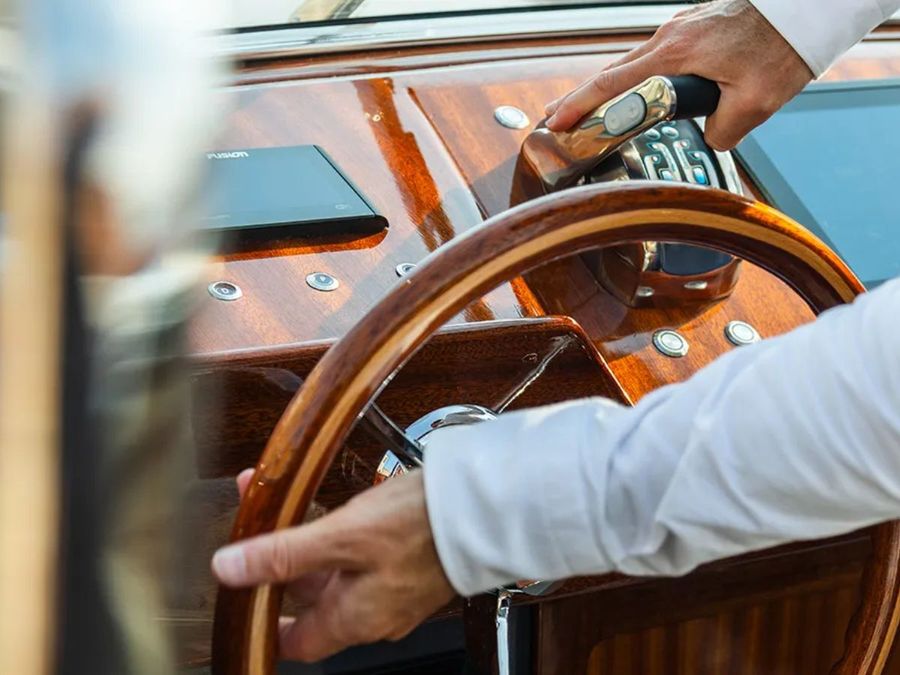
The silhouette carries clear echoes of the traditional cab boats that have worked these canals for decades. A forward helm gives the driver unobstructed sightlines in every direction. A semi-shaded mid-section shelters passengers from the worst of the sun while still admitting a breeze. At the stern, an open cockpit keeps the mood relaxed and social. The proportions are correct, but subtle refinements to the superstructure give Lucietta a clean, contemporary profile that sets her apart from her diesel predecessors.
The drivetrain is where the real departure from tradition lies. A 200-kilowatt electric motor draws from a 180-kilowatt-hour lithium-ion battery pack, giving Lucietta a top speed of 30 knots. In practice, Venetian speed limits mean that figure is seldom relevant. What counts is performance at the measured pace the canals demand, and here the numbers are persuasive. Cruising at 7 to 10 knots, equivalent to roughly 13 to 18 kilometres per hour, Lucietta can complete a full eight-hour working day without returning to a charging point. There is no gear-changing, no exhaust smell, no vibration working its way through the hull. Torque is immediate, the ride is smooth, and the wake is minimal. For a taxi driver trying to hold a conversation with a passenger, or for a canal-side resident trying to sleep past dawn, these are not small things.
Repower has built the supporting infrastructure around the vessel, providing dockside charging stations that draw partly from solar generation. Boat, charging network, and energy management are treated as a single integrated solution rather than separate problems to be addressed in isolation.
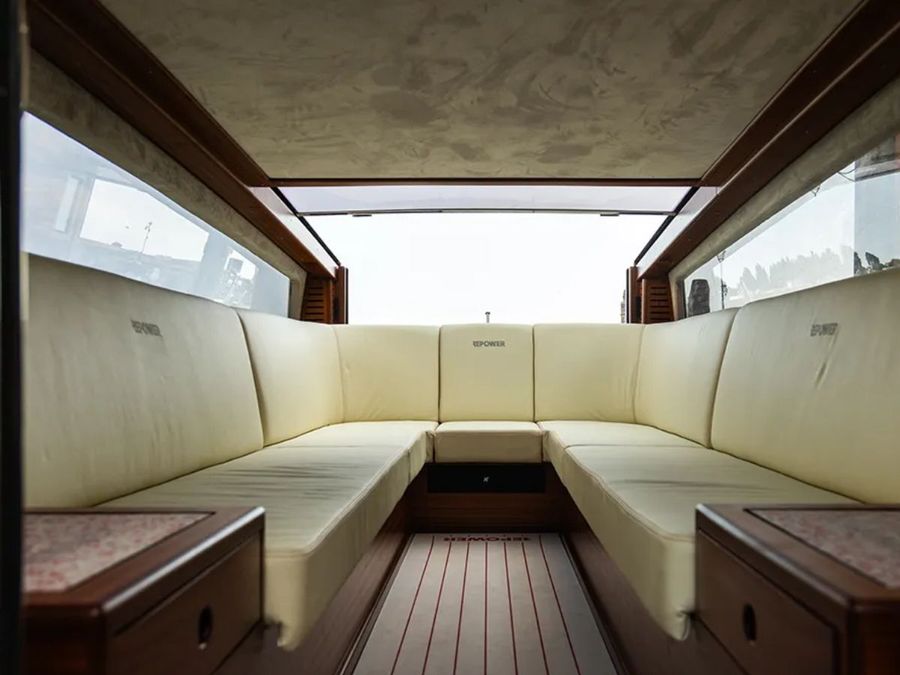
Step aboard Lucietta and the interior reveals a considered tension between practicality and place. Underfoot, synthetic teak offers grip in wet conditions and requires far less upkeep than the real thing. The hull's carbon-fibre construction keeps weight down and rigidity up. The detail that most distinctly ties Lucietta to her home city is found in the glazing.
Panels of recycled Murano glass are set into the interior, the material sourced from furnace waste by Rehub, a Venetian startup that reclaims it and puts it back to work. For a city that has produced fine glass for centuries, it is an apt gesture, connecting a boat built for the future to the craft traditions of the lagoon's past. The rest of the fit-out makes clear that Lucietta is a professional working vessel rather than a concept study. A Fusion sound system, USB charging points for passengers, LED navigation and underwater lighting, a 42-litre fridge, a 56-litre freshwater tank, and a 12-inch Garmin display at the helm ensure that comfort and function are both taken seriously.
Lucietta entered service with a high-profile first assignment: shuttling guests during the 82nd Venice International Film Festival, running from 27 August to 6 September. From there she moves into regular commercial operation, carrying whoever needs to get somewhere across the canals, whether a local resident, a hotel guest, or the occasional film star.
Marcello Bertoldi, CEO of Bertoldi Boats and Repower's nautical partner on the project, is straightforward about what the team set out to achieve. "Lucietta is part of a public transport conversation. It's about giving Venice real alternatives to combustion-powered boats. It's about long-term viability, not just a photo op," he said. The numbers behind that ambition are concrete. Over a year of typical taxi operation, a vessel of Lucietta's type can cut carbon emissions by up to 12 tonnes. Noise pollution falls by 85 per cent. Maintenance costs run approximately 30 per cent below those of a comparable diesel boat. For a city whose canals are under pressure from every direction, those figures carry genuine weight.