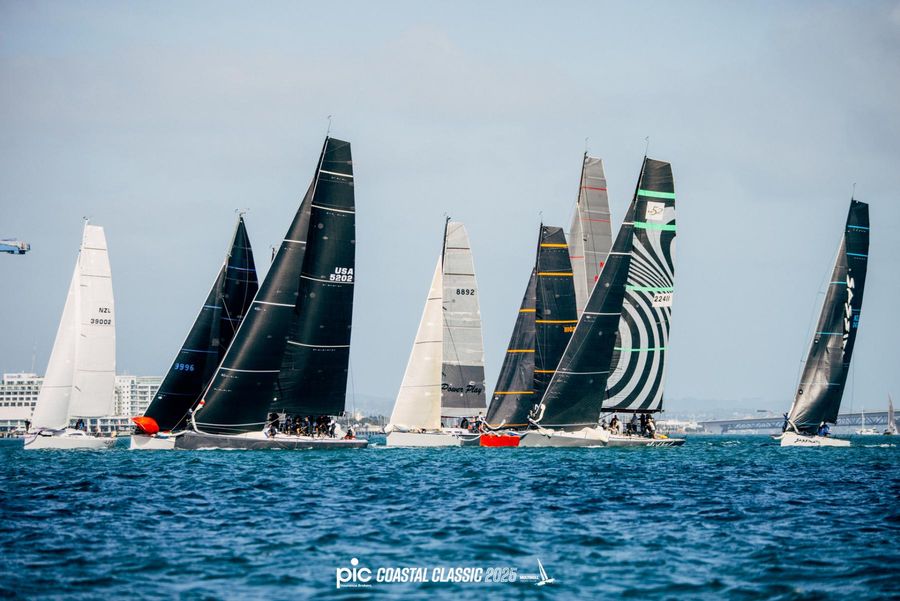
The Waitemātā is wearing two faces this morning. To one side, clear blue sky. To the other, a bank of grey presses down on the horizon. That contrast captures the mood surrounding the PIC Coastal Classic 2025: full of promise, edged with uncertainty.
Forecast models are pointing to 6 to 8 knots at the 10 o'clock start, overcast but dry. Once the fleet clears the harbour and spreads into the Hauraki Gulf, pressure may briefly climb toward 10 knots before relaxing again as boats push north toward Kawau. The concern is what comes later. If the afternoon trend holds, wind in the final stages of the race could drop to around 5 knots, turning this into exactly the kind of contest where minimal drag, clean air, and sharp transitions separate the finishers.
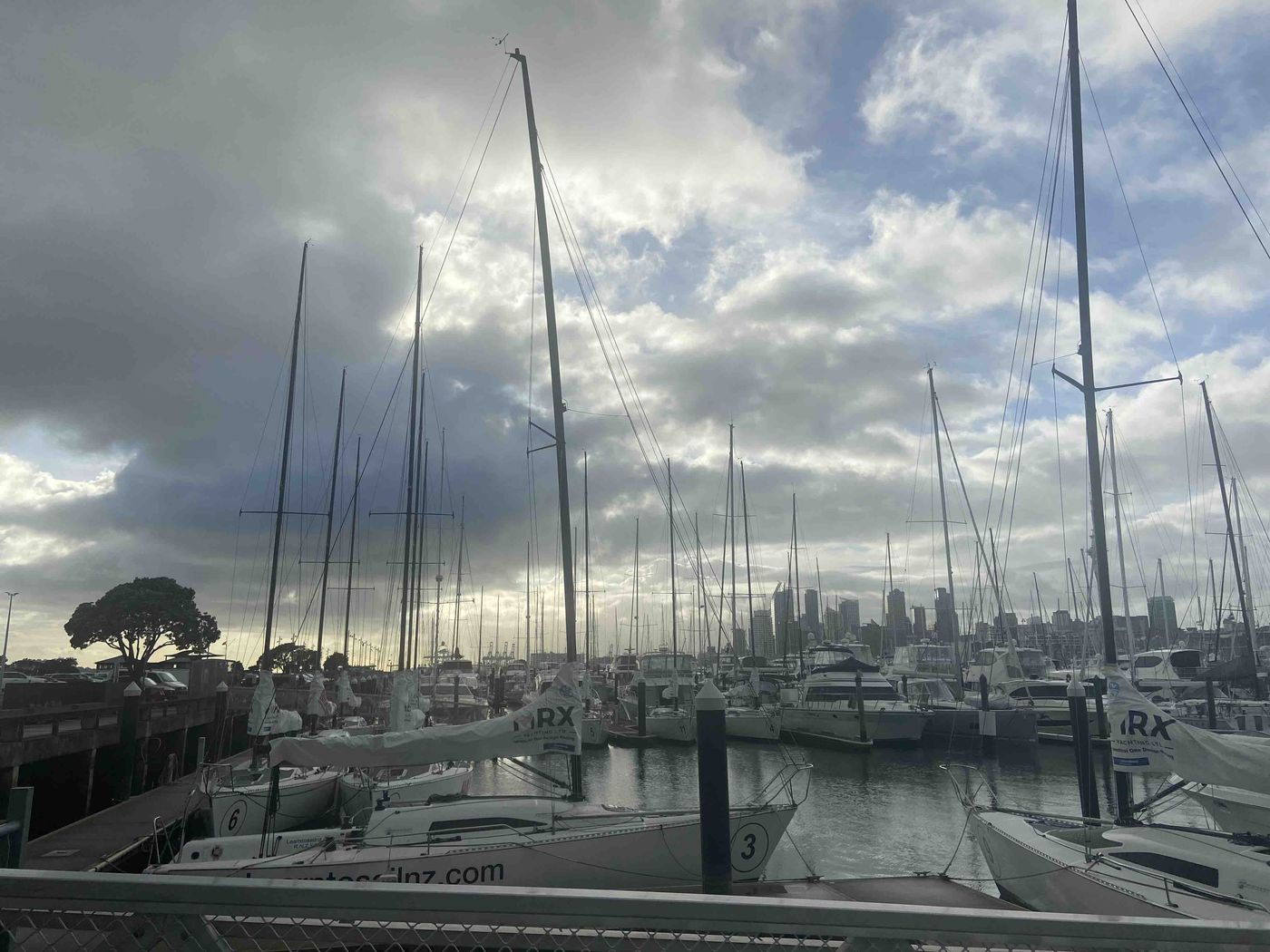
Down at the marina, the atmosphere is charged. Gear is going aboard, checklists are being ticked off, and the shared anticipation of a big fleet on the edge of departure is unmistakable. Lucky's crew were in good spirits the evening before, talking openly about what an elapsed-time result might look like if the lanes open up and the angles cooperate. Privately, though, everyone knows a course record needs more breeze than today's models are offering. The smarter bet is a disciplined start, bow-down through the reaching legs, and patient short-tacking along the shore wherever the shifts demand it.
It is shaping up as a fine morning for younger sailors, too. SV Thistle's crew were spotted moving through the Squadron precinct looking sharp and well-prepared, their meal plan locked in well before dawn. That kind of quiet organisation is, in its own way, a form of boat speed. These are the passages that stay with people for decades.
[video width="848" height="480" mp4="
With 6 to 8 knots across the start line, time-on-distance calculations will lean conservative and the fleet will have room to find pace gradually. Rangitoto Channel will compress the lanes quickly, and the teams that hold pressure rather than burning it through unnecessary tacks will pick up ground. Should that brief 10-knot window materialise in the inner Gulf, look for boats pushing into higher modes, keeping their rudder angles small and protecting their lane. Further north, once the wind softens above Kawau, VMG discipline becomes the defining skill: boats flat, manoeuvres minimal, and height traded for speed only when the numbers make the case.
If the forecasted fade does arrive, the evening runs long. Seven hours was the hopeful early estimate, but a finish before 10 pm is now the realistic target for the quickest boats, with a drawn-out night ahead for much of the fleet. That suits crews who are patient, tidy in their work, and comfortable on a quiet boat.
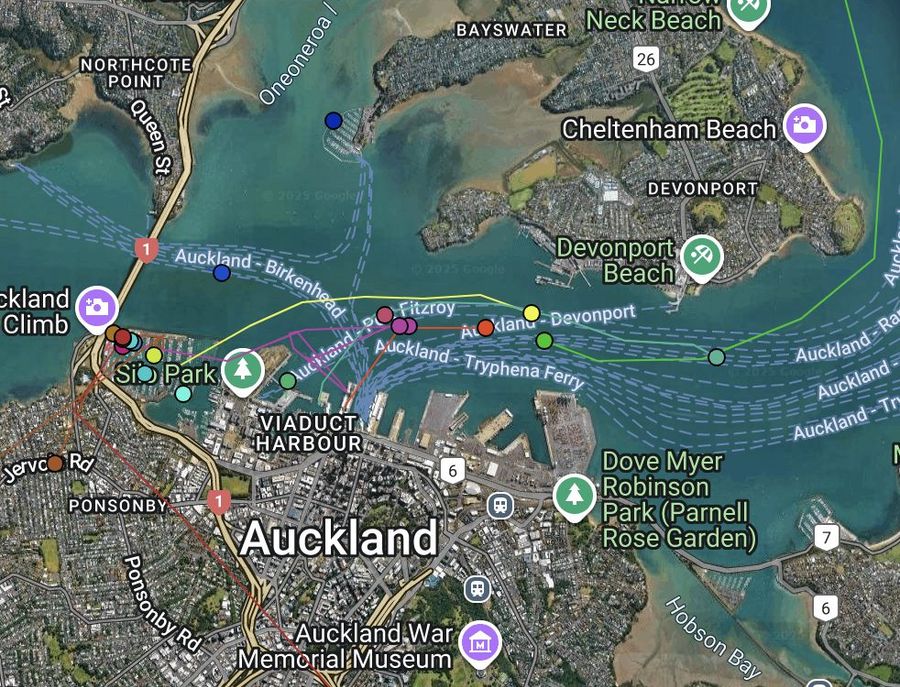
Coverage today is spread across the team. Chris is reporting from Westhaven as the fleet departs, while Kirsten is out on a chase boat on the Waitematā Harbour capturing the start and the opening moves across the Gulf. Suellen is also on the water with a camera, and that material will follow through the day. Once the fleet is running north, the focus shifts to Russell, where finish-line coverage will be ready for the front-runners. The PIC Coastal team also has a drone in the air, and footage from that will come through as the race develops.
A few things worth watching closely once the gun fires. In sub-10 knots, the boats that build speed early and manage to protect it through the first transitions will be difficult to catch. In light air, even half a knot of extra pressure is worth chasing, and the winners will find those narrow bands and stay in them. Tacks and gybes are expensive today, so expect the disciplined teams to keep their manoeuvre counts low. North of Kawau, if the wind steps down as forecast, layline calls will carry disproportionate weight. And keep an eye on Lucky: if any boat in this fleet can convert a soft-breeze day into a fast passage, it is that one, though the conditions will still need to offer something to work with.
Two versions of this race are available. Enough pressure and it becomes a sprint. A deeper fade and it turns into a chess match played over dark water. Either outcome has its own appeal. The PIC Coastal Classic 2025 is on, and the coast is calling.