Leg 3 of the 2026 Doyle Sails Round North Island Two Handed Yacht Race delivered a fast Cook Strait crossing, sharp tactical decisions along the coast, and corrected time margins tight enough to keep crews studying the results long after the finish.
The 220 nautical mile leg from just outside Tory Channel to the Port of Napier got underway at 1pm on Monday. Fresh south-easterlies and short steep seas met the fleet as it pushed clear of the Marlborough Sounds and into Cook Strait. From there the course traced the Wellington coastline east and north, past Cape Palliser, Castlepoint, and Cape Turnagain, then around Cape Kidnappers before the finish off Napier.
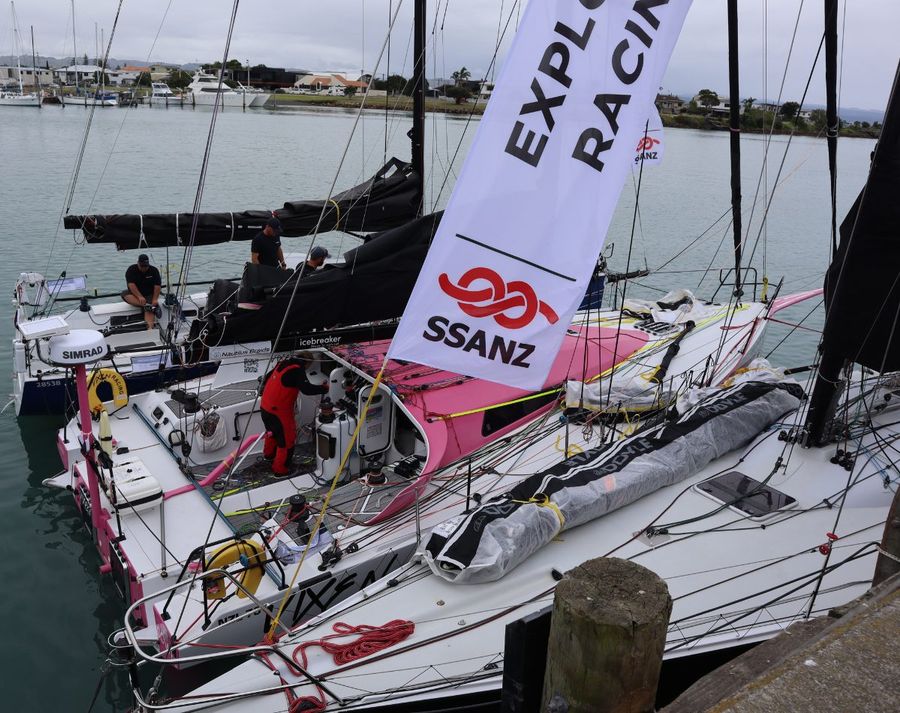
The fleet found its order quickly. The Elliott 50 Explore Racing, sailed by William Goodfellow and Jesse Turner, moved towards the front early, alongside the Davidson 52 Whichway with Bruce Gault and Craig McMillan, the Verdier 40 Vixen Racing sailed by Sharon Ferris Choat and Taylor Edwards, and the Thompson 1150 Motorboat III under Damon Joliffe and Josh Tucker. Tactical splits emerged almost immediately, with some crews holding close to the Wellington coastline hunting favourable current while others pushed offshore for steadier breeze.
By Monday evening Explore Racing had opened a clear gap on line honours and was driving north along the Wairarapa coast. The reaching angles that built up the east coast suited the Elliott 50 well, and Goodfellow reflected on the passage afterwards.
"It was a great leg. It was a little bit bouyant coming out of Cook Strait and across the bottom of the North Island there, but then [we had] a brilliant run up from Palliser through to Kidnappers. We had a great ride. It was a good sail."
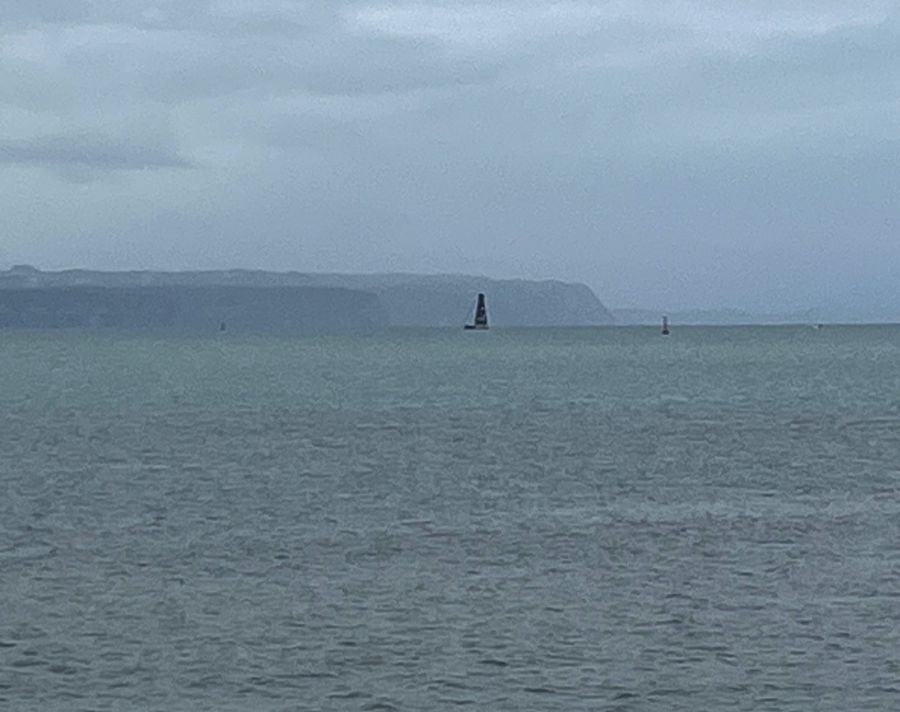
By Tuesday morning the yacht was closing on Cape Kidnappers with Hawke Bay opening ahead. Grey skies sat over Napier, and locals walking the promenade were puzzling over a black-sailed yacht pushing up the coast, asking whether it was famous, while other vessel blips showed across their AIS monitors.
At 10.57am on Tuesday Explore Racing crossed the finish line off Napier in 21 hours 57 minutes 36 seconds, taking line honours for the third consecutive leg.
Out front Explore Racing had raced largely unchallenged, but the contest behind it was another matter entirely. Motorboat III and Vixen Racing shadowed each other for much of the passage, rarely separated by more than a few miles. A portion of Motorboat III's advantage had been built along Wellington's south coast, where Joliffe and Tucker found and worked a powerful tidal stream running close inshore.
"There's a river of current that goes across the south coast. And so when you find it, you start and just tack back and forth. About four or five knots of current. That's what we did. Huge gains to be made."
Getting the most out of that current was hard work given the sea state along that stretch.
"But it was a lot of work trying to tack in three metre breaking seas. It's quite tough on the boat. Ten or twelve tacks right in there in this little river. But we probably made a four mile gain out of that against the guys who just went out wide."
The gain was real but not conclusive. Vixen Racing stayed in the hunt through the closing stages, and Ferris Choat identified exactly where the lead changed for the last time.
"We lost the lead [against Motorboat III] coming around Cape Kidnappers."
She was enthusiastic about the quality of the contest itself.
"It's brilliant racing; it's when you've got that one manoeuvre, you're in front, the next manoeuvre, they're in front. It's really good. And you can monitor the speed, and the boats are completely different, but they're very similar speed, which is great."
Motorboat III crossed in 1 day 23 minutes 41 seconds, with Vixen Racing arriving around two and a half minutes later. Within an hour the two crews were sharing toasted sandwiches and drinks. On corrected time the Thompson 1150 secured overall PHRF victory for the leg by 9 minutes 35 seconds.
With the finish barely behind him, Joliffe was measured about what the result might mean for the overall standings.
"We think we've done enough, but time will tell. The boats we're watching are Ragnar and Kick. These are the ones with the tight battle overall."
Among the broader fleet Whichway turned in a solid result. The Davidson 52 finished fifth on line honours and claimed the Division 2 win on corrected time, posting 1 day 44 minutes 4 seconds to finish seventh overall on PHRF.
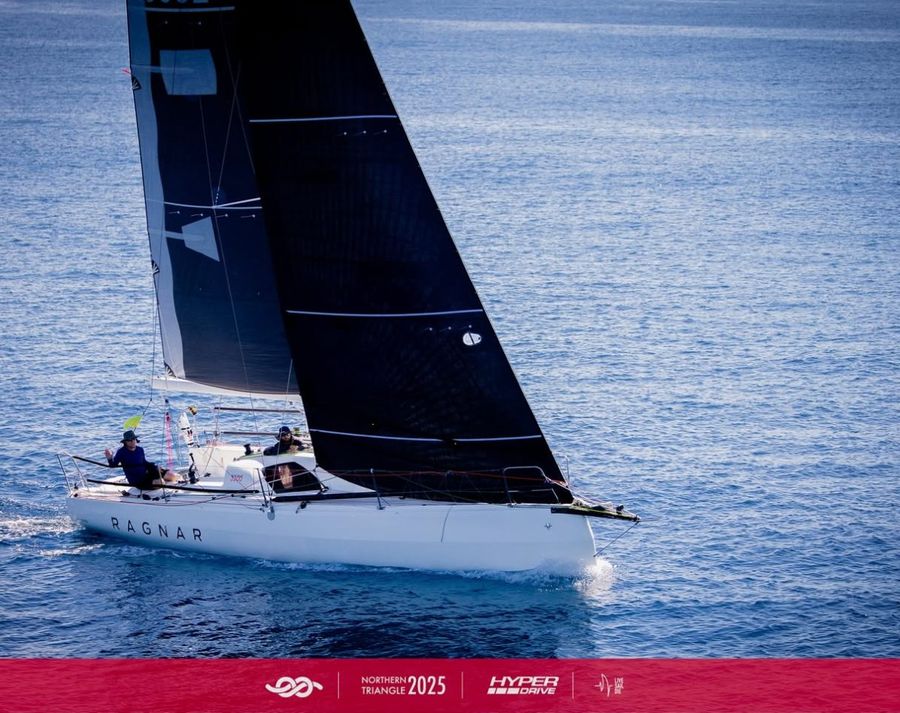
The Sun Fast 3300 Ragnar, sailed by Brett Elliott and James Glidden, put in one of the stronger results across the divisions. Racing in Division 3, Ragnar finished ninth on line honours and fourth overall on corrected time with a time of 23 hours 50 minutes 25 seconds. Further back, the Ross 930 Hotdogger, raced by Nigel Bish and Sinisa "Sin" Grujicic, secured the Division 4 win and tenth overall on corrected time.
Divisional margins across the leg were often very fine. In Division 2, Whichway edged the Elliott 10.50 Motorboat 2, sailed by Alan Quere and Vincent Trinquet, by just 2 minutes 41 seconds. In Division 3, the Ross 9.1 Physical Favours, sailed by Ryan McCready and Andrew Child, finished only 19 seconds ahead of the Division 2 Elliott 1350 Tourer Focus, crewed by Craig Fraser and Rob Croft.
The leg was as physically demanding as it was tactically complex. Ferris Choat, who is building towards a Trans Tasman Solo campaign in May of this year, had arranged a four hours on, four hours off watch rotation with Edwards. The pace of the racing made that plan largely theoretical, and she managed around one hour of sleep across the entire leg.
"That was a real nice dream."
By Wednesday morning the final finisher had come across the line and the fleet could rest before preparing for the next stage. Leg 3 rewarded bold routing, smart current work, and sustained boat speed through demanding conditions, from the exit out of Cook Strait to the closing battle off Cape Kidnappers.