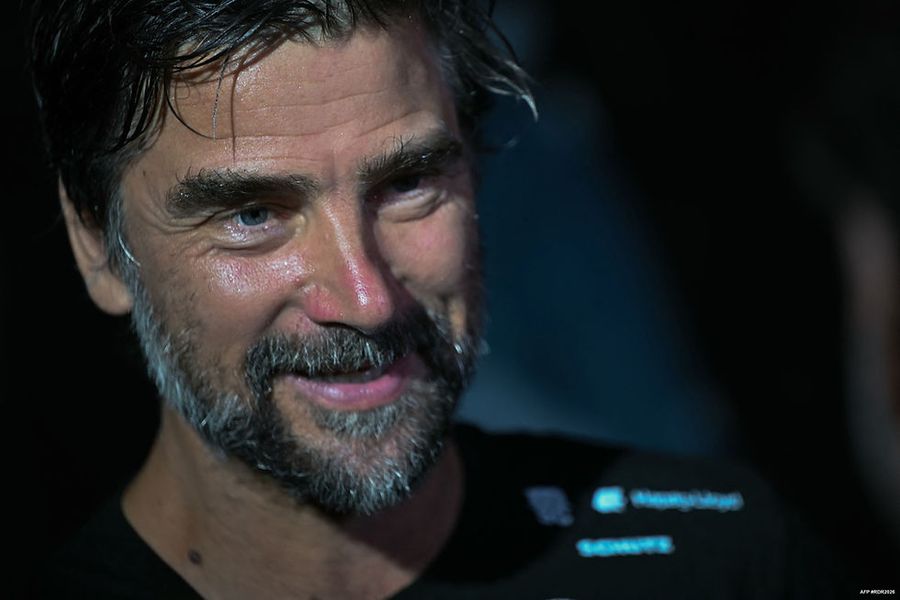
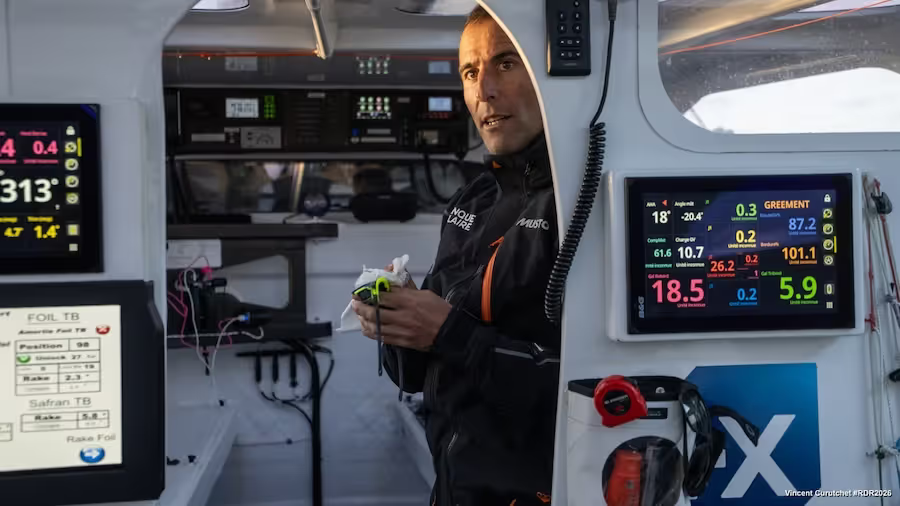
Armel Le Cléac'h has broken his silence on the capsize that ended his Route du Rhum campaign aboard the Ultim Maxi Banque Populaire XI, giving a detailed account of the accident, his rescue at sea and the days that followed his arrival in Norfolk, Virginia.
Reunited with his wife Aurélia Le Cléac'h and the Team Banque Populaire sports director on the US coast, the French skipper released a lengthy video and statement setting out what happened, from the moment the boat went over to his eventual pickup by a cargo ship days later.
"Before the accident, everything was going well on board, I think we'd had a good start to the race, me, the boat and the weather team, we were in the match with SVR-Lazartigue, with Tom (Laperche), we were very close," he said. He had been preparing to tack ahead of an approaching front and had already reduced sail area when a violent gust struck. His team later told him wind speeds had reached 40 knots.
It happened at night. The boat went onto its side within seconds.
"Even the anti-capsize systems weren't enough to compensate for how brutal that moment was," Le Cléac'h said.
His first instinct was to grab hold of something, scrambling into the entrance of the central hull companionway before the boat rolled fully over. Alarms sounded, then came the blackout. He triggered his distress beacon, pulled on his survival suit and retrieved the safety equipment stowed for exactly this scenario. But the interior was built from carbon, so the satellite signal from his emergency phone struggled to get through, delaying his first message ashore confirming he was safe and unhurt.
"It's like a nightmare because it wasn't planned at all," he said. "Everything flips in a few seconds. There's confusion. There's a feeling of having ruined everything, enormous disappointment, especially as at that point I wasn't out of danger yet."
Told a cargo ship would reach him in seven to eight hours, he forced himself to eat and drink, aware the transfer would be physically demanding. It was the first time the crew of the cargo vessel Palexpo had carried out a rescue at sea, and rough conditions and sustained wind made several approach attempts difficult without risking further damage to the boat or danger to Le Cléac'h himself.
He eventually went into the water, the cargo ship some twenty metres away, held afloat by a rope until he could be hauled aboard.
"There's inevitably relief, but the phase after that is decompression and a feeling of being shattered," he said. He spent six days at sea with the Palexpo crew, who he described as treating him with great kindness, and says the experience taught him a great deal.
He now faces a debrief with his team to understand exactly what went wrong. For now, though, he says he is simply taking things day by day.