Rough conditions on Lake Taupō made for a bruising second round of the NZ Offshore Championship, and for one crew the day ended not at the finish line but in the water.
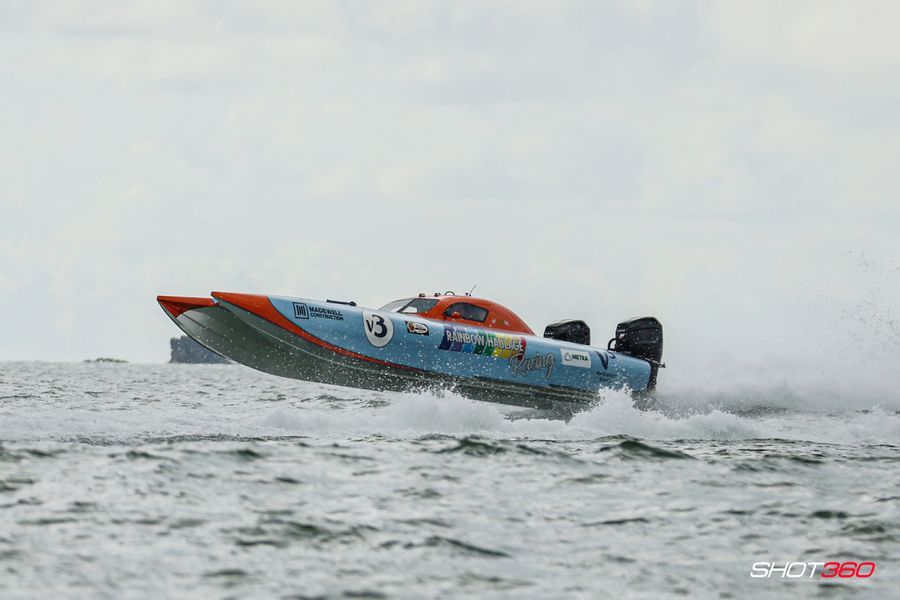
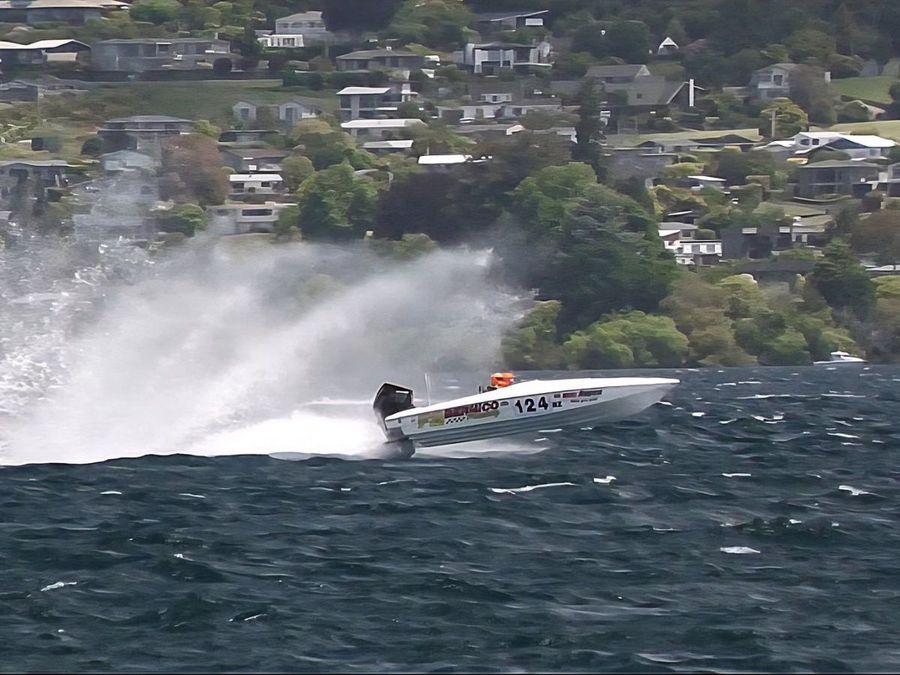
The offshore racing fleet arrived at Lake Taupō last Saturday for Round Two of the NZ Offshore Championship to find the lake in an unforgiving mood. Short, steep chop punished hulls and crews alike, leaving many competitors ashore afterwards nursing sore backs and heavy arms. The post-race atmosphere mixed laughter at the wild ride with genuine relief at having made it back. One long-time follower of the event drew comparisons to a late-eighties Taupō race that served up similarly brutal conditions, observing that the lake's fresh water is about the only concession it tends to make.
Grant Walker captured the first race in its entirety on video.
For the majority of the fleet, the day amounted to hard racing and hard-won yarns. For one team, however, it turned into something altogether more serious. A 5.7-metre powerboat sank before Race One had even started, taking both crew members into the water. Neither was injured, and both swam ashore safely. Eight days on from that moment, the vessel has been recovered.
The sinking occurred just before midday, close to the milling area off Three Mile Bay. According to an Offshore Powerboat spokesperson, a wake lifted the boat and drove it into the transom of another craft. The bow dug under, the cockpit filled rapidly, and the vessel went down in a matter of moments. Because it all happened behind the milling line, most onlookers were unaware of the incident until the two crew members reached the shore.
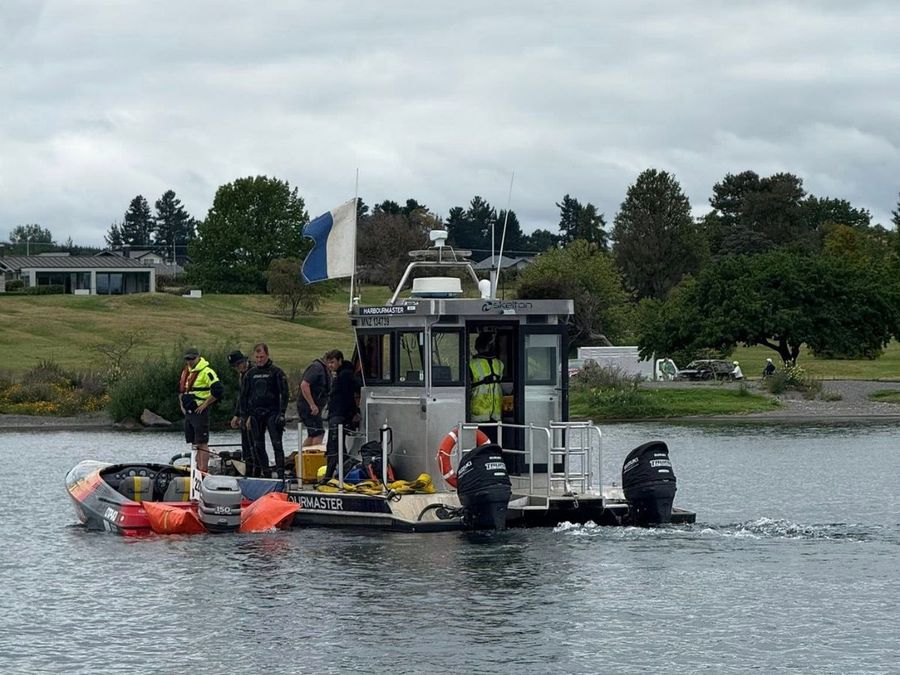
Harbour Master Jamie Grant was notified promptly, and Maritime NZ was also informed. Support teams moved quickly to assess the situation. Sonar searches identified three possible contacts sitting in 25 to 35 metres of water, but recovering a sunken vessel from Lake Taupō is far from a routine operation. The lake sits 360 metres above sea level, a factor that complicates dive planning considerably, and Worksafe requirements meant a bell-dive setup was necessary. Those two constraints defined the shape of the recovery effort from the beginning.
Fuel risk was assessed as low throughout. The sealed underfloor tank contained around 80 litres and remained secure, with no surface sheen detected at any point. Protecting the lake's water quality was treated as a priority by everyone involved, and the recovery plan was designed to keep disturbance to an absolute minimum.
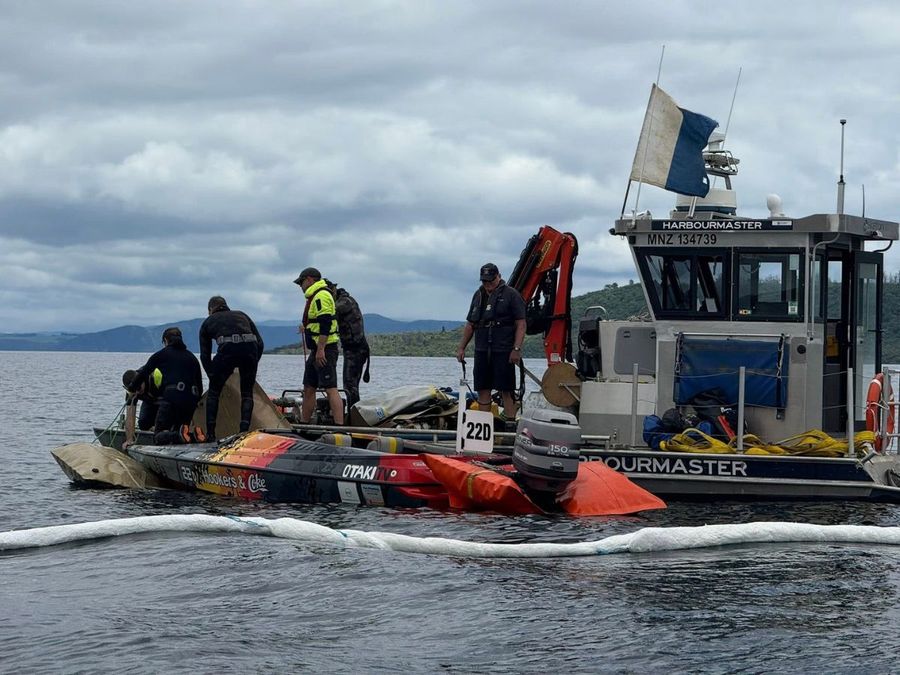
New Zealand Diving and Salvage led the lift, working in close cooperation with the Harbour Master's office and supported by kaimahi from the Tūwharetoa Māori Trust Board. Once the vessel's position on the lakebed was confirmed, floatation bags were attached and it was brought to the surface in a controlled ascent. The boat came up intact, no fuel was released during the operation, and officials subsequently confirmed that environmental impact had been minimal.
Elsewhere across the fleet, the day produced close racing, a handful of mechanical casualties, and the kind of hard-earned stories that only a rough day on Lake Taupō can generate.