There is a boat at the Auckland Wooden Boat Festival that rewards a second look. Walk past Lady Rebecca without stopping and you will have missed something genuinely interesting, because she is no ordinary wooden vessel. She is a Swampscott dory, and understanding what that means takes you back nearly two centuries, to a stretch of New England coastline that shaped one of the most practical small boat designs ever built.
Swampscott sits roughly fifteen miles northeast of Boston on the largely rocky Massachusetts shore, a place of exposed headlands, small sandy beaches, and open water that faces straight into Massachusetts Bay. It was never a sheltered harbour. Fishing boats here were launched through surf and dragged back above the tide line at the end of the day. That demanding environment, around 1840, led Theophilius Brackett to refine the basic dory form into something lighter and more capable for beach-launched fishing and lobster-pot work.
The result was a boat that looked elegant but thought practically. Where the heavy, slab-sided Banks dories of the Grand Banks offshore fishery prioritised load carrying above all else, the Swampscott version was altogether more refined. A narrow flat bottom allowed her to sit upright on the beach rather than lolling to one side. Her topsides flared outward with a rounded shape that delivered buoyancy when punching through breaking surf. A small tombstone stern gave control when running back to shore with the sea chasing behind her.
Typically built between fourteen and eighteen feet in length, these boats were rowed by one or two oarsmen. Light enough to manhandle up the beach, they were also capable enough to handle genuinely exposed coastal water. Every feature of the hull had earned its place through experience rather than theory. Because she heeled easily, a fisherman could roll a heavy catch aboard over the gunwale rather than heaving it upward. The shallow draft and absence of a deep keel meant surf could not trip her sideways. The flared topsides added stability as she heeled and kept reserve buoyancy available for rough conditions.
Over time, sailing rigs found their way onto the Swampscott dory. Simple arrangements, often a leg of mutton mainsail paired with a small jib on an unstayed mast, transformed the working boat into an affordable recreational sailboat that retained the ability to handle open water. The design came to be described as the aristocrat of the dory family. It rows more easily than the heavier working variants, tracks with more precision, and handles with a balance that larger, more purely functional dories rarely achieve.
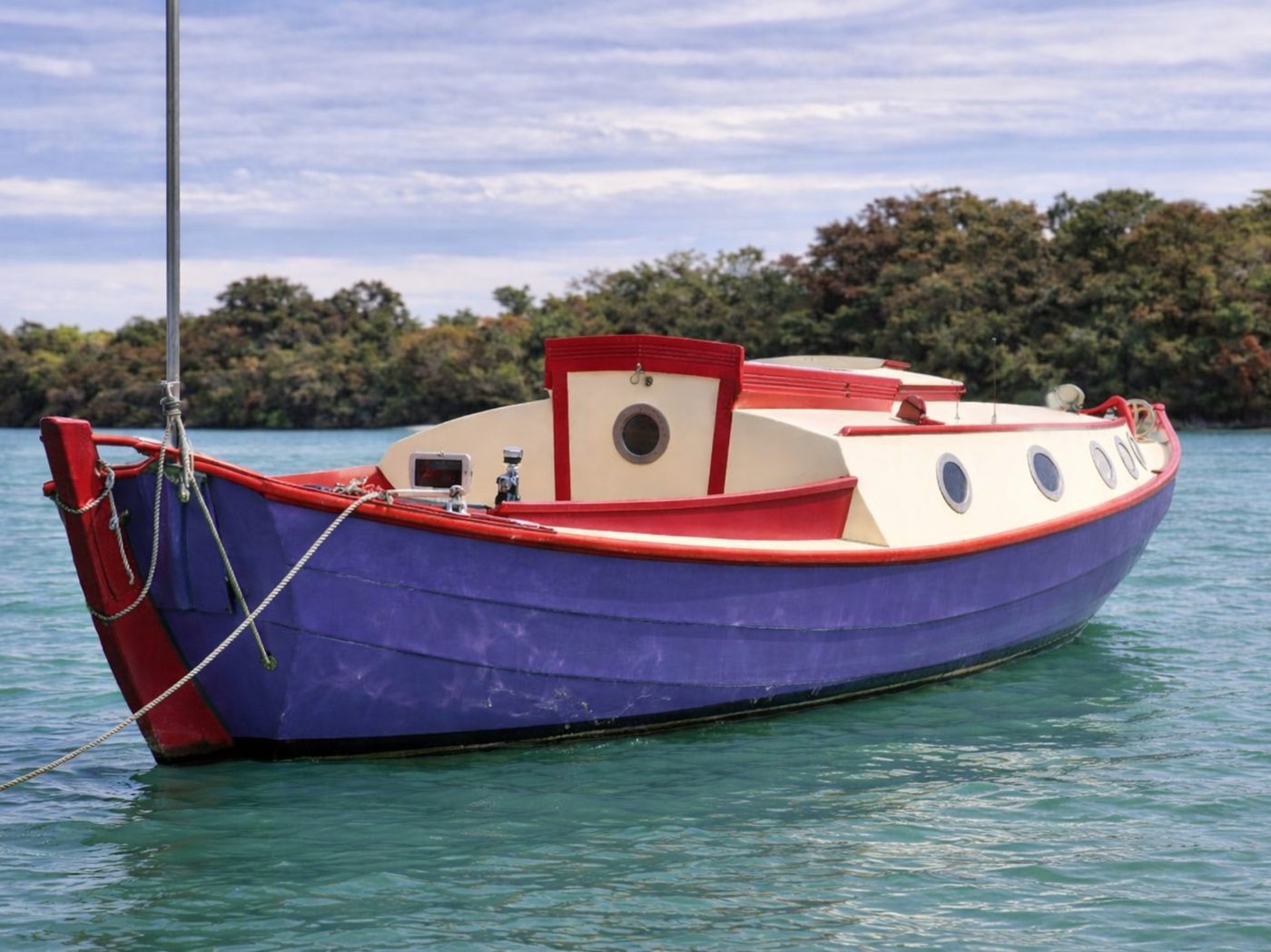
For New Zealand, the concept is not merely a historical curiosity. Surf beaches, exposed headlands, and a culture of rowing and sailing in open coastal conditions mean the Swampscott dory remains relevant here in ways that go well beyond nostalgia. Lady Rebecca reflects that directly. Rebuilt by Roger Mills, who added her cabin and rig (it should be noted that this Roger Mills is not the Boating New Zealand photographer), she measures 9.14 metres overall with a beam of 2.75 metres. Her flat bottom remains central to the design, and twin drop keels have been fitted to improve windward performance under sail while preserving the shallow draft that the original concept demands.
She is neither a harbour racer nor a heavy cruising launch. Lady Rebecca occupies her own ground, a capable, beach-friendly boat that carries the logic of the Swampscott dory into a thoroughly local context. At the Auckland Wooden Boat Festival, she serves as a reminder that some of the most enduring wooden boat designs were not conceived in drawing offices or built for show. They were worked out on exposed beaches by fishermen who needed to get through the surf, do their work, and come home again.