I spent much of the 2020 lockdown watching Sailing La Vagabonde from the first episode, when Riley Whitelum and Elayna Carausu were learning the ropes on a production monohull in the Mediterranean. Somewhere between Greece and the Panama Canal Kirsten and I told our kids we were going to buy a boat and live on it. We did, although six years on we’re still in New Zealand, mostly because on a boat, something always needs fixing!
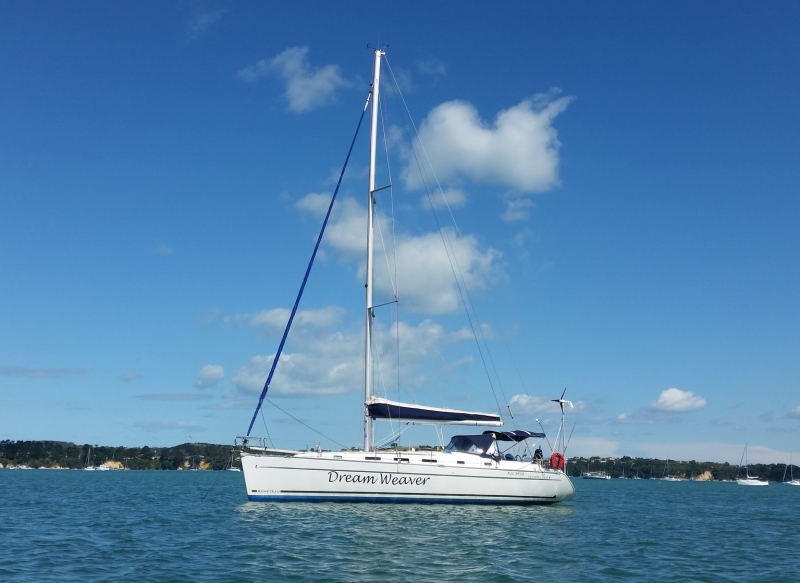
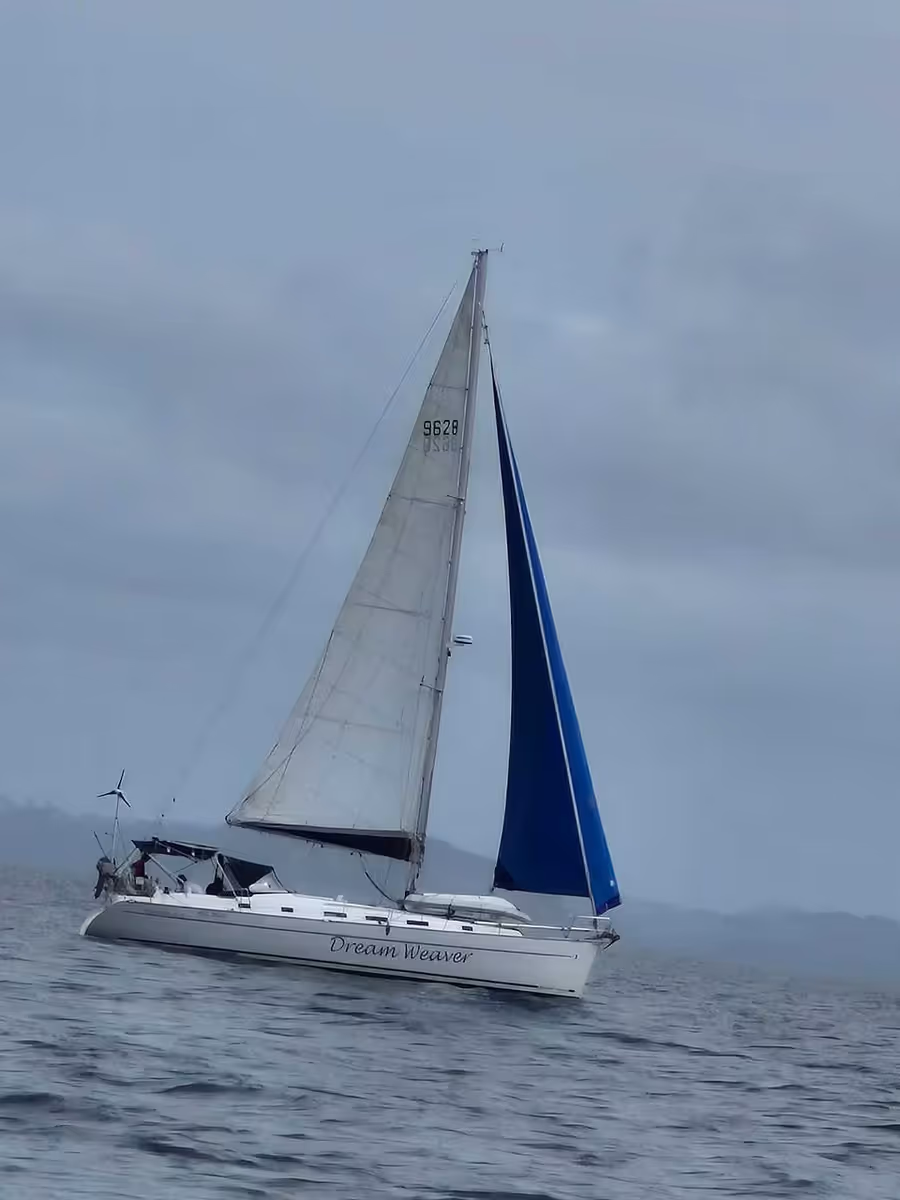
So it was a strange moment to learn that the boat which started all of that will be on the start line of the 2026 PIC Coastal Classic next Friday. She sails as Dream Weaver these days. Ian Ashton and his family have owned her coming up nine years, and she has done every rally to Russell since 2018.
Pulled from sale over a currency mistake
The Ashtons had been looking for a bluewater boat for some time. The dream was to fly to the Med, buy something there and sail it home over a couple of years while the kids were still at intermediate.
As it turned out, the boat was already here. Ian’s wife was at-home sick and scrolling through Trade Me when she found a listing in Whangārei that ticked most of their boxes. They took the next day off and drove north.
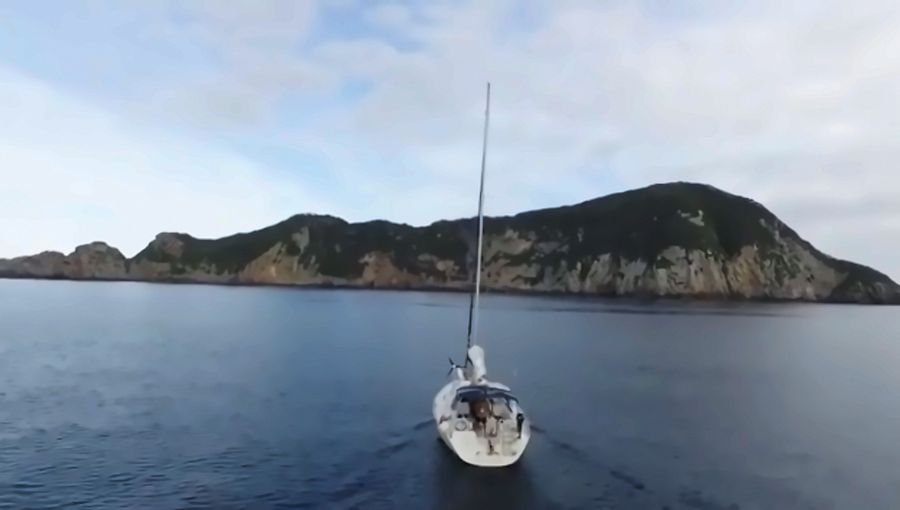
“We didn’t realise until we’d actually seen it that it was La Vagabonde,” Ian says. “It still had the name on the back.”
They agreed a deal with the broker, subject to survey, only for the boat to be pulled from sale. She had been advertised in New Zealand dollars when the price should have been in Australian dollars.
Riley and Elayna then looked at raffling her. With most of their audience in the United States, where raffle law changes from one state to the next, the idea went nowhere. Instead, the Ashtons put forward their own pitch for why the boat should be theirs, built largely around the Scout troop Ian helps lead. He had been taking young Scouts sailing for years, letting them sleep aboard, steer and pull the ropes, “which becomes one big classroom.”
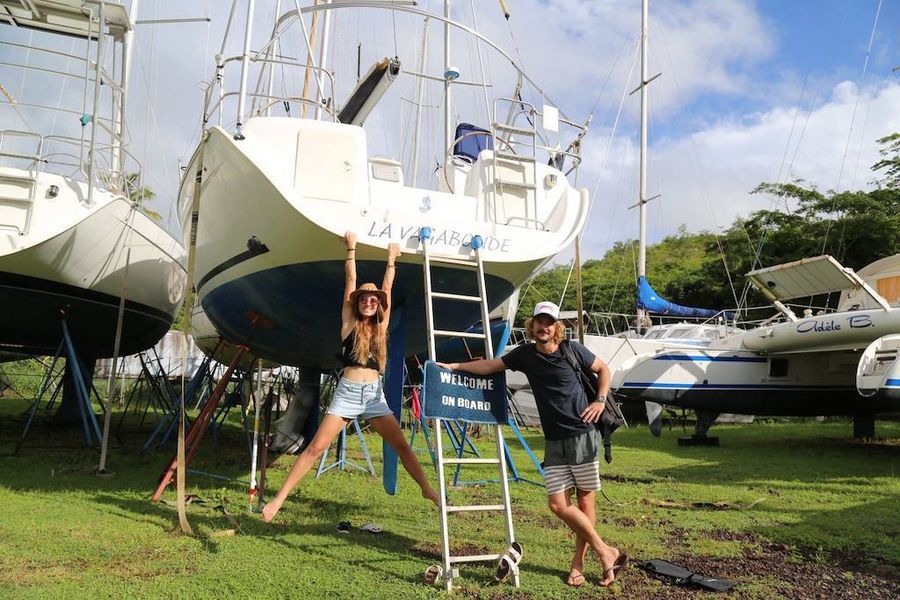
The pitch won. The one condition was a new name, since La Vagabonde belonged to the YouTube brand rather than the hull.
“It’s bloody hard trying to pick a boat name,” Ian says. “It’s like trying to name your kids.” With two children who wanted a say, it took a while before everyone settled on Dream Weaver.
A cruiser that keeps turning up in Russell
Ian missed his own boat’s first Coastal Classic. He was offshore on a delivery in 2018, so his brother took Dream Weaver north with crew aboard. Ian has skippered her every year since.
She’s a Beneteau Cyclades 43.3, a roomy Berret-Racoupeau design drawn largely for the charter market. She’s heavy, and she won’t plane. Ian has never been tempted to race her, partly because of what a racing endorsement would do to the insurance and partly because he knows she’d be making up the numbers.
“We don’t do it for the race,” he says. “We do it for the trip back.” The Coastal has always been a boys’ weekend, and the boat has to come home in one piece. “If we break the boat this close to Christmas, I’d never hear the end of it.”
For all that, her results hold up well. She was 16th in 2018 and ninth a year later. In 2020, only three of the 21 rally boats reached Russell. Dream Weaver was one of them, finishing third behind the Ashtons’ old Young 88, Driving Force. She was fifth in 2023. In 2024, with three boats retired and three non-starters, she was the only rally boat to finish and took the division.
Part of that comes down to how the boat is run. Everyone is on deck for the start and the first few hours. After that, two crew at a time go below for two or three hours’ sleep. “Otherwise you’ll end up tired and all fall asleep at the same time,” Ian says, “which is not a good look.”
He speaks from experience. The only Coastal his crew have ever abandoned was years ago on the Young 88, before trackers. After a long beat up the coast, the whole crew nodded off near Whangaruru, south of Cape Brett, and they put in there for safety. Only later did they find out they had been leading their division.
“We’re the invaders out there,” he says. “The sea always wins.”
An inner forestay now, and the islands in 2028
Most of this year’s preparation is routine. Part of the deal for crewing the Coastal is doing some maintenance, so the engine gets its annual oil change. The hull was scrubbed on the floating dock last week. The folding prop fitted last season has finally had its Propspeed, around a year later than planned, and the lower cap shrouds were replaced last year.
The dodger has new clears, although Ian hadn’t intended to replace them yet. Two Coastals ago his brother put a knee through one, it spent a year held together with patches, and last year he finished it off.
The bigger job is on the rig. Ian has fitted an inner forestay and will have the bottom termination spliced and in place before the start. The problem he wanted to solve is familiar to plenty of masthead-height cruisers sailing in a breeze. With two reefs in the main and the headsail rolled to its second or third mark, the rig pumps because the jib’s centre of effort sits too high. A storm jib or small staysail on the inner stay lowers the sail plan and settles the mast.
A friend with a sister ship made the same change before heading to the South Island last Christmas. After a rough trip, he told Ian it was “an absolute game changer.”
The forestay is the first step in a longer refit. A hard top, solar arch, davits and running backstays will follow. Ian also wants to reroute the twin backstays, which currently cut across both helm stations. All of it is aimed at a Category 1 certificate and a trip to the islands in 2028, sailing in company with friends and possibly continuing on to Vanuatu.
Five aboard, and a beat in the forecast
Five crew will sail this year. Ian’s brother is back, along with long-time crewman Chris Yates and fellow Scout leader Pete Longman. The fifth is Luke McCarthy, who did his first Coastal Classic on Driving Force at 14. He’s 25 now.
Ian checked the long-range models earlier this week and isn’t expecting an easy ride. “We’re going to be looking at 15 to 20 on the nose the whole way,” he says.
There are six boats in the rally this year. Ian expects Adrian Percival’s Lavranos 44 catamaran, Lady Nada, to beat him. The two go back to their Pied Piper days, before Ian moved to the Young 88 and Adrian moved to multihulls. Ian names Tiki as the boat to beat.
The trimaran that didn’t make it
Ian still talks with Riley from time to time. Riley and Elayna have moved on from their monohull to a catamaran and then to a Rapido 60 trimaran. When it looked as though the trimaran might reach New Zealand this spring, Ian suggested Riley bring her to the Coastal.
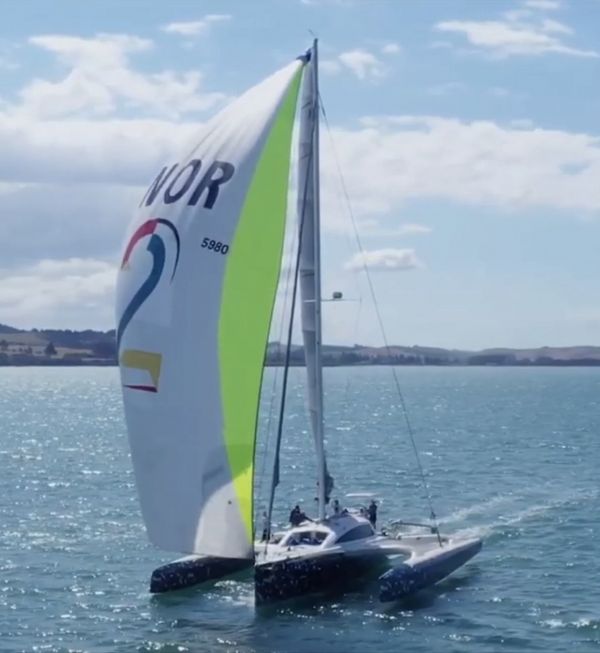
Riley liked the idea, but the timing didn’t work. There will still be a Rapido 60 in this year’s fleet, Romanza, and it’s the same boat Riley and Elayna test-sailed on the Waitematā before ordering their own.
Room for more
This year’s fleet passed 100 entries, although Ian can remember Coastals with more than 200 starters. He would love to see the rally grow. He has been talking with the organisers about ways to bring the cruising fleet together, including a WhatsApp group so crews get to know each other before the start gun.
His advice for anyone weighing it up is simple. “Just do it, have some fun.”
Late entries are still being taken. First-timers can use the race’s concierge service to get through the paperwork, and last year’s start shows what the harbour looks like when the fleet heads north.
Dream Weaver may also be out and about again in January. Ian says the Evolution Sails Kawau Classic over Auckland Anniversary Weekend is “highly possible”.