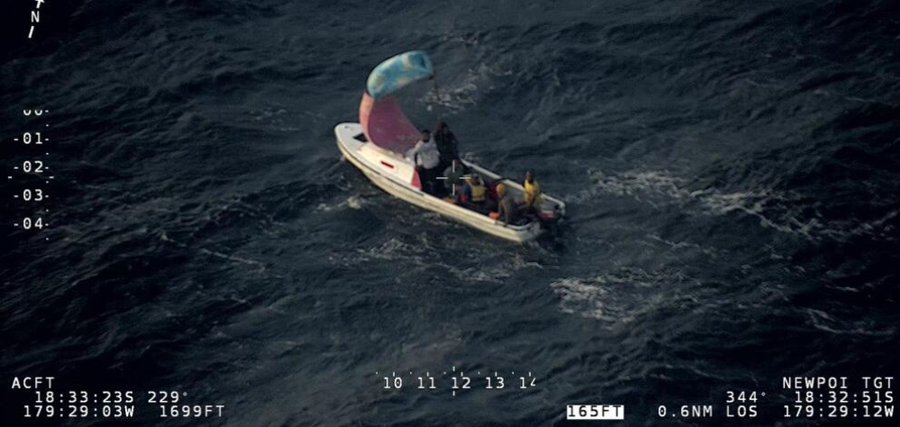
La Vagabonde's Riley talks about safety, affordability and what Starlink's new international plans mean for cruising sailors.
A lot of cruising sailors have come to treat Starlink as part of the safety kit, not just a nice-to-have. From 17 August, the rules around using it offshore get a lot more restrictive.
Riley Whitelum, who sails aboard La Vagabonde and shares the voyage through the Sailing La Vagabonde YouTube channel, has appealed to Starlink to work with cruising sailors as the company rolls out its new international Roam policy. He's not calling for a boycott. Starlink, he says, has transformed communications aboard cruising boats, letting crews pull current weather, reach doctors or technicians, and stay in touch with family from hundreds of nautical miles offshore. It's precisely because that capability matters so much to him that the rising cost of using it internationally has got him worried.
Anyone who joined Starlink from 14 July is already on the new terms. Existing customers move across on 17 August 2026, and from that date Roam Unlimited allows up to 30 days of use outside the account's registered home country at a time, a limit confirmed in Starlink's own online guidance. For New Zealand yachts planning to cruise offshore, that's the number to know.
Starlink offshore cruising changes on 17 August
A customer's home country, in Starlink's terms, is wherever the account is registered. There are two exceptions: the US and Canada are grouped as one region, and a large bloc of European countries counts as another, so travel within either group doesn't trigger the international clock. Every other country, New Zealand included, is treated on its own.
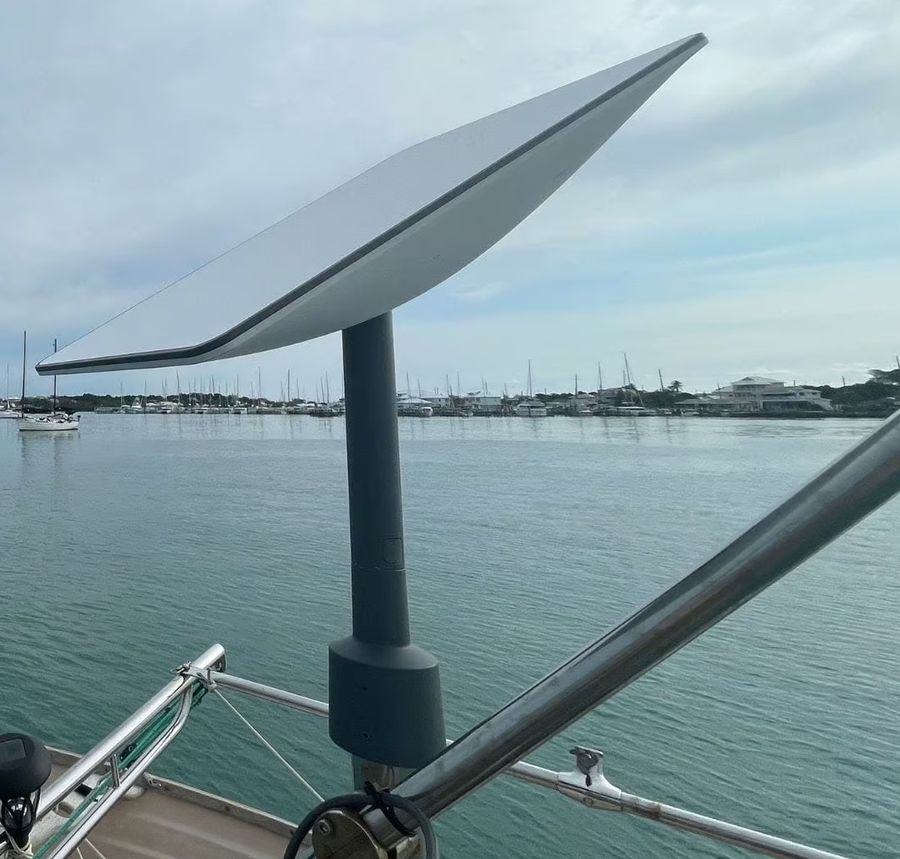
That's what makes this change land differently here than it does for a European sailor island-hopping the Mediterranean. A New Zealand registered cruiser has no equivalent multi-country roaming zone, so the moment the terminal is used outside NZ waters, the 30-day international allowance under Roam Unlimited starts running.
Once those 30 days are used, Starlink offers three ways forward: upgrade to a Priority plan, localise the account to the country where the yacht now is, or sail home, which resets the clock. None of those options map neatly onto how a yacht actually moves between Pacific nations.
Riley Whitelum asks Starlink to listen
Sailing La Vagabonde has spent years documenting ocean passages and international cruising, which is a big part of why Whitelum's comments have landed with sailors. He's also measured about it rather than swinging punches. "This certainly isn't an attack on Starlink," he says. "I am profoundly grateful for what Starlink has done."
What he keeps coming back to is what affordable broadband has actually added aboard a cruising yacht. "When you're hundreds of miles from land and you can get live weather updates, you can actually see where a storm is tracking," he says. Being able to reach a doctor or a technical specialist from sea, he adds, has given crews another layer of reassurance offshore.
He's careful, though, to draw a line between connectivity and safety equipment. "It doesn't replace something like an EPIRB or good seamanship," he says. Starlink was never meant to substitute for a vessel's distress equipment, its communications setup, passage planning or plain seamanship. What it has done, aboard La Vagabonde and boats like her, is put weather data and outside contact within reach of ordinary cruising crews in a way that simply wasn't available before. Whitelum's concern is whether that stays affordable.
The price of Starlink offshore cruising
The numbers do a lot of the explaining here. Starlink currently lists Roam Unlimited in New Zealand at NZ$235 a month, against NZ$100 for Roam 100GB, which drops to unlimited low speed data once its high speed allocation runs out.

Moving to extended international or offshore use means moving into a different product altogether. Starlink markets Global Priority for "maritime and global connectivity", covering both ocean and worldwide land use, and it starts at NZ$477 a month for 50GB. A 500GB plan runs NZ$1,241, a terabyte is NZ$2,196, and 2TB comes to NZ$4,106. Extra data, if you need it, costs NZ$191 for another 50GB block or NZ$955 for 500GB.
It's not only the price that changes, either. Priority plans pair a monthly terminal access charge with recurring data blocks, every service line needs recurring data attached, and customers can't buy terminal access on its own. Data blocks don't roll over month to month.
For a family used to paying NZ$235 for Roam Unlimited, jumping to NZ$477 for 50GB isn't a small adjustment, it's the gap Whitelum wants Starlink to close.
"They're a business. They can make their own decisions," he says. "They have a product that I honestly love." What he wants is something workable for ordinary cruising sailors: "It would be cool if they could work with us to come to some sort of agreement."
Could cruisers simply change countries?
Starlink calls its other option localisation. Once the 30-day Roam Unlimited allowance runs out, customers who've relocated can transfer their account to the country they're now in, which sounds like it could work for a boat parked in Fiji or Tonga for a few months.
In practice it's more hassle than that description suggests. Starlink won't just let you update an existing account's service and shipping address. Its published instructions call for cancelling the existing service first, recording the terminal's Starlink identifier, and transferring the hardware out of the old account. Only then can the cruiser open a fresh account in the new country, under a new email address, re-enter the terminal identifier, supply a local service address, pick a plan and set up billing all over again, subject to Starlink's transfer restrictions.
Doing that once, for someone emigrating, is a reasonable ask. Doing it every time a slow-cruising yacht clears into a new country is another thing entirely.
There's also a question Starlink's published instructions don't really answer: whether repeatedly moving the same terminal between national accounts is an intended, permitted long-term cruising strategy, or just an edge case nobody's tested at scale. Localisation doesn't solve connectivity during the passage itself, either. Starlink says Global Priority is the plan built for use "at sea", covering both territorial waters and anything beyond 12 nautical miles, which localisation alone doesn't touch.
For a cruiser working slowly around the world, localisation might cover part of the picture. It's not an elegant fix.
What about Local Priority?
There's a middle option too, though it's not much use to offshore sailors. Local Priority offers up to 60 days of total international use, but that figure counts any days already burned on Roam Unlimited, so a sailor who's already used 30 days has 30 left on Local Priority, not a fresh 60. Global Priority carries no time limit at all, but Starlink itself pitches Local Priority at customers who mostly use the service on land. Global Priority is what it recommends for continuous international use and anyone operating at sea, territorial waters and beyond 12 nautical miles included.
Starlink's new structure does offer solutions. Whether they suit how a recreational cruising yacht actually moves through the world is a separate question.
Competition is coming
Part of Starlink's leverage with cruising sailors comes from how few real alternatives exist, though that may not last. Amazon is building out Amazon Leo, its own low Earth orbit broadband network, with a terminal lineup that includes a compact Leo Nano unit Amazon says is designed for download speeds up to 100Mbps, pitched as a high speed satellite service with global reach.

None of that helps a cruiser today. Amazon Leo isn't yet a working substitute for the terminal already aboard, which is exactly why the timing of Starlink's changes matters: sailors have to decide based on what's actually available now, not what might arrive later.
Where does this leave New Zealand cruisers?
None of this changes much for a boat using Starlink around New Zealand's own coastline. It's a different story for the yacht clearing Opua and heading north, where 30 days doesn't stretch far across an international cruising season. Boats often spend weeks in one country before moving on, and some cruisers are away for years at a time, so those sailors now need to know not just whether their terminal will work, but which plan covers that use, how much data comes with it and what happens once the international allowance runs out.
Travel Registration adds one more layer: Starlink requires a passport or other government-issued photo ID before anyone can use the service outside their registered home country, Enterprise accounts excepted. Whitelum hopes Starlink notices sailors as a distinct group of customers. "If you're a sailor or you know a sailor out there, we really want Starlink to get hold of this and to notice," he says.

It didn't take long for reliable broadband aboard an ordinary cruising yacht to go from novelty to something sailors just expect. Weather updates, a call to a doctor or a technician, a chat with family, all of it now carries on hundreds of nautical miles offshore. That's not a substitute for an EPIRB, proper communications equipment or good seamanship, and Whitelum is the first to say so. But once a crew has had that extra layer of connectivity, going back is hard.
Whitelum isn't after some grand concession from Starlink. What he wants is a plan built around how recreational sailors actually cruise, rather than one designed with office workers and road trippers in mind and stretched to cover everyone else. Starlink already changed what life offshore looks like for people like him. Whether the sailors who came to depend on it can still afford to use it is the bit nobody's answered yet.