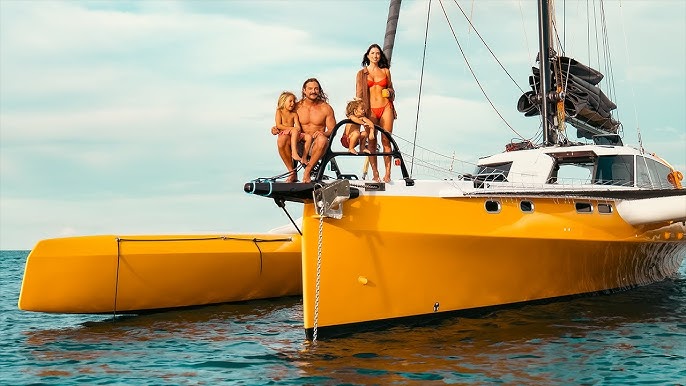
La Vagabonde is for sale. The announcement came in the latest YouTube episode from Riley and Elena, confirming what last week's instalment had hinted at: their Rapido trimaran will be put on the market.
For anyone who has spent time following Riley and Elena, La Vagabonde is far more than a boat name. The channel now sits at just under 2 million subscribers, built across years of honest, unglamorous storytelling that began long before the trimaran era. For a significant number of sailors and aspiring sailors, La Vagabonde marks the moment when offshore life stopped looking like someone else's dream and started looking like a genuine possibility.
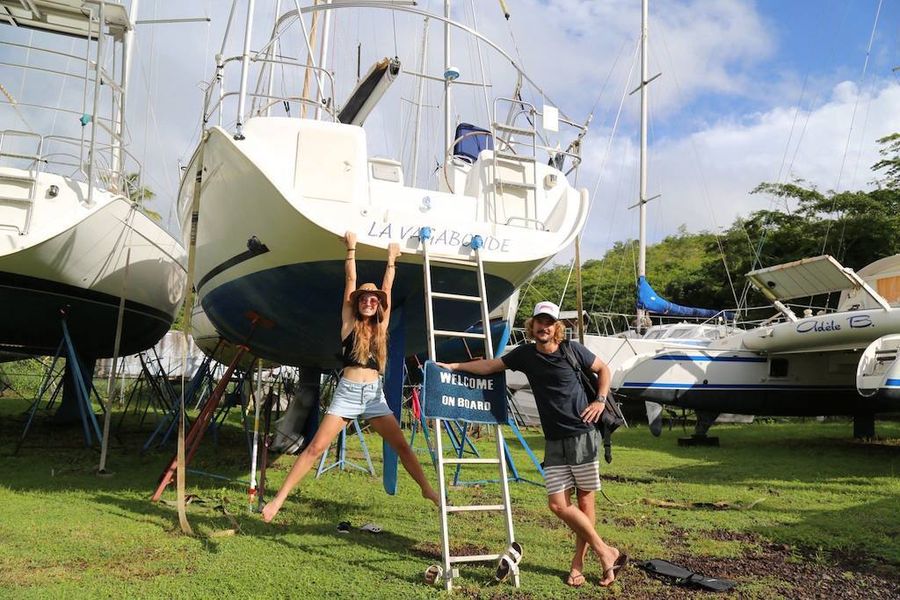
The journey began with a modest monohull, slower sailing, and no production polish to speak of. Two people were simply figuring things out as they went. The catamaran came next, then a baby, then a second. Gradually, the story transformed from a young couple travelling freely to a family finding its shape on the water.
The channel grew alongside them. What had been informal and unhurried developed into something with real production value, though the core of it remained recognisable. Watching Riley and Elena, and later Darwin and Lenny alongside them, was compelling precisely because none of it looked effortless. They made it clear that cruising did not demand perfection, wealth, or a carefully laid plan. Ordinary people could choose an unconventional life, commit to it, and work out the details along the way.
For many viewers, that was not just entertaining. It was instructive. Following their journey played a genuine part in shaping our own, helping move our family from watching sailing videos to actually buying a boat, from vague offshore ambitions to concrete plans, from imagining life on the water to living it. Their dreams made ours feel achievable. More than that, they helped us change our lives.
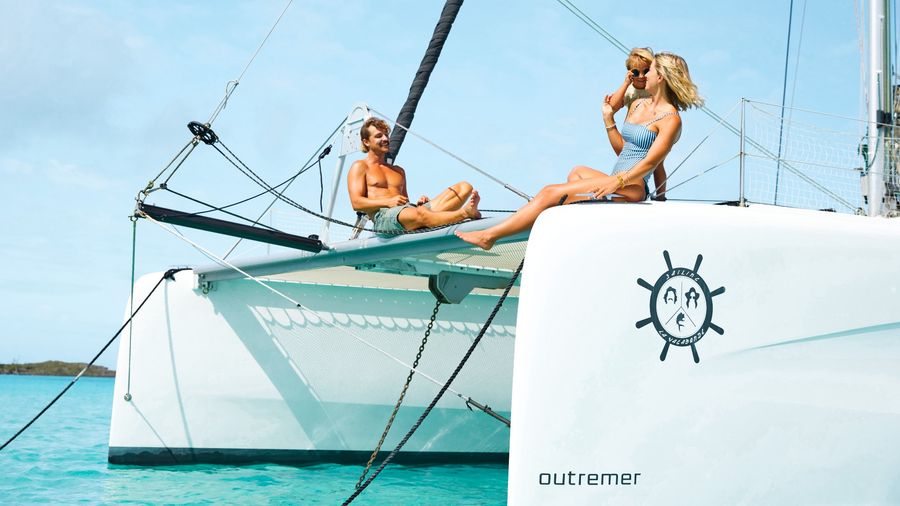
La Vagabonde inspired confidence not because Riley and Elena were polished media personalities, which they are not and have never claimed to be, but because they were boat people. Practical, fallible, learning in real time. The boat was their home, and that came through in everything they made.
The move to the 60-foot Rapido trimaran felt like a different chapter. From a technical standpoint, the vessel was genuinely impressive. It was built for speed, which had been a deliberate priority for Riley. He had made the reasoning plain enough: the faster the passage, the less time spent exposed on the open ocean, and therefore the lower the risk. The trimaran delivered on that. Lightweight carbon construction, serious offshore performance, and a design that pushed what a cruising trimaran could realistically achieve. When La Vagabonde was weighed in Japan at 11.8 tonnes, close to her design target, it quieted a good number of critics.
But technical accomplishment and emotional fit are different things.
Looking back honestly, the trimaran never quite connected in the same way. Watching today's episode, there is a strong sense that the owners found themselves in a similar place. The boat performed, but performance came bundled with complexity, and something in the tone of the channel shifted with it.
That feeling became harder to ignore after the accident in Japan.
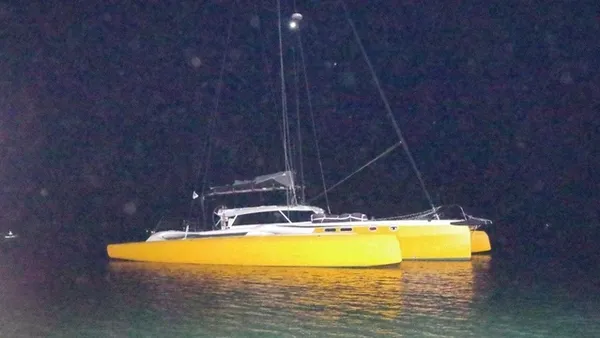
While the family slept at anchor, La Vagabonde was struck by a fishing vessel. Nobody was hurt, but the damage was significant and the uncertainty that followed lasted weeks. Early fears centred on the possibility of structural damage, though as repairs progressed it became clear the boat was considerably more robust than initial assessments had suggested. There was no structural damage. The episode was a reminder all the same that vulnerability does not only exist in the middle of an ocean. It can arrive close to shore, in the middle of the night, without warning.
The boat returned to the water, but the weight of the experience did not fully lift.
Operating a 60-foot carbon trimaran is not a casual undertaking. With total investment sitting at around US $2.1 million, including sponsorship contributions, the boat required paid crew, ongoing maintenance, marina fees, and constant oversight. Even when not sailing, she made demands.
Meanwhile, life ashore was pulling in a different direction.
Elena spoke candidly in today's episode about what the family wants now. Full-time life afloat is no longer the plan. The goal is something closer to balance: children attending school, an off-grid home on land, and a lifestyle that moves comfortably between the two rather than committing entirely to one. Where that home will be is still to be decided, though some of the language in the episode raises questions. There was notable discussion about the boat being too expensive to keep if it were sailing around, and about what a lower provable value might mean for their options. Given the way certain comments were framed, it is hard not to wonder whether a return to Australia is being considered, and whether import tax is part of the calculation. A smaller provable value might equal a reduced tax bill and a more straightforward case for keeping the boat after returning home.
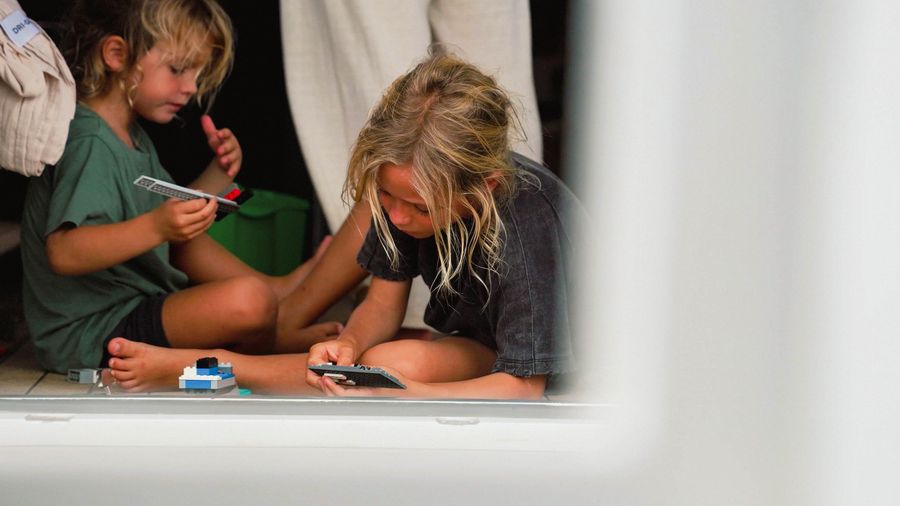
What they do want, they said clearly, is a boat nearby. Just not La Vagabonde as she exists today. The description Elena offered was striking in its simplicity: a wooden boat, an old fishing trawler, something functional and undemanding. The contrast with a carbon racing trimaran could hardly be more complete. There was no talk of long ocean passages or sustained voyaging. The picture that emerged was of people who want to be near the water without being entirely defined by it.
None of this diminishes what Riley and Elena have built. They have crossed oceans, raised their family aboard, and made the whole thing public in a way that has inspired genuinely large numbers of people and helped grow an entire community of sailing content creators. The influence of that runs well beyond view counts.
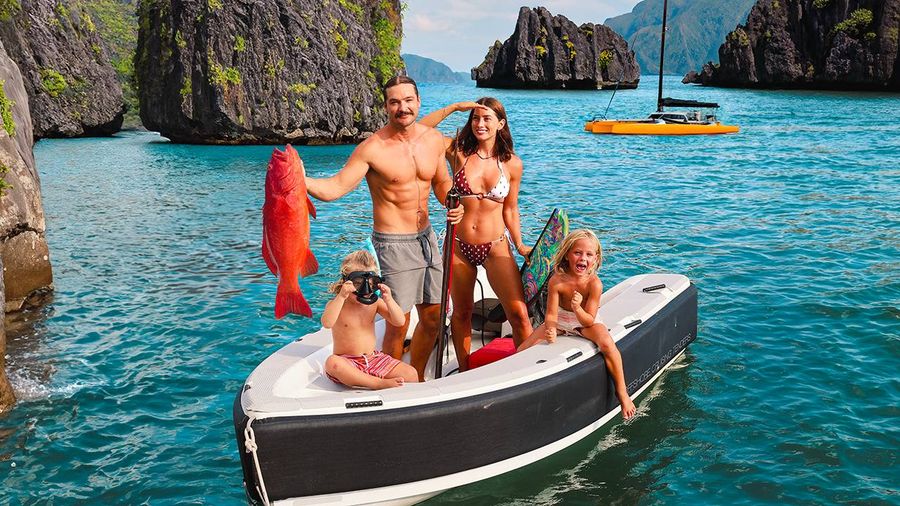
On a personal level, the news carries a quiet kind of sadness. Not because of the fame or the following, but because of what La Vagabonde has meant. Watching that channel was part of what pushed our family onto the water in the first place, and ultimately into selling up on land and committing fully to life aboard our own boat. That is not a small thing.
La Vagabonde may be moving on, but the influence she carried does not go with her.
For many who watched, that will last well beyond the boat herself.
This article was updated after publication to reflect that there was no structural damage to the vessel.