The 2025 International Multihull Show in La Grande Motte broke records on several fronts, with a bigger fleet than any previous edition, a string of world premieres, and a first-ever dedicated motor multihull marina that drew considerable attention from buyers and industry visitors alike. More than 60 sailing multihulls and close to 20 powercats were on the water, and electric and hybrid propulsion systems featured prominently across numerous brands. Fresh design thinking and a growing focus on sustainable technology are reshaping what multihull boating looks like.
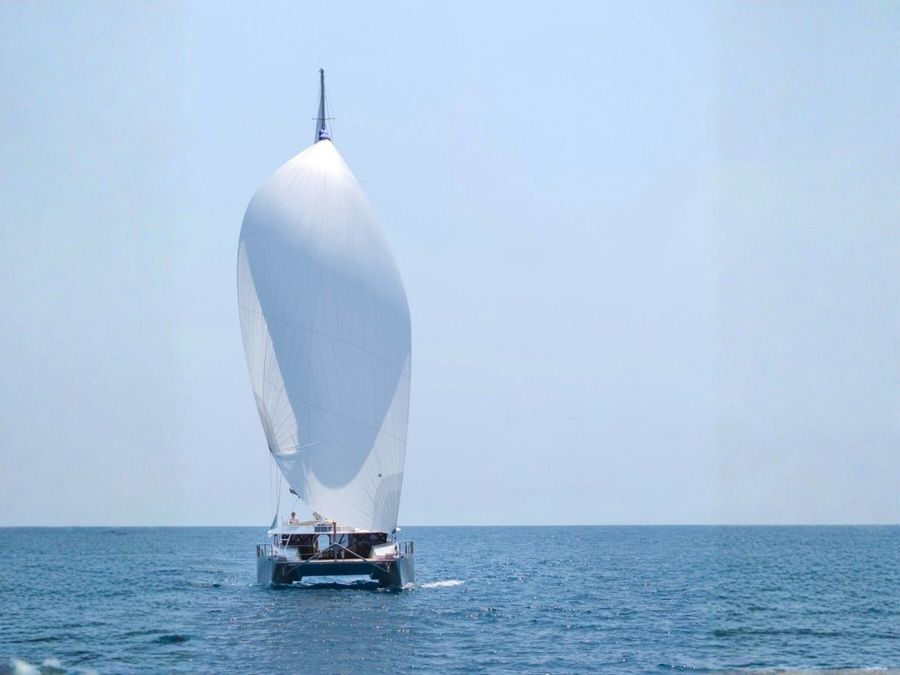
Among the boats that attracted quiet but genuine interest was the La Tortue 147, a 14.7-metre aluminium catamaran conceived by designer Jean Sommereux in collaboration with Jean-Michel Kalfon and built by Cataruga in Hergla, Tunisia. Launched in March 2025 and introduced to European audiences during the spring show season, it takes a deliberately different position from the performance-oriented catamarans that dominate most marina conversations.
The name translates simply as "The Turtle," and the unhurried philosophy behind it runs through every design decision. Where many cats are optimised for passage-making, the La Tortue 147 is built around the way most owners actually spend their time on the water: anchored in a bay, swimming off the stern, cooking for friends, and living comfortably aboard for weeks at a stretch.
The deck and cockpit reflect this priority. Wide side decks, substantial protection from the elements, and a generous aft cockpit make moving around, eating outside, and hosting guests genuinely easy rather than something that requires careful planning. Shade is integral to the layout rather than bolted on as an afterthought, and getting into the water is straightforward from the stern. At 14.7 metres with a beam of 7.85 metres, the proportions favour usable space over sailing theatrics. The boat sits wide and composed at anchor, with a solidity that makes itself felt from the moment the hook goes down.
Inside, the La Tortue 147 has more in common with a well-considered apartment than a yacht arranged around passage-making efficiency. The galley occupies a central position and is sized accordingly, with genuine bench space, proper storage, and headroom that does not require contortion. Natural light enters from multiple directions. Rather than pushing cabins to the front of the layout and treating the saloon as a thoroughfare, the living area takes precedence, giving the interior a domestic quality that is somewhat rare in production cats of this size.
The systems philosophy matches the layout. The La Tortue 147 carries approximately 5.5kW of solar capacity feeding a large lithium battery bank, which handles daily electrical loads without requiring the engines to run. Propulsion is hybrid, combining twin 57hp diesels with twin 10kW electric motors, and the design intention is to minimise engine hours rather than chase speed. A cruising speed of around eight knots is available when passage-making is necessary, but the emphasis throughout is on quiet, self-sufficient time at anchor. Evenings are covered by the batteries; the diesels stay silent.
Construction is aluminium throughout, with 8 to 10mm plate used across the structure. The La Tortue 147 displaces around 17 tonnes empty, a figure that rises once stores and the 1.2-tonne freshwater ballast system are accounted for. That ballast, used to manage trim and distribute load, contributes to the boat's characteristically settled feel. Long protective keels and skegs guard the running gear and allow the boat to sit comfortably in shallow water, a meaningful advantage for coastal cruising and anchoring close inshore.
La Tortue 147 | Technical overview
- Builder: Cataruga - Designer: Jean Sommereux with Jean-Michel Kalfon - Launch: March 2025 - Build location: Hergla, Tunisia - Length overall: 14.7m - Beam: 7.85m - Draft: 1.65m - Construction: Aluminium, 8–10mm plate - Displacement: approx. 17 tonnes empty - Ballast: 1.2T freshwater ballast - Propulsion: Hybrid diesel electric - Engines: 2 × 57hp diesel + 2 × 10kW electric - Solar capacity: approx. 5.5kW - Cruising speed: around 8 knots