Twelve years ago Kraken Yachts' Dick Beaumont went to Queenstown to meet with Kevin Dibley, a New Zealand yacht designer whose work ranges from small racing trailer yachts to a 150-foot superyacht.
An avid sailor, Beaumont had already sailed more than 100,000 nautical miles, so he had very clear ideas about what an ocean crossing yacht needed to look like. Dibley's connection to Beaumont and Kraken began when he designed the Kraken 50. Their 2014 conversation expanded into plans for the 44, 58 and 66. As Dibley recalls, "Dick knew exactly what he wanted and I knew how to bring it to life."
The news now is that Kraken has formally committed to building the smallest of those yachts. The company wanted to begin sooner, but held the Kraken 44 back until its own production shipyard was operating in Gdynia, Poland. That yard is now open and in production, clearing the way for the 44 to move ahead.
Kraken has always aimed its boats at sailors making extended ocean passages. These are owners who may spend two or three years working through Indonesia, the Philippines or the Pacific, where suitable haulout facilities can be scarce.
The smallest boat discussed at that Queenstown meeting was the 44. It has been designed to be manageable for two, with a single helm and centre cockpit pointing to couples and short handed crews, though Kraken says it can accommodate four on an ocean passage.
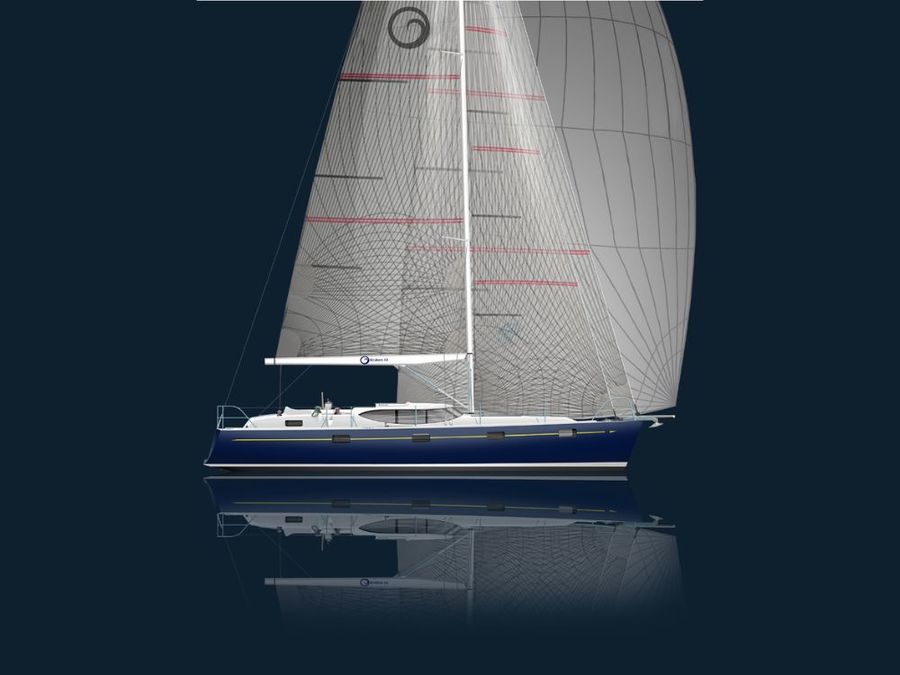
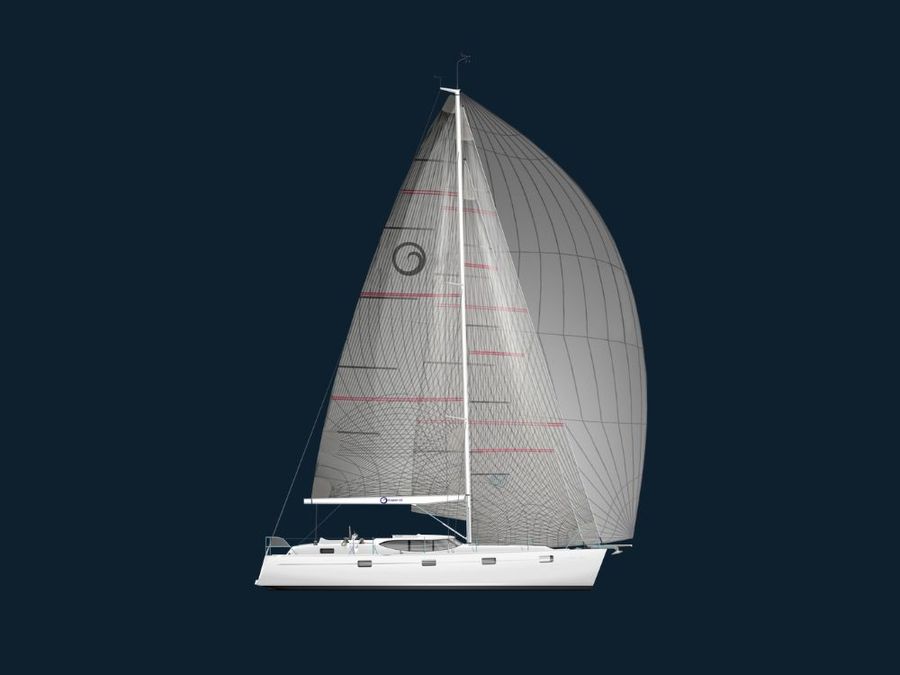
Dibley drew on work across the wider Kraken range in shaping the 44. He describes it as carrying the DNA of her bigger sisters, with the same Zero Keel and Alpha Rudder found on the larger yachts.
The Kraken 44 will have a deep centre cockpit and single helm. Beaumont considers the centre cockpit the safest arrangement for an ocean cruising yacht because it keeps the crew near the middle of the boat and better protected. “We’re not going down the fashion parade route,” he says. “We’re going down the ‘this boat crosses oceans’ route.”
The Kraken 44 will also have a raised saloon, an arrangement Beaumont says is important for an ocean cruising yacht because it provides room for larger tanks. The published specification lists 600 litres of fuel across three tanks and 500 litres of fresh water across two. That capacity is intended to support extended cruising away from marinas and regular refuelling stops.
That capacity is important on a yacht intended to stay away from marinas for long periods. The published specification lists 600 litres of diesel across three tanks and 500 litres of fresh water. A triple fuel polishing and transfer system reduces the risk of contaminated diesel reaching the engine and stopping it during a passage.
The 44 will also retain Kraken’s dedicated engine and equipment room. Rather than placing the machinery beneath bunks or squeezing it behind removable panels, Kraken groups the main mechanical systems in an accessible working space. That should make routine checks and repairs easier, particularly when the boat is moving and help is several days away.
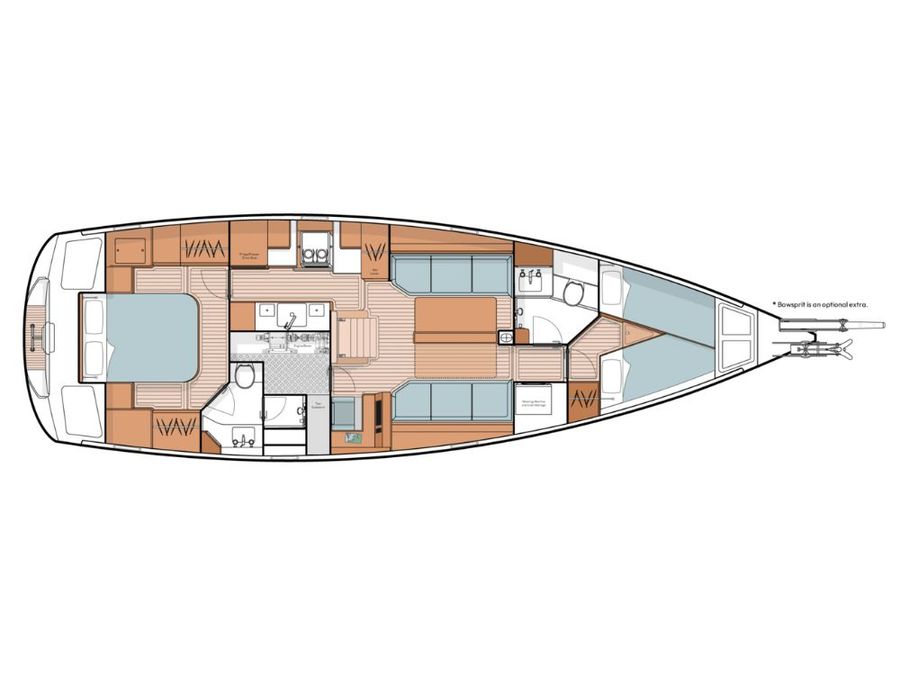
Beaumont says the interior layout is almost finished. Kraken isn't giving buyers a range of layouts to choose from. The layout will remain fixed, although buyers can pick their timber, upholstery and furnishing colours. The world cruising specification is comprehensive, but equipment brands and details may still change.
Three Kraken 44s have already been sold, with the first delivery pencilled in for spring 2028. That is considerably later than Kraken’s original timetable, which anticipated production during late 2025 and deliveries from early 2026.
Structurally, the 44 follows the same thinking as its larger sisters. The ballast sits inside a moulded keel rather than being bolted on beneath the hull. The rudder hangs from a full length skeg, while its bearings can be reached and changed with the yacht still in the water.
The Solent rig keeps two furling headsails ready to use, reducing foredeck work for a short handed crew. Kraken’s published specification also includes a hybrid drive system, pairing the diesel engine with an electric motor designed to regenerate power under sail. The company says this removes the need for a separate generator, leaving more room in the engine and equipment space.
We will be keeping an eye on the Kraken 44 as it moves towards its first delivery in 2028.
|
Specification Kraken 44 |
|
|---|---|
| Designer | Kevin Dibley, Dibley Marine |
| Builder | Kraken Yachts, Gdynia, Poland |
| First delivery | Spring 2028 |
| Length overall | 13.52m (44ft 3in) |
| Waterline length | 12.4m (40ft 9in) |
| Beam overall | 4.20m (13ft 8in) |
| Draught | 1.8m at half load (5ft 10in) |
| Displacement (full load) | 15,400kg |
| Ballast ratio | 40% |
| Sail area (standard rig) | 114m² |
| Engine power | Approx. 43kW (59hp) diesel, plus Eco Hybrid Drive (published figures vary; provisional) |
| Fuel capacity | 600 litres across three tanks |
| Fresh water capacity | 500 litres total, across two tanks |
| CE certification | RCD Category A, Ocean |
| Learn more at Kraken Yachts and Dibley Marine. | |
← Scroll to see full specification →