The Kōpū Marine Precinct was built to solve a straightforward problem. Local marine operators had been turning work away for years, unable to keep pace with demand, while boat owners faced long drives to Auckland or Whangārei for even routine maintenance. Sitting at the entrance to the Coromandel and within easy reach of Auckland, Hamilton and Tauranga, Kōpū had long appeared the logical place to establish a facility capable of serving both the region's aquaculture industry and its expanding recreational boating community.
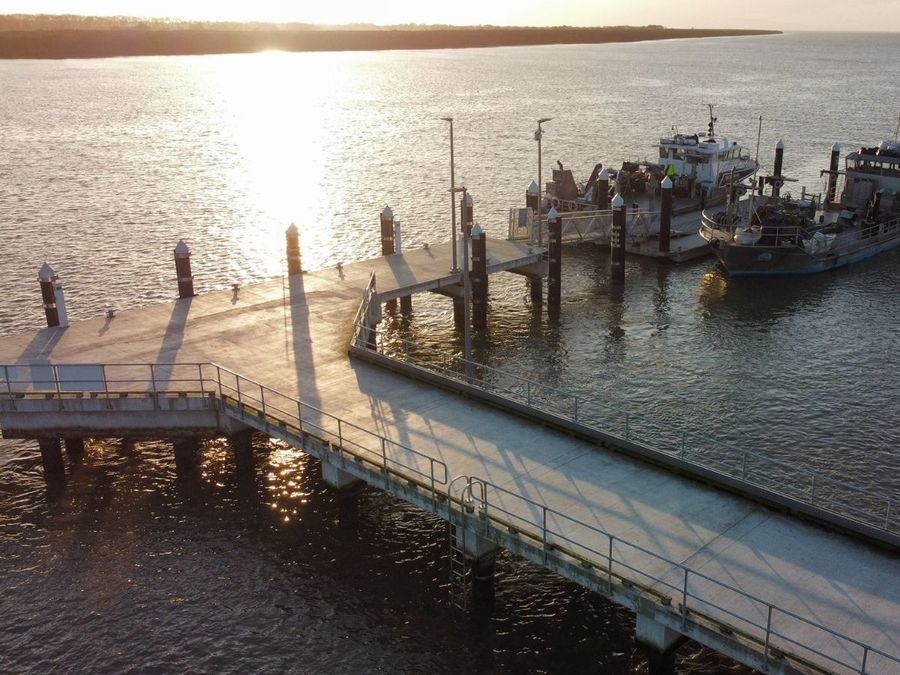
A feasibility study in 2018 confirmed what locals already suspected, and Thames-Coromandel District Council secured resource consent in 2022. The $15 million precinct opened in mid-2024, bringing with it a new commercial wharf and floating pontoon, an upgraded slipway, and an expanded hardstand. The design kept commercial and recreational traffic apart, pairing the L-shaped commercial wharf with a dedicated trailer-boat ramp and jetty for everyday boaties.
The site does come with its own particular challenges. The Firth of Thames runs shallow near Kōpū, with depths dropping to around a metre at low tide and climbing to three metres or more at high water. Boats under five metres can generally launch regardless of the tide, but anything larger needs careful timing, with most skippers planning their runs within two hours either side of low water. Deep-keeled vessels are largely unsuited to the site, and even those launching at dead low tide need to watch for rocks. These natural constraints help explain why the precinct was designed with workboats, trailer boats and aquaculture operators in mind, rather than cruising yachts.
From the day it opened, the commercial wharf remained off-limits to the general public. Council cited strong currents, turbid water, and the practical hazards of crane operations and servicing equipment as reasons to keep casual visitors away. Recreational users were directed to the separate ramp and pontoon, allowing the commercial end of the facility to operate without weekend boaties and casual fishers wandering through the work area.
That separation did not stop questions from surfacing. By 2025, councillors and community members were openly raising concerns about whether the precinct was being fully utilised. Reports indicated that only a handful of businesses were making regular use of the wharf, with uptake falling well short of what had been anticipated. A marketing campaign followed, though doubts about the facility's performance continued to circulate.
Council is now trialling weekend and holiday pedestrian access through to late October. For the first time, locals can walk the new wharf and see the facility for themselves. Whether the precinct finds its place as both a working yard and a genuine community asset will depend on the feedback that trial generates and the confidence it builds.