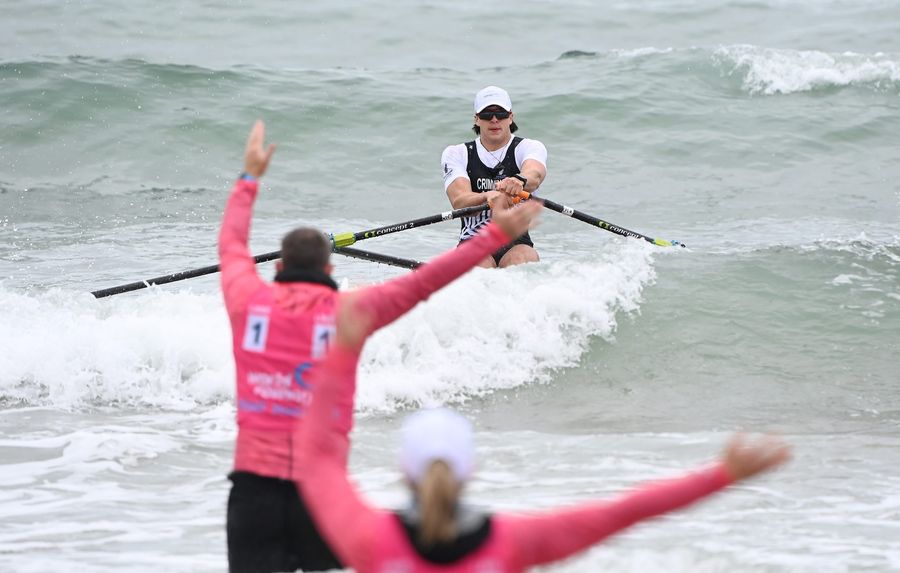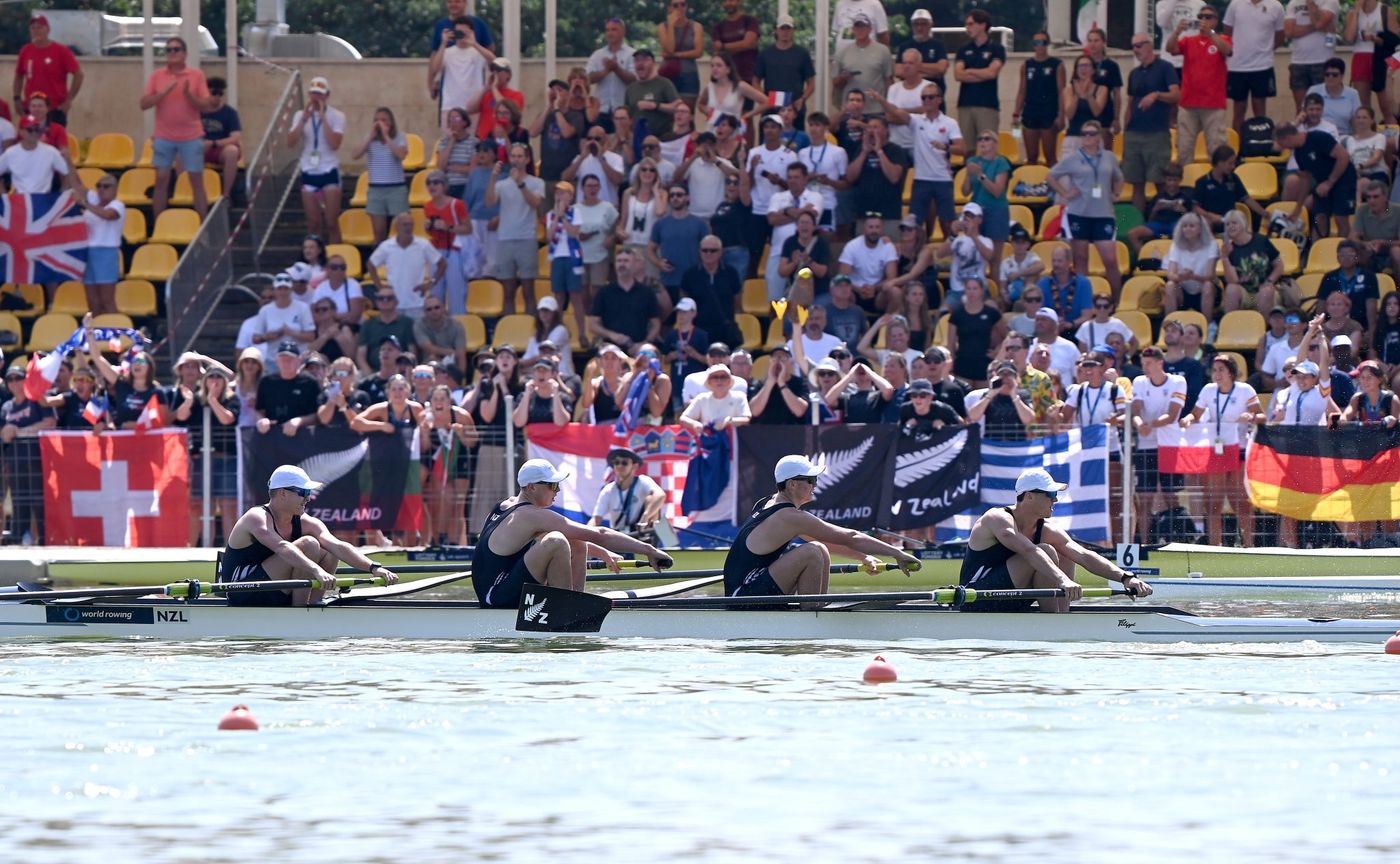
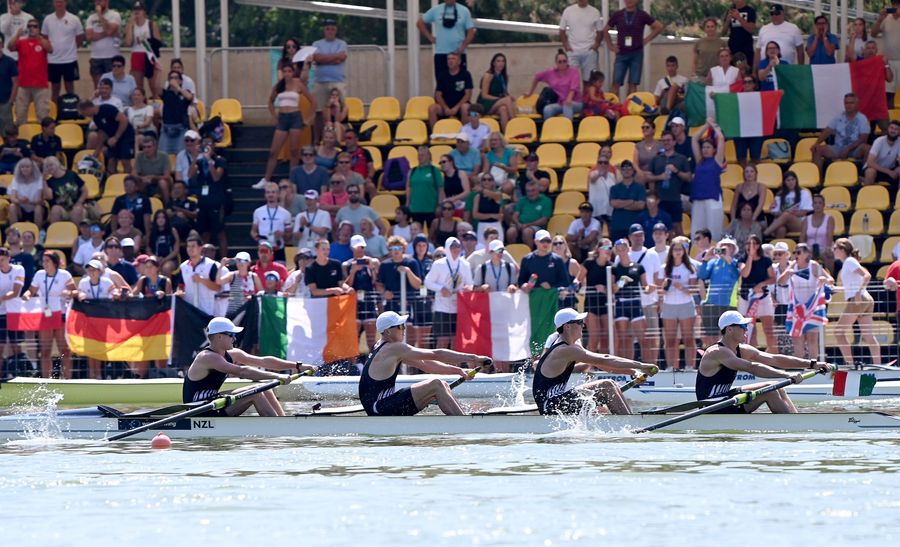
Charlie Field, Sam Bird, Alex Walters and George Langley finished fifth in the A Final of the Men's Four on the penultimate day of racing at the U19 World Rowing Championships in Plovdiv, Bulgaria. It was close enough to hurt.
The four had shown real promise getting to this point, finishing second in their heat then winning their semifinal. They were just 0.12 seconds off Great Britain in second place through the opening 500 metres. Spain bolted to the front at 800 metres, and New Zealand held bronze position at the 1500-metre mark with France building momentum behind them. The French moved onto the podium with 400 metres to go, and the Kiwi boat dropped back to finish in 6 minutes 7.54 seconds. Spain took gold in 6:00.97.
Coach Mark Clemo acknowledged the sting. "The Spanish rowed a little more the race that we were wanting to. The frustration for the four in particular is they knew that a good performance for them, they were going to win it." He added that the crew would "reflect on and be super proud of making the A final and actually being in a position to be disappointed at the result, but the context isn't there right now because it's just happened."
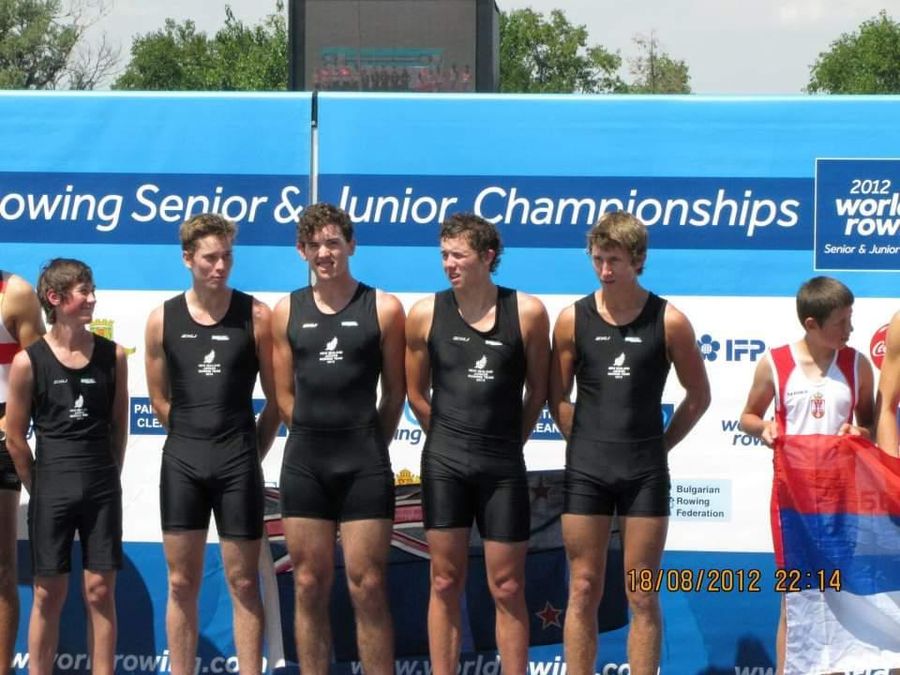
Plovdiv is well-worn ground on the World Rowing circuit, but it is 14 years since the city last hosted this championship. In 2012, future America's Cup winner Cam Webster and Olympic gold medallist Michael Brake were still at Westlake Boys High, competing on the same course where they took gold in the Men's Coxed Four alongside Thomas Jenkins, Tom Murray and cox Sam Bosworth.
Fourteen years on, two more Westlake boys were on the start line in the four. Webster messaged George Langley before racing, telling him and Sam Bird to "Get after it."
He remembered what that Plovdiv campaign had meant. "We were sort of excelling in our lives you know, everything was going pretty well and then we're off to juniors and it was like, 'Yeah, this is sick.' We were confident in who we were and how we conducted ourselves."

Elsewhere in the results, Charlie Manser and Aidan Bennett were sixth in the A Final of the Men's Double Sculls. The event drew 31 entries, the largest field on the programme, meaning anyone chasing a medal had to get through four races in three days. Manser and Bennett had done exactly that. Just 1.23 seconds separated the field through the first 500 metres, with New Zealand and eventual winners Estonia at the back. The Kiwis were only just over a length down on the leaders at 1500 metres before Estonia sprinted clear to take gold in 6:18.60. New Zealand crossed in 6:26.43.
Eleri Clare and Zara Blackie won the B Final of the Women's Double, having impressed throughout the regatta. It is Cashmere High student Eleri's second year in the U19 programme; for Zara, a novice rower at St Cuthbert's College in 2025, it is her first. They overpowered leaders Lithuania at the 1000-metre mark and held a more efficient rhythm to close out victory in 7:17.51, with Lithuania crossing in 7:18.18. The Women's Four of Charlotte Mawston, Georgia Kendrick, Charlotte Gorman and Jess Walkinshaw finished third in their B Final.
The 2012 worlds launched Webster and Brake into New Zealand's high-performance system. Others took different paths. Twins Russell and Cameron Crampton rowed in the Men's Quad that year, finishing sixth. At an RPC weekend in Twizel earlier that season they had met Villa Maria College athlete Sophie Shingleton, who won bronze in the Women's Four at those same Plovdiv championships. It was around that time Russell and Sophie got together. They now live in Perth with their four-year-old son, Russell working as a supervisor in the mines and Sophie newly qualified as an accountant. Covid delayed their wedding plans. They remain engaged.
As the class of 2012 shows, racing at the U19 worlds is just a start on the rowing journey, and on life's one too.