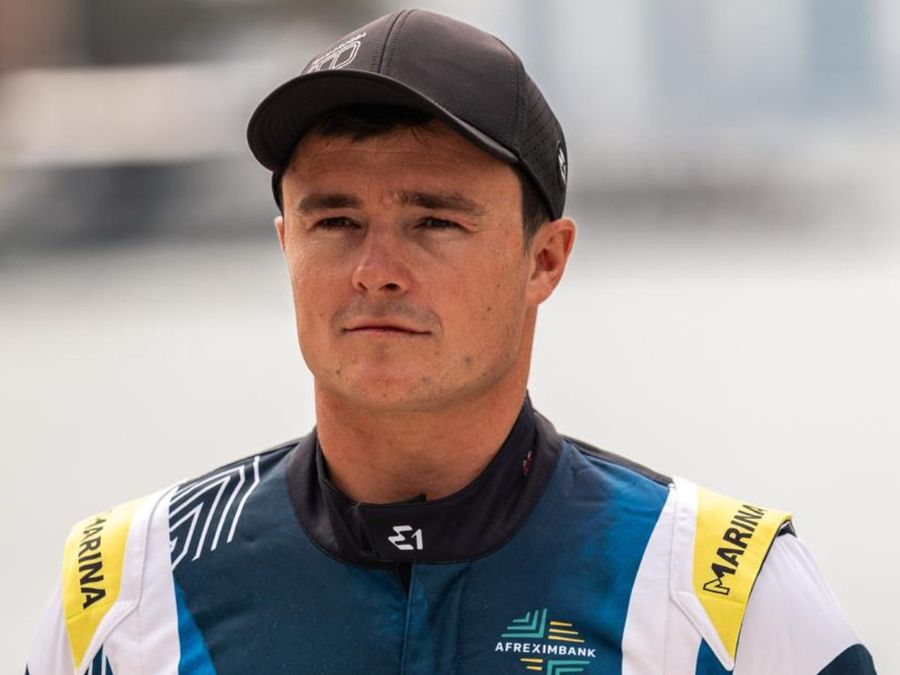
Micah Wilkinson is no stranger to reinvention. The Kiwi Olympian who has spent years campaigning the Nacra 17 now returns to the cockpit of an electric hydrofoil race boat for the 2026 E1 Grand Prix season, racing once again for Team Drogba Global Africa. On the surface it looks like an unlikely combination, yet the closer you look, the more sense it makes.
New Zealand sailors have always found a way to adapt when the game shifts. Even so, few have moved as fluidly between disciplines as Wilkinson. Racing an Olympic mixed multihull demands constant dialogue, physical commitment, and the kind of instinctive foil management that takes years to develop. Stepping into a single-seat electric hydrofoil and pressing the limits at close to 50 knots demands something surprisingly similar.
Built on Olympic foiling
The foundation Wilkinson brings to E1 was laid over a long Olympic campaign aboard the Nacra 17, the mixed crew catamaran that defines modern multihull racing at the Games. Alongside Erica Dawson, he competed at both Tokyo and Paris, closing out the 2024 regatta in Marseille with a bronze medal.
[gallery td_select_gallery_slide="slide" ids="167051,167050,167049"]
Contemporary Nacra 17 sailing has more in common with aviation than it does with traditional yachting. Once the hulls leave the water, everything hinges on ride height, pitch control, and foil loading. Sail trim, crew weight distribution, and constant communication between helm and crew all feed into the shared challenge of keeping a flying platform fast and stable.
"In the Nacra it's Erica and I. You're back and forth, making decisions together."
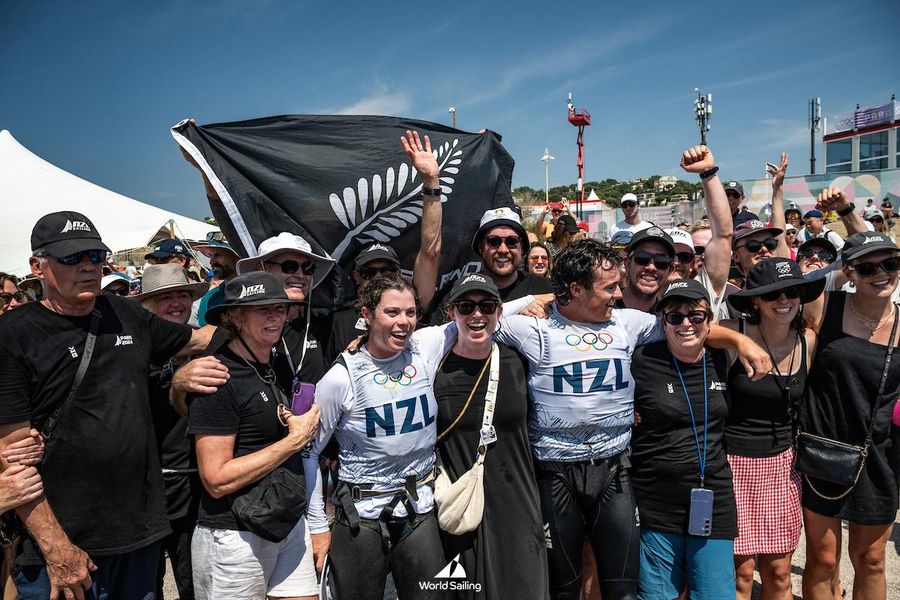
That constant exchange between two people is central to how Olympic foiling works. It is also one of the sharpest contrasts Wilkinson encountered when he first climbed into a powerboat cockpit.
A different machine, familiar territory
The E1 RaceBird sits at the opposite end of the spectrum in almost every practical sense. It is a single-seat, all-electric hydrofoil race boat driven by a 150kW electric motor, where sheets and traveller lines give way to buttons, paddles, and a cockpit full of screens. At speed, carbon foils lift the hull clean off the water.
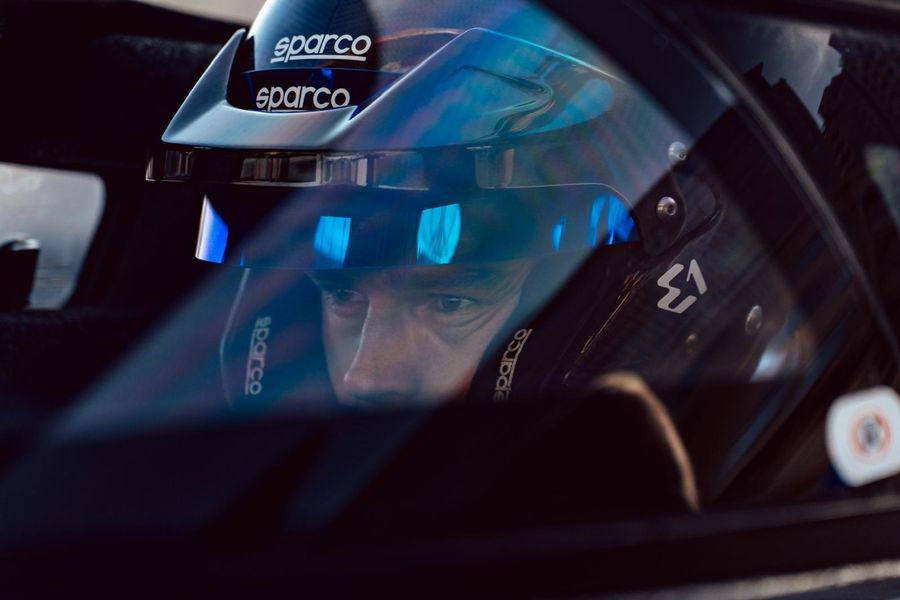
"Very fighter jet esque with all its buttons and screens."
Where a sailing boat filters control inputs through the sails and the movement of two bodies, the RaceBird responds immediately and without compromise. Ride height and pitch are managed through steering wheel paddles and engine trim, and there is no crew member to share the load or the decisions.
"The hardest part is probably not having a sailing partner. In the RaceBird it's all instantaneous, and you're on your own."
The physics underneath, though, are genuinely familiar. The RaceBird operates within a flight window of around 400mm. Drop below that band and the hull slaps back onto the surface. Climb too high and stability goes with it.
"You've got about a 400 mil high window you can fly at. It's easy in flat water, but once it's choppy, you're constantly balancing the boat."
Why a sailor had the edge
Much of the E1 field arrives from motorsport, bringing sharp racing instincts but little experience of boats, let alone foiling. Powerboating itself was unfamiliar territory for many of them before the series began, let alone the additional complexity of flying a hull above the water.
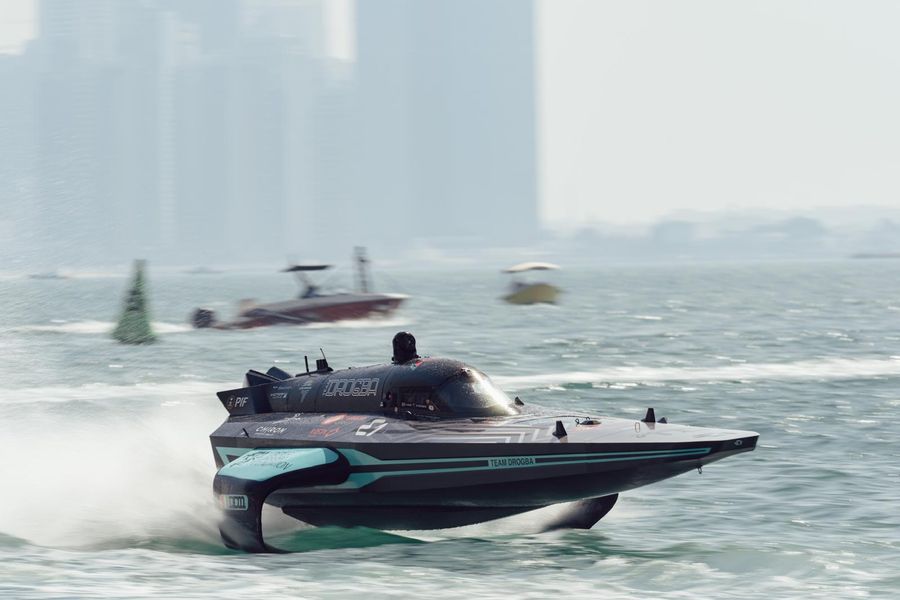
"A lot of the drivers are coming from motor racing backgrounds. The whole powerboating was new to them as well, and then the foiling."
For Wilkinson, the behaviour of a foiling boat at speed was already deeply ingrained. He understood how lift builds through the foils, how quickly things can unravel when balance is lost, and how small, precise inputs carry outsize consequences. That knowledge gave him a meaningful head start over competitors who were learning all of it from scratch.
"I managed to use the skill set I had to sneak in there right from the start."
The results confirmed it. Wilkinson picked up a podium finish in Doha during his rookie season.
The ceiling that physics sets
At full power, the RaceBird reaches around 50 knots. Beyond that point, it is not the motor that becomes the constraint.
"It doesn't take long to get up to 50 knots, which in the foiling world is right at the limit. Above that speed, the foils cavitate, and that's the ceiling."
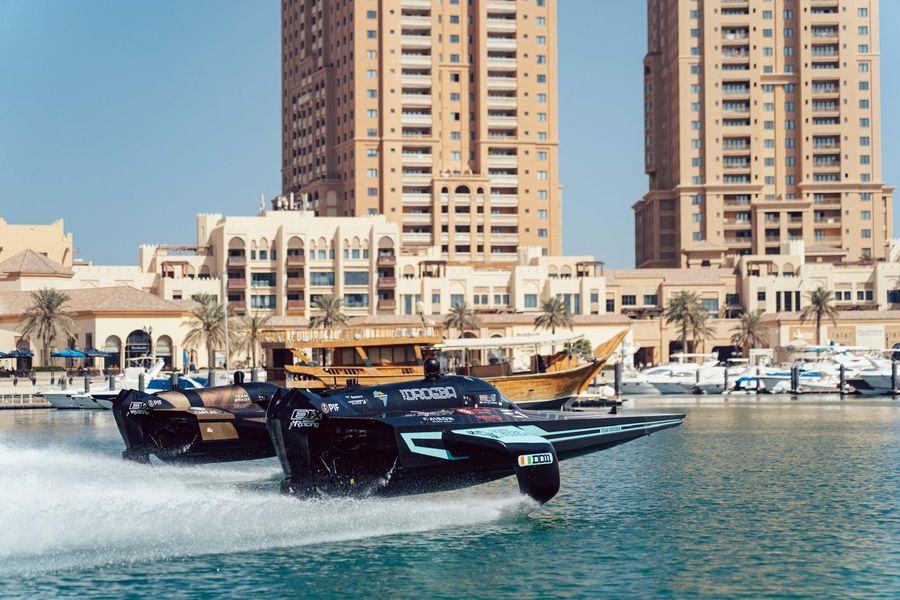
Wilkinson sees this as something both sports share. Whether the lift comes from sails or a 150kW electric motor, foiling rewards control over outright speed. Keeping a boat flying cleanly requires the same discipline regardless of what is generating the power.
Racing for Team Drogba
Wilkinson competes in E1 under the Team Drogba banner, a team owned by football icon Didier Drogba. The format of the series is compact and relentless. Practice, qualifying, and racing are compressed into just a few days, leaving little room for error or adjustment.
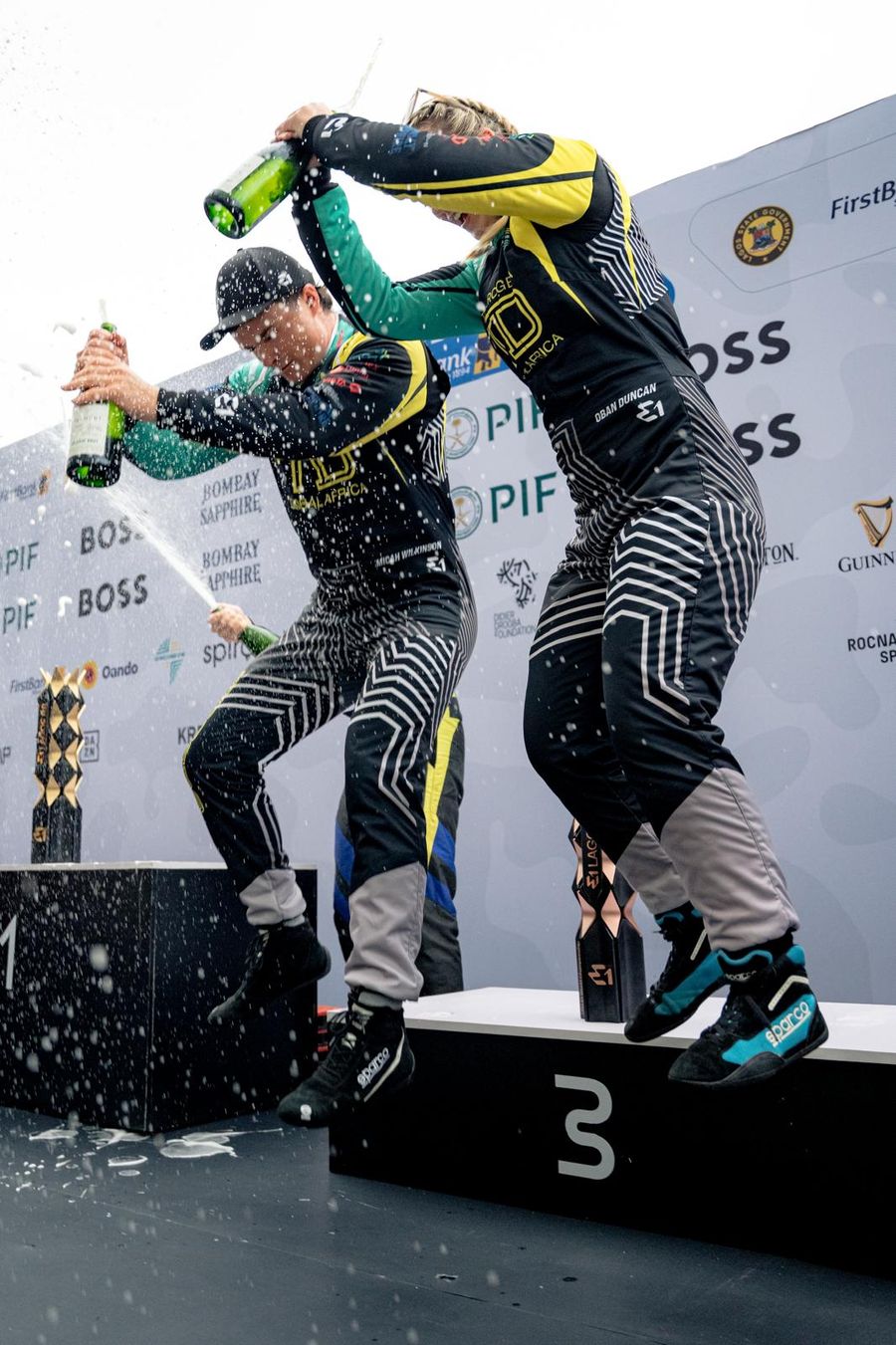
"The race weekends are very high intensity compared to sailing."
Behind the scenes, the series carries a distinctly New Zealand character, with Kiwi involvement running from management through to technical support. It is a further reminder of how effectively New Zealand's maritime expertise travels.
Two programmes, one direction
Wilkinson is not choosing between his two worlds. He has returned to full Olympic campaigning alongside his E1 commitments, working towards Los Angeles 2028. Rather than pulling against each other, he finds the two programmes reinforce one another.
"You're learning when you jump between campaigns. That's very much what I'm about with these two programs."
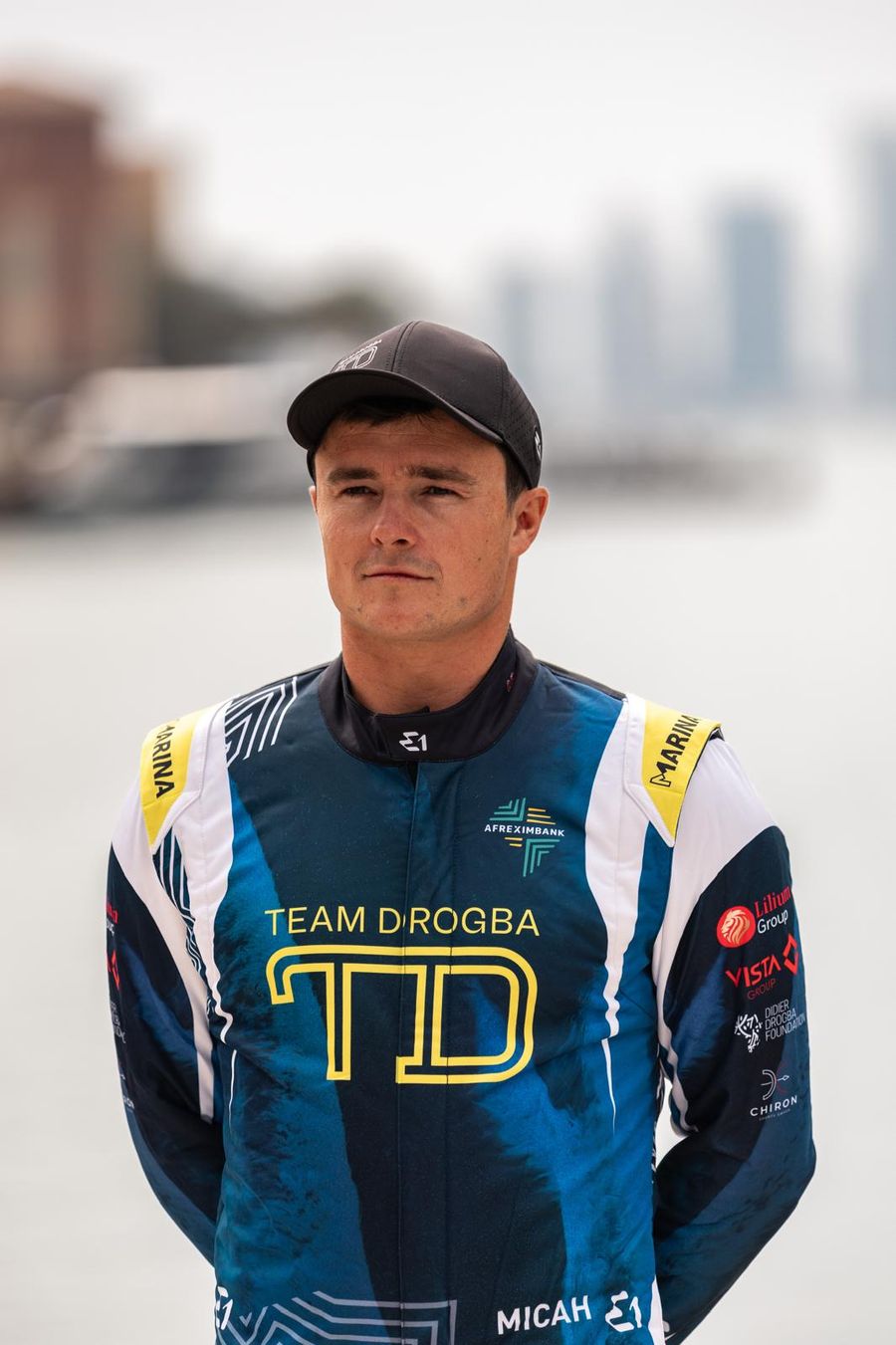
The line between high-performance sailing and electric hydrofoil racing turns out to be thinner than most people expect. Wilkinson recognised early that both were heading in the same direction, above the surface, at speed, where control is everything and the physics remain constant regardless of what is generating the power.