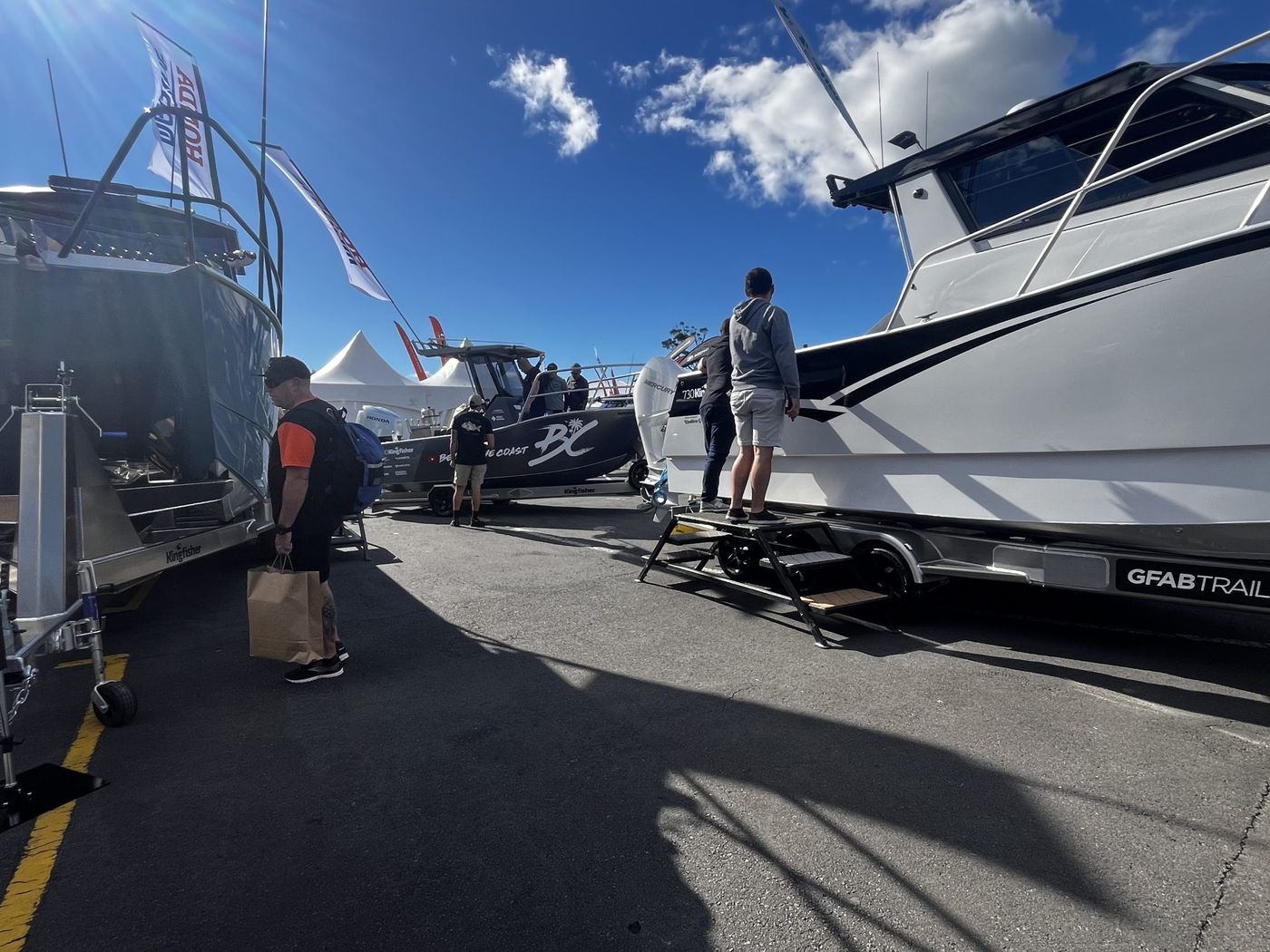
Tauranga-based Kingfisher Powercats is bringing three models to the Hutchwilco Boat Show: the 510, the 670, and the 730. All three share a twin-hull configuration, though they divide into two fundamentally different types.
The 730 and 670 are symmetrical hull cats, where both hulls are identical in form, satisfying the strict definition of a catamaran. The 510 takes a different path, combining an asymmetrical hull layout with a single engine and centre console configuration that delivers excellent walkaround access. Across the range, the twin-hull format means more volume, more deck space, and greater side-to-side stability compared with a monohull of the same length. In a swell, the motion softens and a stepping action replaces the rolling you get from a mono. Get on one and find out.
The 730 is making its New Zealand boat show debut at this year's Hutchwilco event. Production of this model has been largely directed toward the Australian market, which has meant local buyers have had no opportunity to see one in person until now.
It is designed as a weekender. The forward cabin houses a double berth along with a table that converts down to a second sleeping area, providing enough room for two adults and two children.
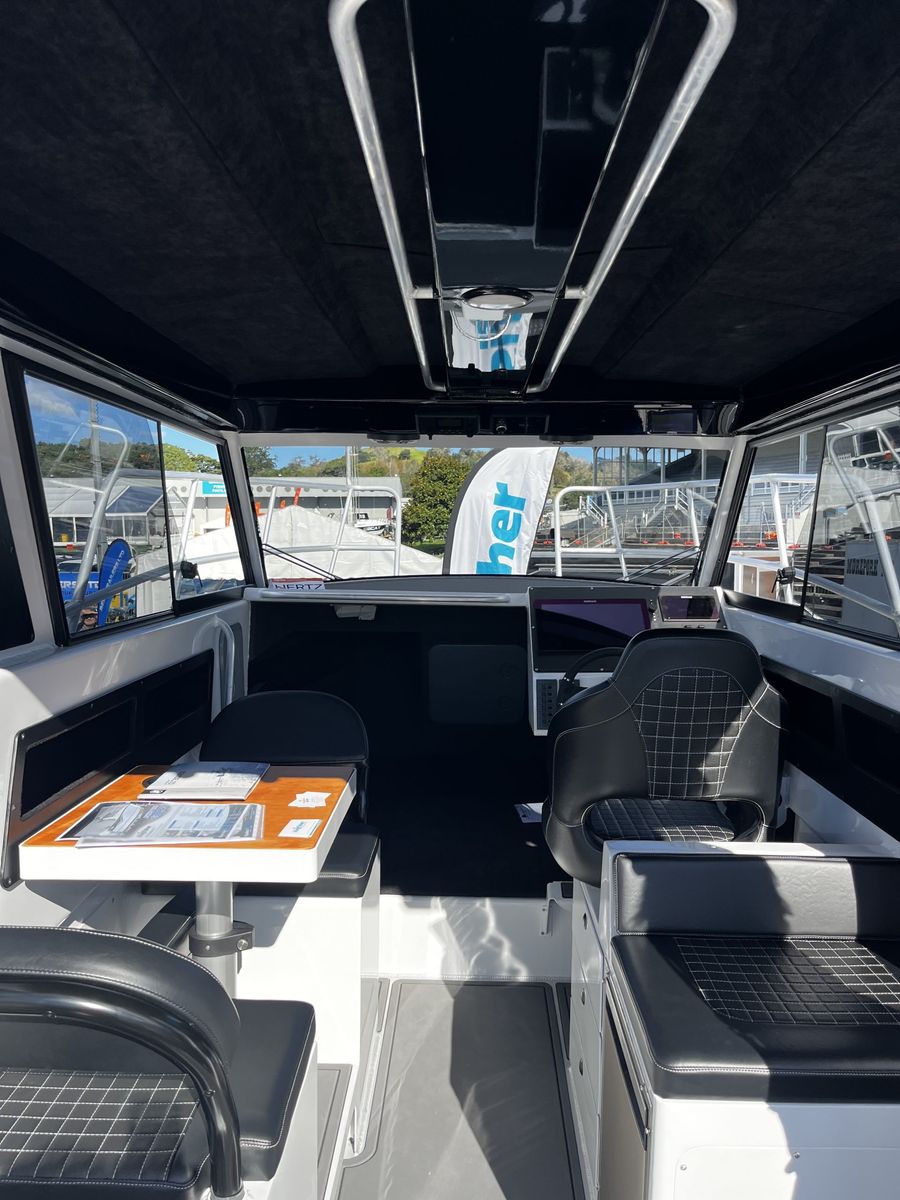
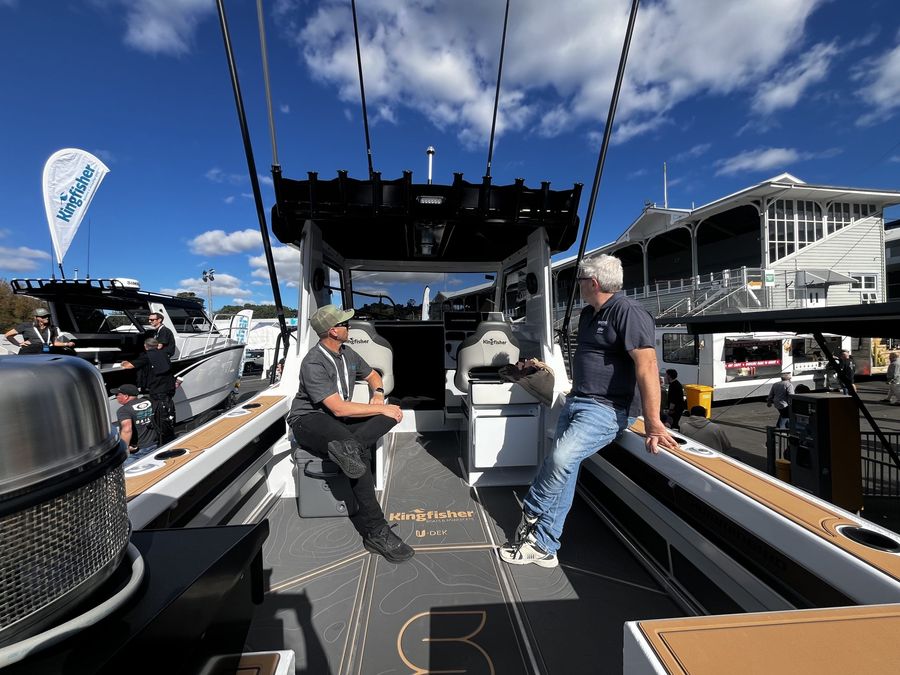
The cockpit on the 730 is more spacious than that of the 670, with twin stainless kill tanks installed. Both were loaded with two bags of ice that morning, and despite the boat sitting in full sun throughout the day, the ice was still there.
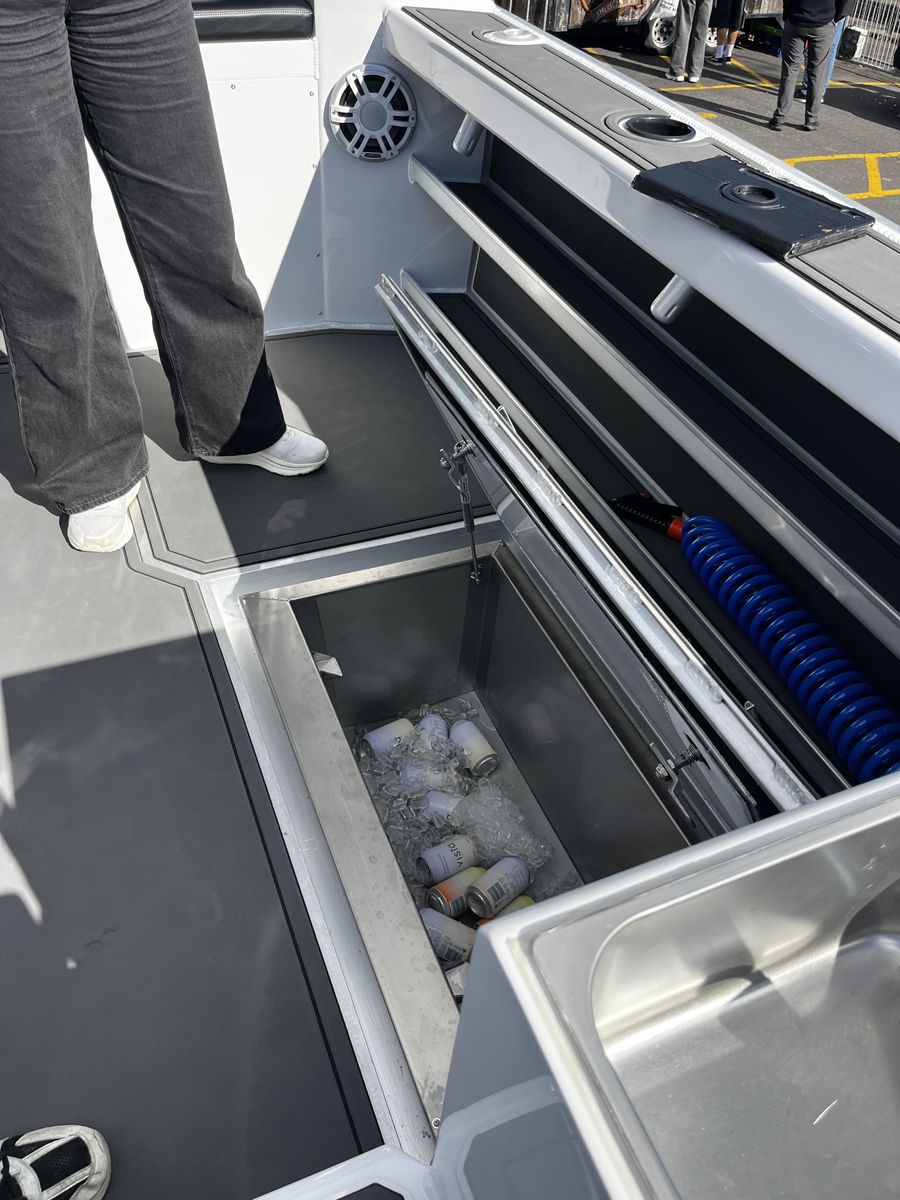
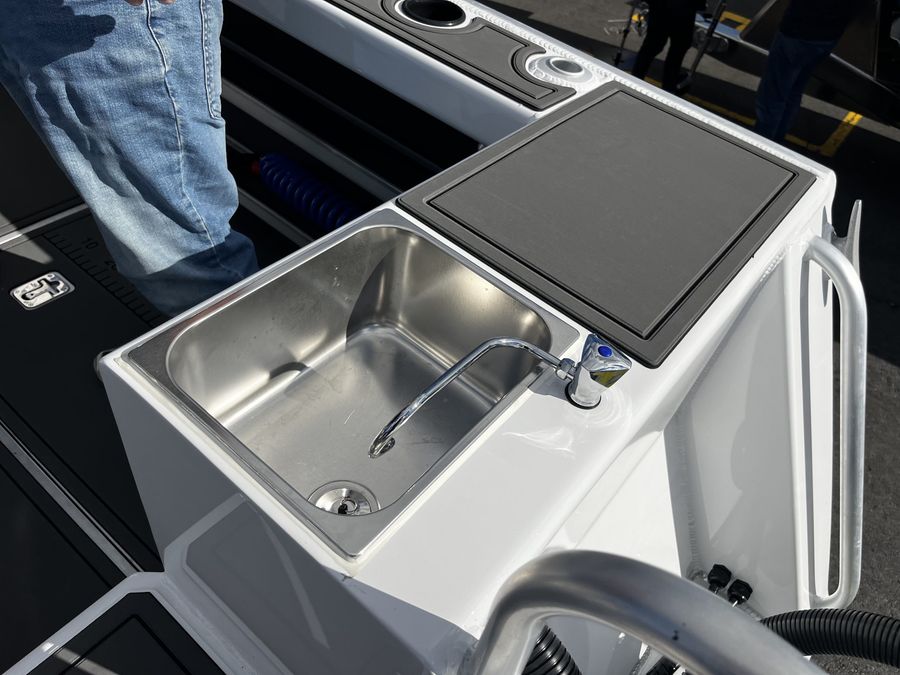
Onboard amenities include a saltwater sink, livewell, fridge, and a 12-volt pie warmer (small oven). The beam comes in just under 2.5 metres, keeping it road legal in both New Zealand and Australia.
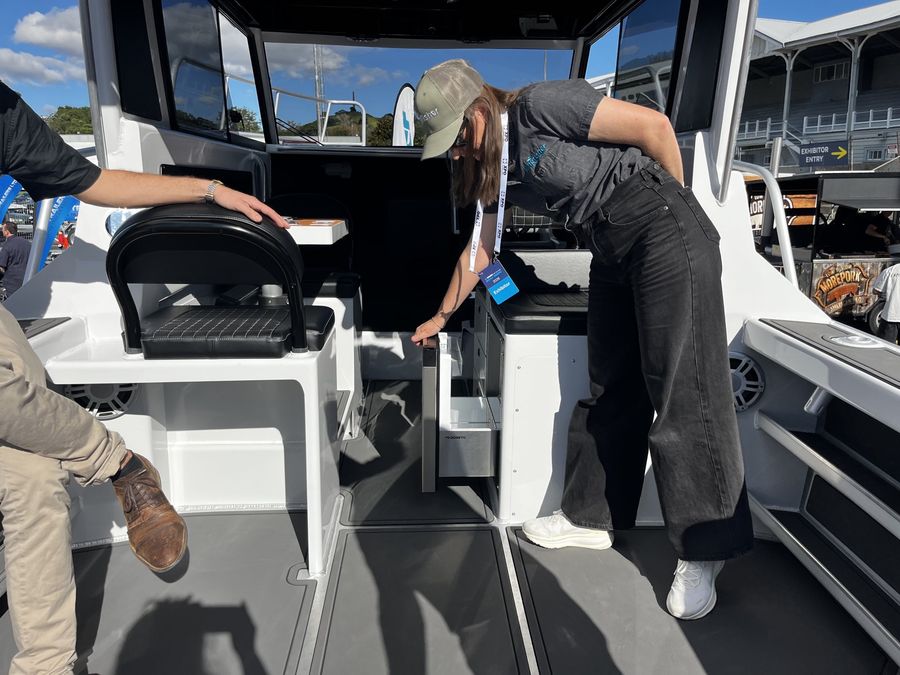
The 670 has undergone a thorough redesign, with nearly every panel revised. The most visible change is the forward windscreen, now a single curved piece of glass where two flat panels previously sat. Full glass side windows, a new hardtop, and a revised roof profile are all part of the update. Structural changes have also been introduced to meet US and EU market requirements, both of which mandate foam buoyancy above a certain length and do not recognise air-pressure tested floors, a construction method common in New Zealand-built boats.
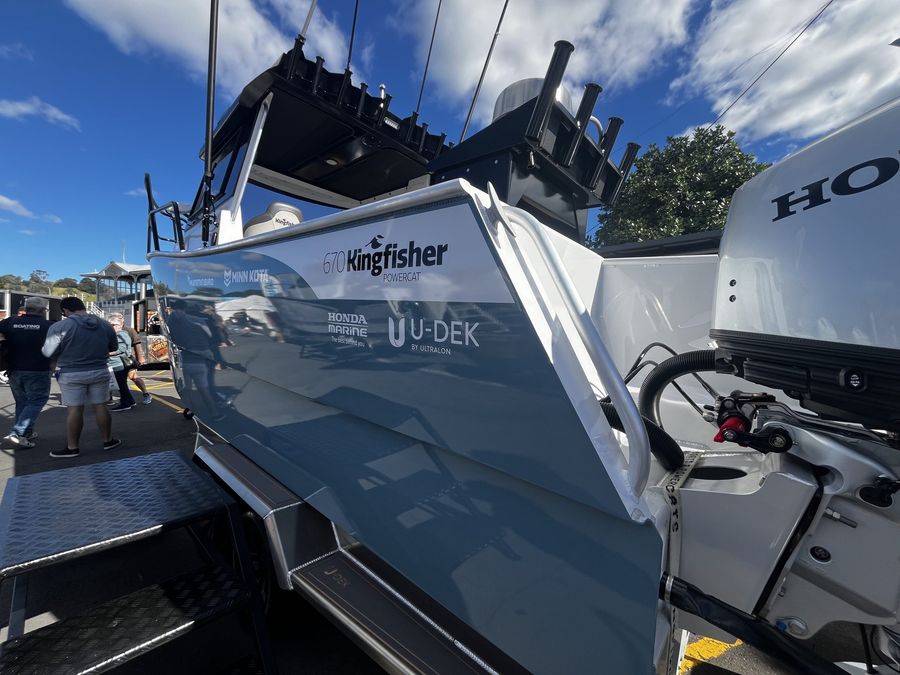
Reworking the floor construction to meet those standards freed up storage space in the cockpit and beneath the forward bunks. Fuel tanks are separately mounted. The 670 comes pre-plumbed for a toilet as an optional fitment, and a 12-volt hot water system and pie warmer (small oven) are included. Garmin is the preferred electronics brand, with Honda or Yamaha the preferred engine choices, though customer and dealer preferences vary. Beam measures 2.49 metres.
The bow rails on both the 730 and the 670 sit higher up the leg than is typical for boats of their size. The positioning is deliberate. If the boat is disturbed while someone is working at the bow, the rail catches them at a height that gives genuine support rather than clipping at the knee and tipping them forward.
The 510 rounds out the range as the entry-level model, built on an asymmetrical hull with a single engine and centre console layout.