Shane Jones has created a significant swell of opposition. As Minister for Oceans and Fisheries, he is driving what many consider the most sweeping overhaul of fisheries legislation this country has seen in forty years, and the public has not been shy about expressing its anger.
When submissions closed last April, more than 25,000 people had formally rejected the proposed changes to the Fisheries Act. That did not slow the Minister down. He released the Fisheries Amendment Bill in a form that sidesteps those earlier submissions entirely, while piling on additional new proposals that were never consulted on at all. His stated intention is to have it passed before the election. That outcome needs to be stopped.
The Bill effectively hands subsidies to commercial operators and prioritises the speed of commercial harvest over the health of our marine environment, the long-term viability of fish stocks, and the future of fishing in this country. Nobody outside of commercial quota ownership has reason to cheer that approach.
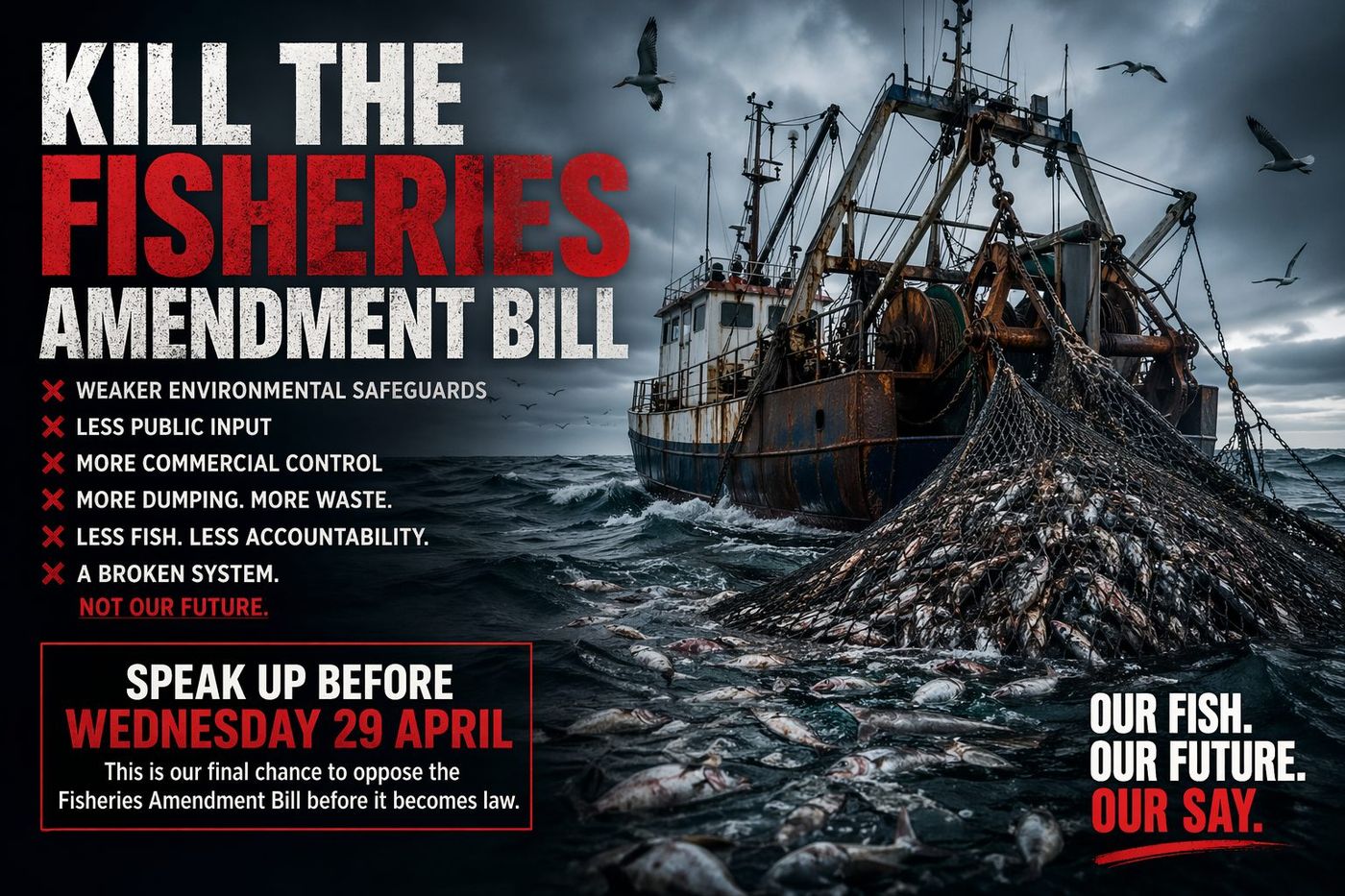
This is the final window to oppose the Fisheries Amendment Bill before it is written into law. Make your voice heard before Wednesday 29 April.
Anyone who has fished New Zealand waters seriously over the years already understands what experience confirms: the fish simply are not there the way they once were. Rather than confronting that reality, the Amendment Bill treats depletion as a condition to be managed around rather than reversed. It normalises decline instead of addressing it.
Among its provisions, the Bill weakens environmental protections, reduces the public's ability to participate meaningfully in fisheries decisions, and removes commercial minimum size limits for species including snapper, trevally and tarakihi. New Zealanders understood immediately what scrapping those size limits would mean in practice. Within a week of the Bill's release, Prime Minister Christopher Luxton responded to the public backlash by announcing he would drop the amendment that would have allowed commercial fishers to retain and sell undersized fish.
That was one battle won, but it should not be mistaken for the end of the argument. Running across 70 pages of dense legal language are changes whose direction is not difficult to identify once you work through them: shifting fish away from the public and concentrating greater control in commercial hands. Another windfall for those who hold commercial quota, and another blow to ordinary Kiwis, their children, and the health of our marine environment.
The Bill also creates a pathway toward greater waste at sea. It would legalise increased dumping of unwanted dead fish overboard, discarding catch that could have remained alive in our waters, justified in the Bill's own language as reducing "unnecessary costs" for commercial operators. Once that kind of discarding becomes lawful, there is no incentive for the industry to adopt more selective or less destructive methods. The predictable outcome is more trawling along our coastlines, not less.
Beyond the size limits and the discarding provisions, the Minister is seeking to lock the public out of any meaningful input on changes to commercial catch limits for periods of up to five years. That means fewer checks, reduced accountability, and consequential decisions being made without any obligation to consult the people most affected by them.
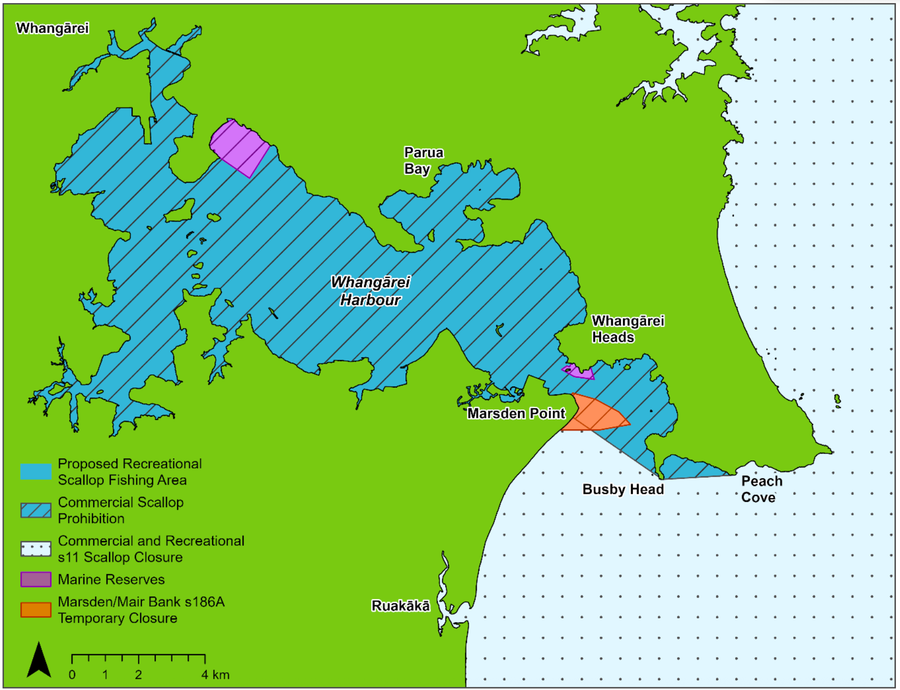
Five years is a long time when marine environments can shift quietly and quickly. Fish stocks do not send out warnings as they worsen. By the time the decline becomes impossible to ignore, the damage is already deeply embedded and far harder to undo. The signs are already visible: crayfish cannot be gathered from Northland, the scallop fishery is closed, and where have our john dory gone? Waiting up to a decade for corrective management measures to be applied after further deterioration is not a responsible position. By that point, the children who might have grown up fishing have lost interest, and the bond between families and the water has been quietly severed.
New Zealanders should not be asked to accept the leftovers of a degraded marine environment propped up by a quota management system that is not working. Kill the whole Bill. Now.