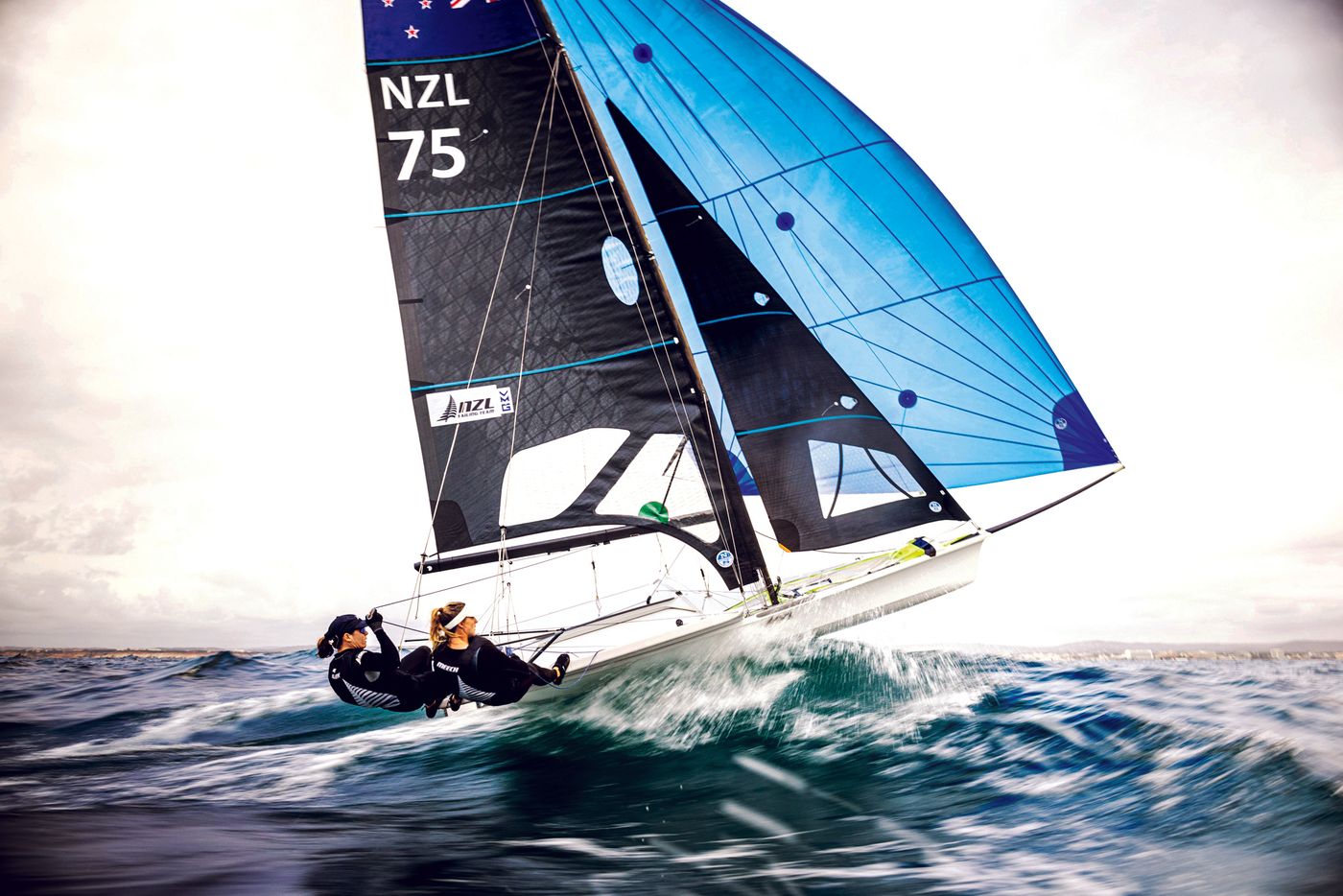
Jo Aleh steps onto an Emirates Team New Zealand AC75 as someone who has genuinely earned her place. A double Olympic medallist and world champion, she ranks among the most accomplished tacticians in the sport. Yet she speaks frankly about the complexity of how she got there.
Speaking to Radio New Zealand, Aleh put it plainly: "None of us like a quota. As a woman who's been involved with yachting for a long time, I don't want to be on something because of a quota, but you've kind of got to take what you can get sometimes."
That honesty cuts to the heart of a tension women in high-performance sport know well. You cannot demonstrate what you are capable of until someone gives you the opportunity, but when that opportunity arrives by rule rather than by instinct, your right to be there becomes the first thing people question.
The America's Cup requirement for each five-person crew to include at least one woman has not been welcomed without reservation. Team NZ CEO Grant Dalton told RNZ he was "quite verbally against it" because it felt tokenistic. In the same breath, he acknowledged that without such a mandate, "instinctively the guys are going to pick the guys." That observation is not about hostility. It is about habit, and habit is often the hardest thing in sport to shift.
Meaningful change at elite level rarely happens without external pressure. The Women's America's Cup gave the sport a proof of concept, and the quota rule keeps the door open long enough for sailors of Aleh's calibre to walk through it.
Sailing is not the only arena where this tension has played out. SailGP requires every F50 team to include at least one female athlete, and on paper the intention looks sound. In practice, most women in the competition have been placed in strategist roles. The visibility is real, but so is the limitation. A strategist's influence depends heavily on whether the helm chooses to act on her input, which means the role can slide from genuine contribution toward something more performative.
There are exceptions, and they carry weight. Martine Grael, the Olympic gold medallist, skippers the Mubadala Brazil SailGP Team, leading the boat rather than advising from behind it. Anna Weis competes for the United States team as grinder and jib trimmer, a physically demanding role that places her at the centre of the boat's operation rather than on its margins. Both women demonstrate that ability, not gender, should determine where someone sits on a boat. They also make plain how uncommon such examples remain.
The 2025 Admiral's Cup introduced a comparable requirement, with at least one woman required aboard each team's offshore entries. Reactions were mixed. Some read it as a genuine step forward, others as box-ticking. What followed, though, was quietly convincing. Talented women sailors joined competitive offshore teams, and their skill and professionalism made the debate about their presence feel beside the point.
As with the America's Cup rule, the Admiral's Cup mandate does not guarantee equal outcomes. What it does guarantee is visibility. It obliges teams long shaped by tradition to consider skillsets they might otherwise pass over, a modest shift but a real one.
For a model that goes further, look outside sailing altogether. The E1 Series, the electric powerboat championship, builds genuine integration into its very structure. Each team fields one male and one female pilot, both sharing identical duties at the wheel: equal seat time, equal responsibility, equal standing in the results. There is no designated female role and no separate development track. Both pilots race, full stop.
Every competitor drives the same RaceBird electric boat, removing any equipment variable and making the result a direct function of skill. The UIM E1 Pilot Academy supports this by recruiting and training athletes of all genders from a range of sporting backgrounds, creating a pipeline grounded in merit rather than representation for its own sake.
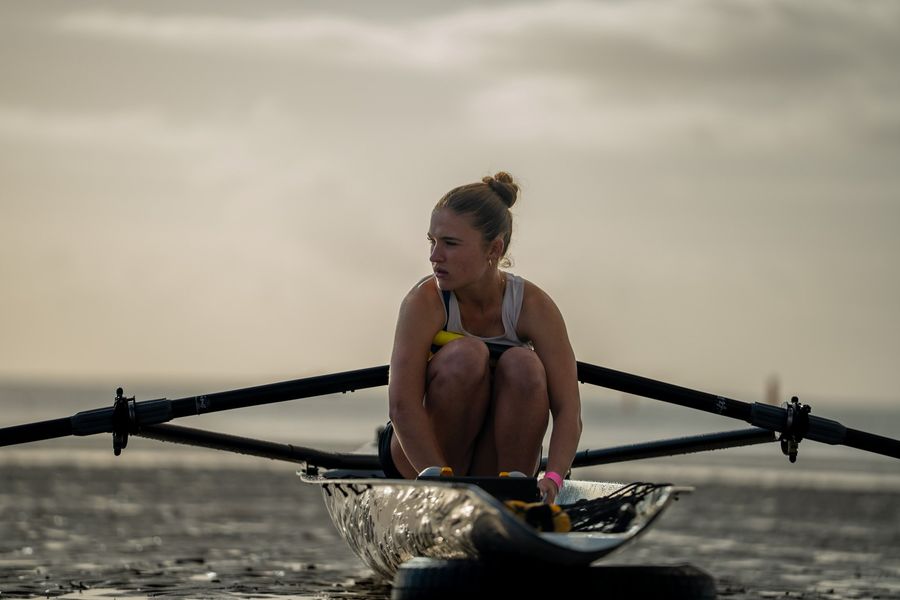
Rowing is moving in a similar direction. After successful trials, World Rowing will introduce a mixed-gender eight-person boat at the 2025 World Championships, with an eye toward eventual Olympic inclusion. Equal numbers of men and women, working in synchrony, sharing both the effort and the result. No quota required, just a format designed from the outset to reward contribution regardless of who provides it.
These examples suggest that inclusion does not require compromise. It requires structures in which talent leads naturally, whoever happens to bring it.
SailGP has its own initiative in the SailGP Women's Pathway Program, intended to bring female athletes into the professional league. The goal is worthwhile, but the programme also raises an obvious question: why do women need a separate pathway at all? No equivalent exists for men, because men are assumed to belong without one. Until that assumption is examined rather than simply accepted, equality in the sport will remain procedural rather than cultural.
Aleh never needed a rule to prove her ability. What she needed was a system prepared to give her a fair starting point. That is what the current mandate, for all its imperfections, provides. The modern AC75 is a boat that rewards composure, tactical precision, and coordinated athleticism over raw physical power. The era of pedal grinders is behind the sport. What wins now is exactly the kind of intelligence and cool-headedness Aleh has built a career on.
Her challenge from this point is not to justify her presence. It is to show what becomes possible when belonging is treated as a given rather than something to be earned under scrutiny.
Progress in its truest form arrives when a woman is selected for a Cup campaign simply because she is the best available sailor. The sport is not there yet. But this current transition, awkward and imperfect as it is, moves things in that direction. Representation is not the destination. Authentic inclusion is.
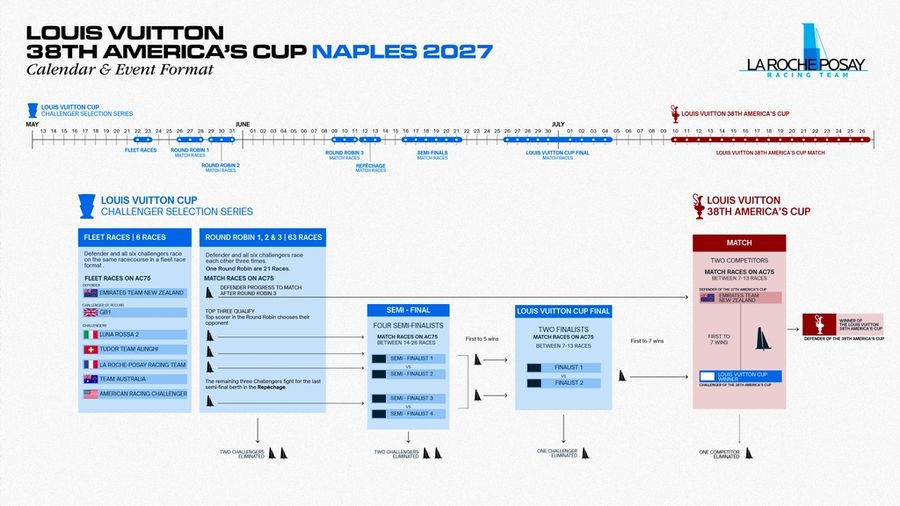
When Aleh lines up to defend the Auld Mug in Naples in 2027, she will represent more than women in sailing. She will stand for what becomes possible when talent meets genuine opportunity, and when tokenism finally gives way to trust.