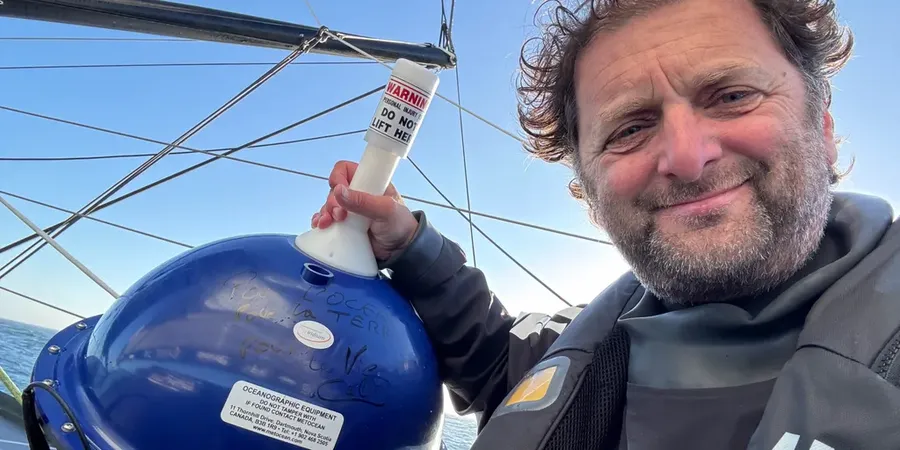
Sam Goodchild is no stranger to the North Channel. The narrow stretch of water separating Ireland from Scotland has featured in earlier chapters of the British skipper's career, during campaigns aboard Figaro Beneteau and MOD70 class boats. That accumulated knowledge carries genuine weight when you are singlehanded on a foiling 60-footer, the coastline barely three nautical miles off, and the margin for error effectively zero. The decision to take MACIF Santé Prévoyance through the channel was a strategic one, arrived at clearly, even though Goodchild knew from the outset that it would require patience to override instinct.
The IMOCA fleet has been deep in the Arctic's grip for days, punished by the high latitudes before beginning the long arc south. The polar circle is now retreating in the wake of each boat, but the demands on every skipper have not diminished so much as changed shape. Élodie Bonafous and Arnaud Boissières are both running their own sums, reading the Irish coast and the miles beyond it for whatever advantage they can extract. The route back to Les Sables d'Olonne still has plenty to say.
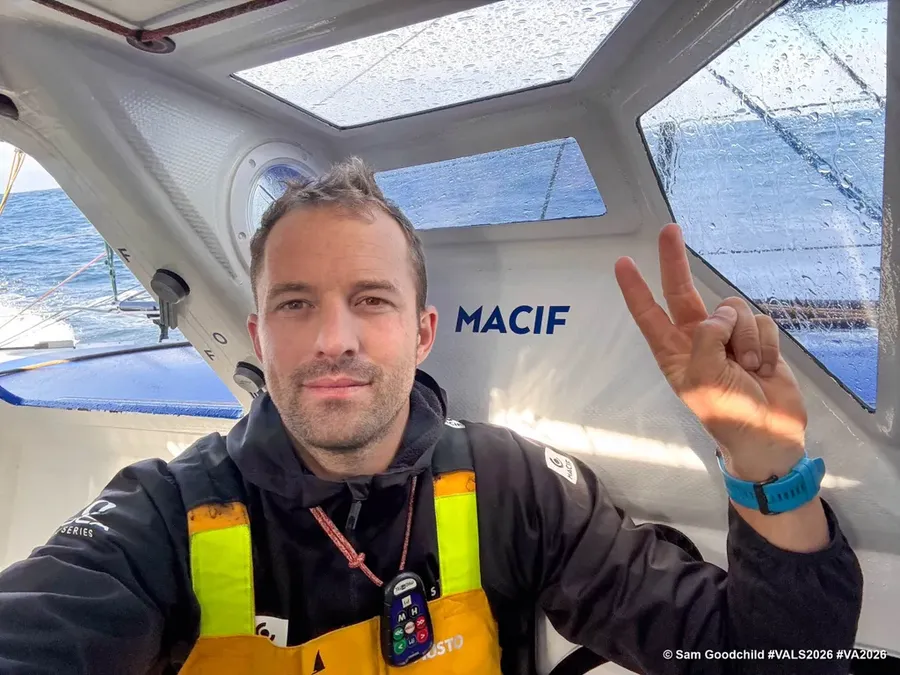
For Goodchild, the North Channel has brought something close to a brief exhale. After the relentless conditions of the higher latitudes, the sea state has settled somewhat, and for a time dolphins appeared alongside MACIF Santé Prévoyance. They were gone before he could get to a camera, but he spoke of it as a nice moment, and there was nothing forced about that.
The channel gives with one hand and takes with the other. Wind tumbling off the Irish hills arrives in unpredictable bursts, keeping whoever is on deck perpetually alert. Goodchild's answer has been a measured one: holding the boat to roughly 60 percent of its capability, trading outright speed for control. Sail changes and manoeuvres are being timed to gaps in the gusts, and scheduled away from moments when a shipping encounter could transform a sound decision into a costly one.
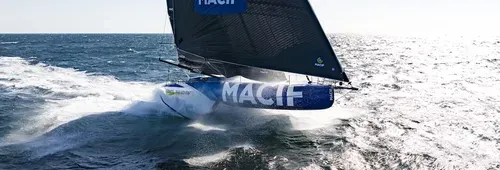
Few racing skippers would find that trade-off easy to sit with, but the arithmetic of the channel makes it difficult to argue against. You deal with what is in front of you. Goodchild expects to be through Saint George's Channel by early morning, at which point the fleet enters a transition zone that every competitor must cross, whether they followed the inside line along the Irish coast or went further west. In his view, the meaningful gaps between boats will come from what the weather does once the fleet reconverges beyond that point. His reading is that the angle back to France will reward those who took the inside route, and that the pressure systems pushing south with the fleet will allow speeds to build again once the pinch point is behind him.
Until that opens up, he holds MACIF Santé Prévoyance at half-throttle through a corridor that has given far more seasoned sailors uncomfortable days, keeping the boat tidy and the options alive, confident that faster sailing is waiting just the other side of the squeeze.