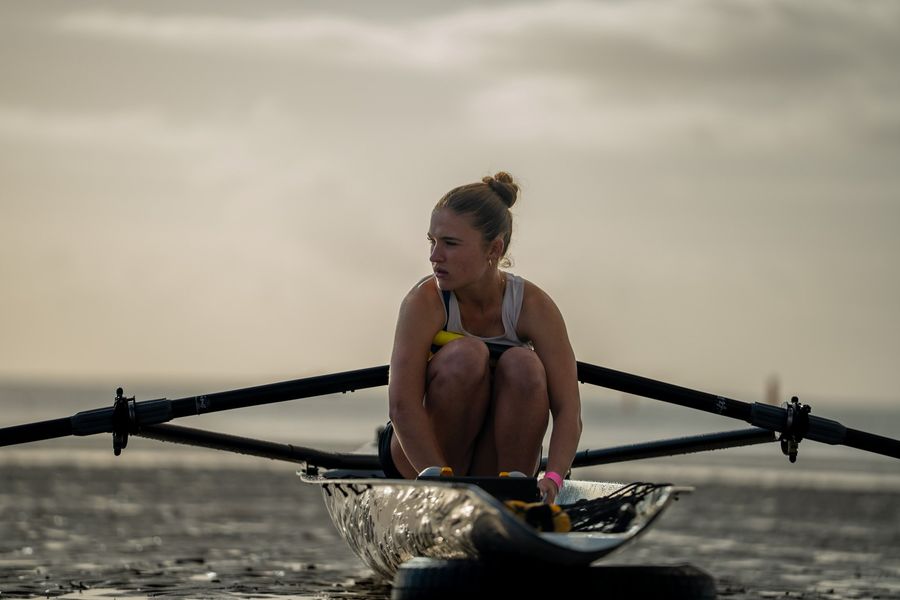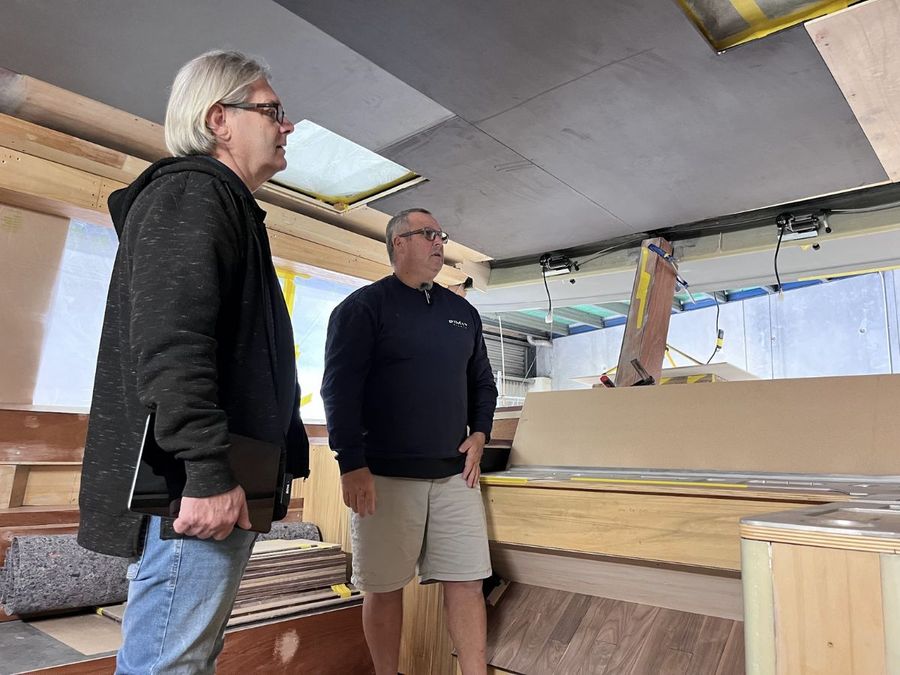
Near the Port of Tauranga sits a workshop that couldn't be more different from the production yards and showrooms dominating the mainstream boating industry. Nic de Mey Yachts is a place of focused intent, where half-finished hulls share floor space with CNC-cut components and design sketches pinned above workbenches. Three decades of boatbuilding are embedded in every corner, visible in the precision of the parts, the gloss of cured carbon, and the quiet confidence of the people working there.
Nic de Mey himself is at the heart of it all. His career has taken in America's Cup campaigns, Whitbread race boats and a long arc of composite innovation, before he opened his own workshop in 1994. In the years since, he has built a reputation for tackling the most demanding and unusual projects, the kinds of builds that call for engineering rigour and genuine creative thinking in equal measure. His filter for every new project is straightforward: "If I'm not excited by it, I won't build it." That standard has held firm across every project in the Tauranga shop, but nowhere is it more vividly expressed than in the world of ski racing.
Nic has been involved in waterski racing for 31 years, not just as a builder but as a competitor, and now as President of New Zealand Waterski Racing for 2025/26. The pull of the sport comes down to a few essentials: the quality of the competition, the bonds formed between competitors, and the sight of young skiers coming off the water having pushed themselves further than they thought possible. "What you think you are capable of is only the beginning," he says. "Never quit, and remember that a team working together is unbeatable."
That philosophy has a physical expression in the Phantom F2, a Formula 2 ski race boat built entirely in carbon fibre that has rapidly established itself as a reference point at the top level of the sport. Built to IWWF standards, it measures 6.25 metres with a 2.03-metre beam and is powered by Mercury's 300R. The detail that gives it an edge beyond its specifications is Nic's own experience behind the wheel. "I drive race boats myself. I know what works."
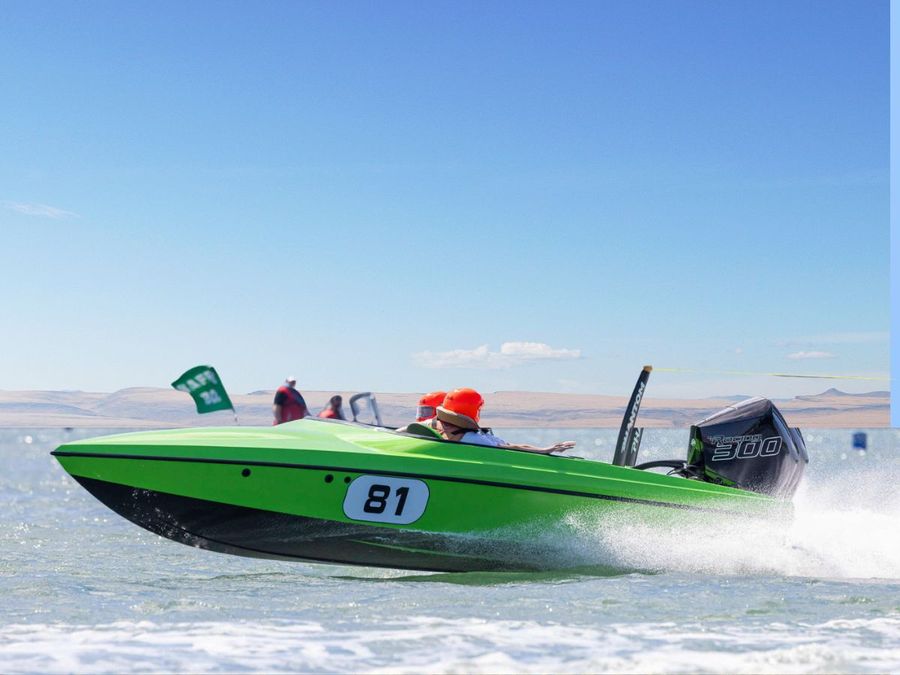
The Phantom F2 has already earned results on the international stage. De Mey Yachts exported its first example to the United Kingdom earlier this year, purchased by Damian Hopkins for his son Sam to campaign at the 2025 World Waterski Racing Championships in Belgium. The green "81" hull proved itself immediately: since taking delivery, Sam Hopkins has won every race he has entered, a result that speaks to both the driver's ability and the boat's performance credentials.
Construction is uncompromising throughout. Each hull is infused carbon over foam, with a solid carbon transom and structural ski pole. Billet fuel caps, CNC-machined fittings and exacting surface finishes bring the detail level in line with the performance. To push the platform further still, Nic developed a stripped-back R&D boat known as War Machine, an ultra-light test platform designed specifically for structural experimentation in preparation for the 2027 World Championships.
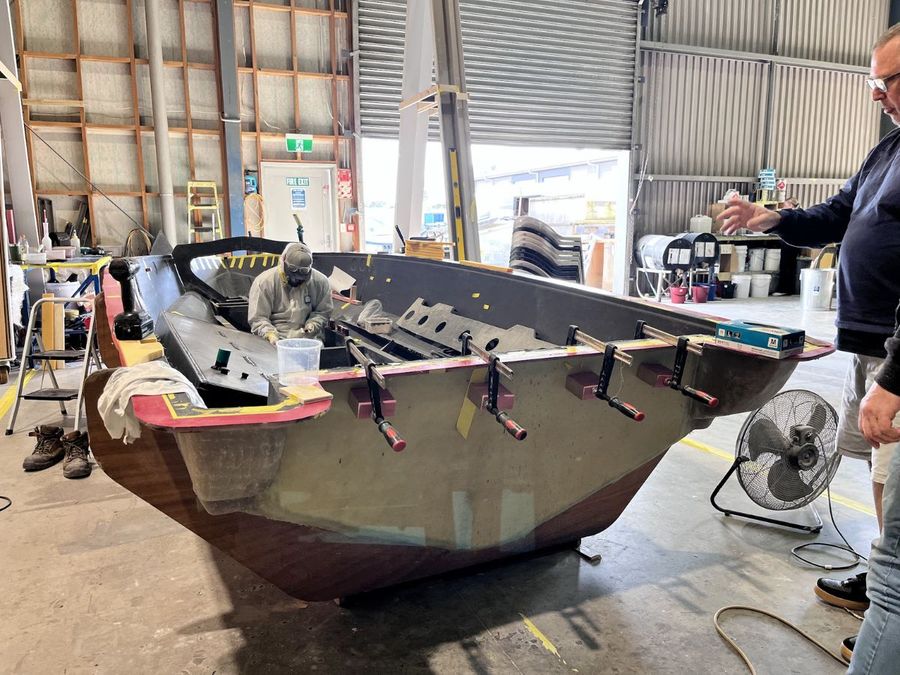
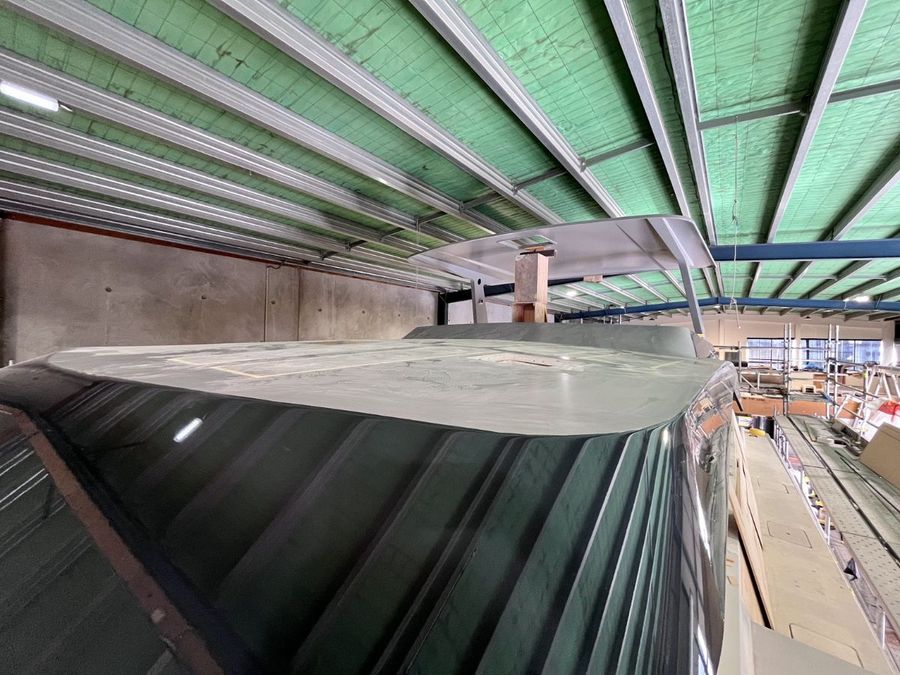
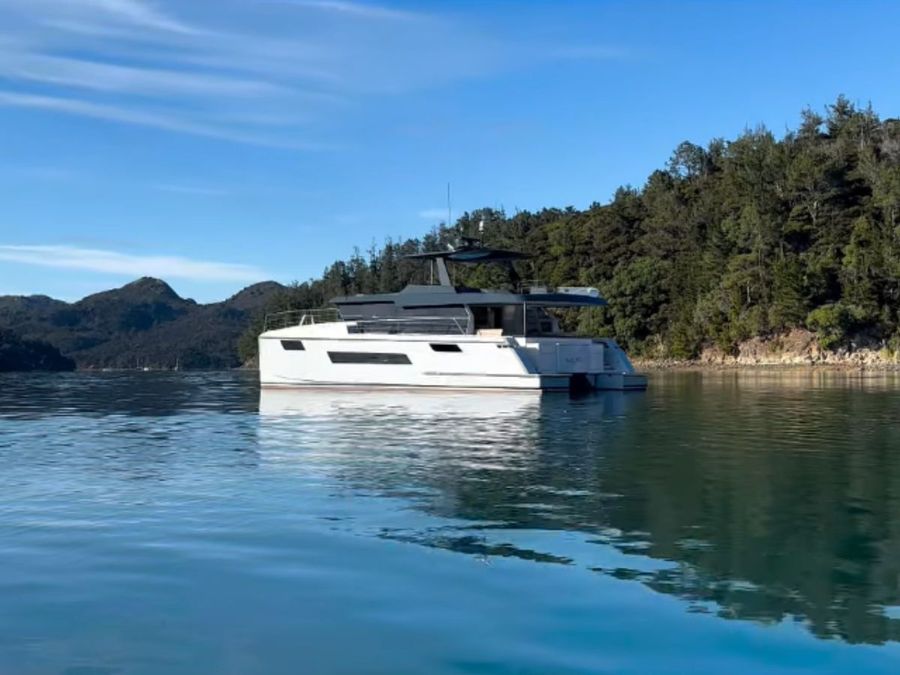
Ski racing commands Nic's competitive energy, but it accounts for only part of what De Mey Yachts produces. The same command of carbon construction that wins races on the waterski circuit is also being directed toward long-range passage-making. The Spaceship 60, a 60-foot carbon catamaran drawn by Roger Hill, demonstrates the full breadth of what the Tauranga operation can deliver.
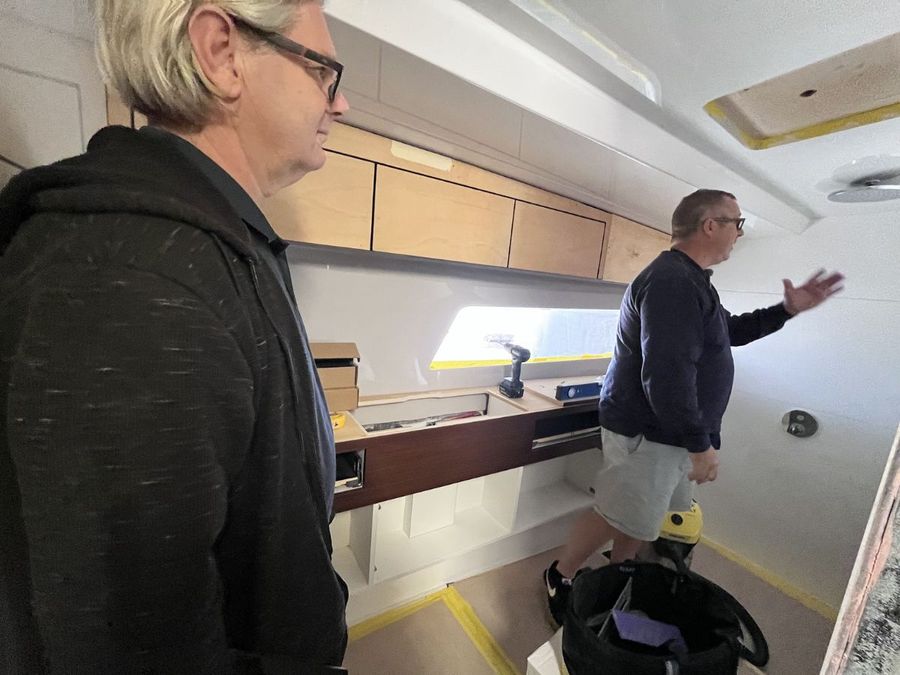
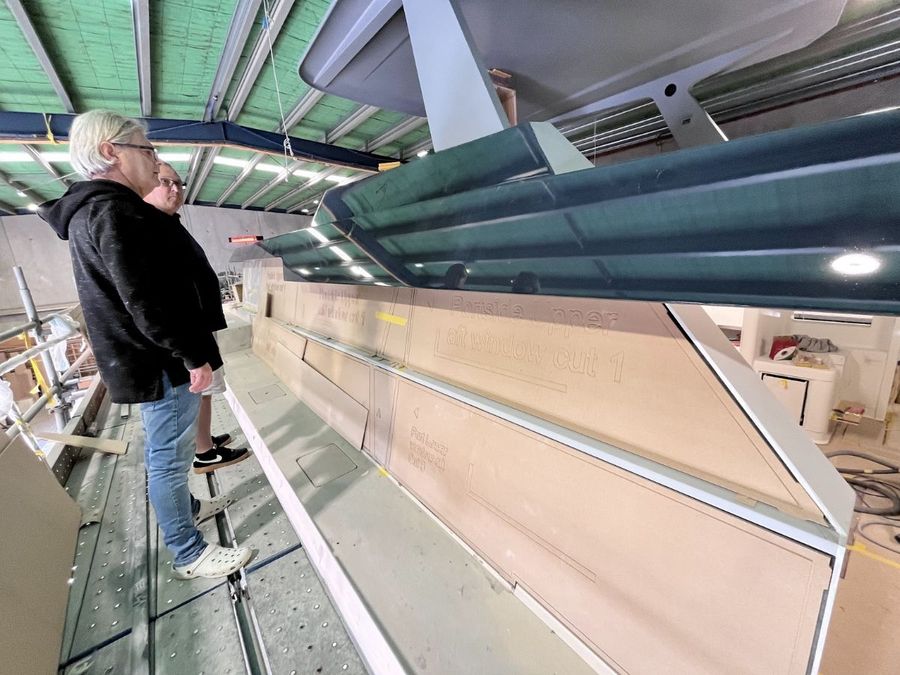
Moving through the unfinished vessel in the workshop, the design thinking behind every decision becomes apparent. A bilge drainage problem was re-engineered into the layout rather than patched over. Choices made for comfort and efficiency are traceable back to conversations with the owners about how they intended to live aboard. Rather than following a fixed plan, the design responds to real needs and adapts as understanding develops.
Powered by twin 550hp Cummins engines and carrying 10,000 litres of diesel, the Spaceship 60 cruises at 18 knots while burning just over 6 litres per nautical mile. Pulled back to 10 knots, her range extends well beyond 3,000 nautical miles. Semi-displacement hulls, foam-cored carbon structure and CNC-machined components work together to deliver strength, speed and efficiency at a level that few builds of this scale can match.
The fit-out is as considered as the structure beneath it. A tender garage houses a carbon catamaran tender designed by de Mey himself. A lithium power bank, solar array, panoramic helm station and multiple living areas complete a package that is as refined as it is capable. Cabinetry, soft furnishings and composite fabrication are all executed to the same standard, because the stated ambition is precise: that every time the owner steps aboard, they pause and say, "Wow. That's my boat."
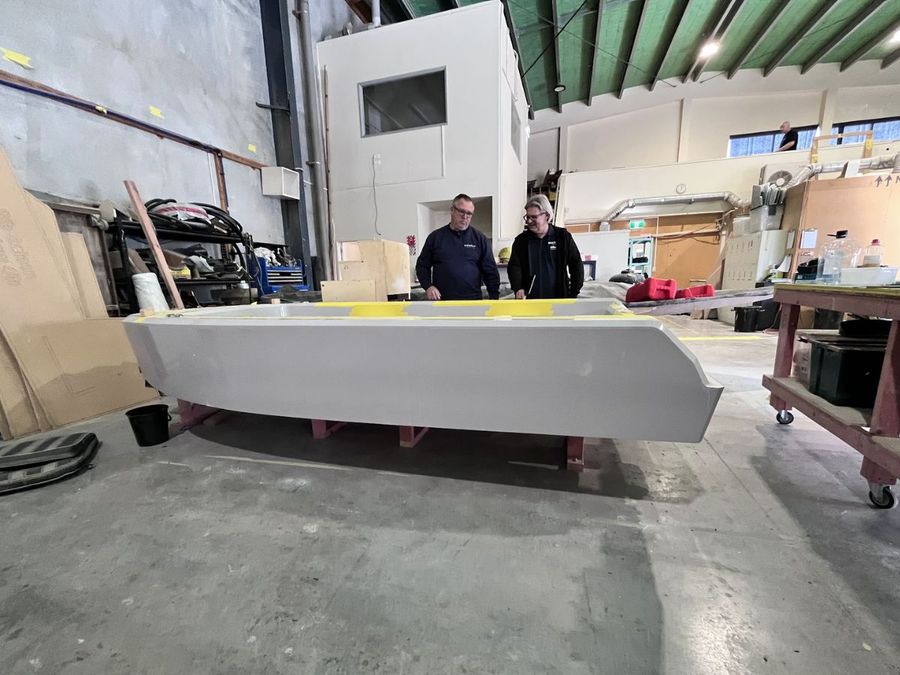
Delivering that moment consistently requires control over the process at every stage, and that reality has shaped the business as much as any individual project. Over the years, Nic has brought nearly every trade in-house: cabinetry, upholstery, painting, CNC machining and 3D printing. The motivation is not expansion for its own sake but the simpler logic that quality cannot be guaranteed if it depends on variables outside your control. "We replaced a lot of traditional skill with better tools. But the mindset, the pride in each detail, is the same," Nic explains.
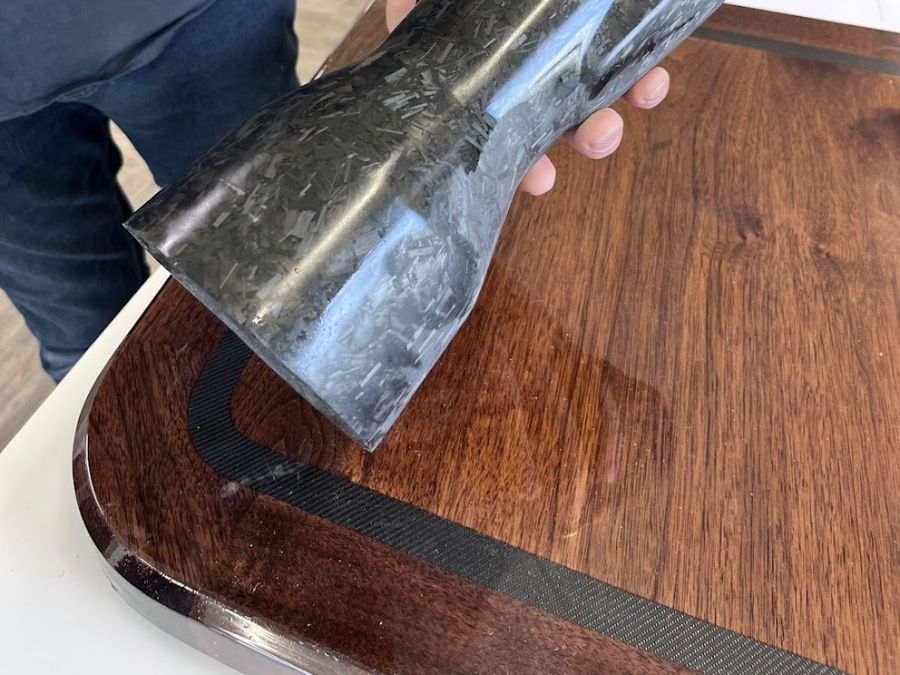
That depth of in-house capability proved its worth during COVID, when skilled tradespeople were hard to find. Rather than accept lower standards, De Mey Yachts doubled down on precision manufacturing. Moulds are now designed and printed in-house. Carbon components are fabricated on-site. Prototyping extends to stainless fittings and complex ducting systems. The outcome is visible in details like curved walnut tables inlaid with carbon and furnishings that feel individually tailored rather than installed from a catalogue.
The design process is built around a creative partnership. Nic drives the concept and direction, while Gregor, his Slovene collaborator, contributes finesse and refinement. The exchange between them is both creative and technical. It might mean adjusting 20mm of camber, reworking a transom line, or resolving the hull geometry of a 17-metre powercat being built by another builder. Every design is stress-tested on screen before carbon is committed, so that finished boats match their renderings and, in practice, go further.
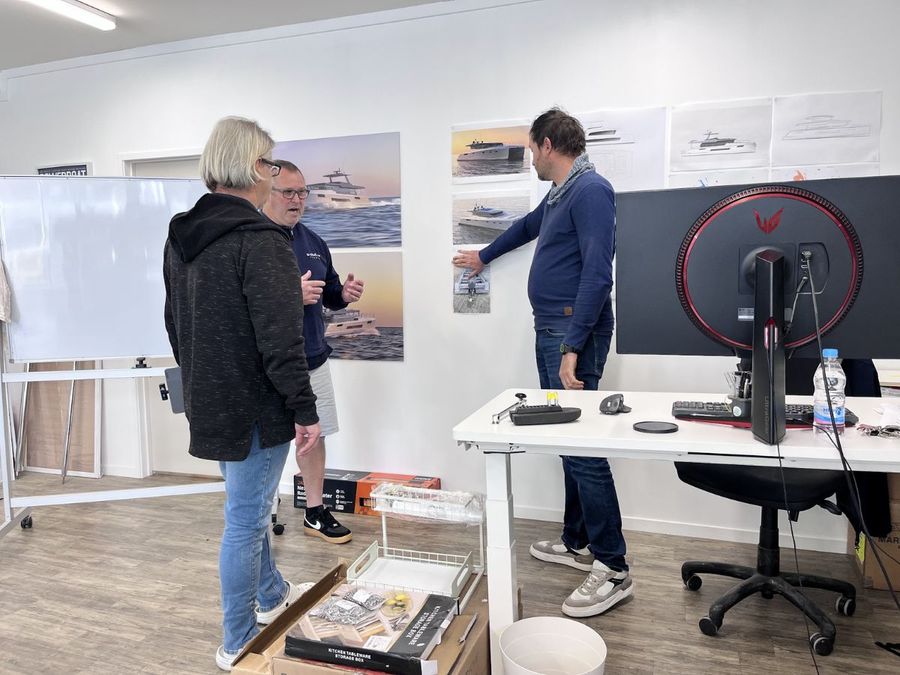
For clients, working with De Mey Yachts means something beyond a specification being met. Each project starts with Nic and Gregor sitting with the owner and listening. "People don't always know what they want until you draw it," Nic says. From that first conversation through to sea trials, every significant decision is made together. The boat that results belongs to the owner in more than the legal sense; they have been part of its becoming.
Scaling up holds no appeal. De Mey Yachts builds a smaller number of boats to a higher standard and extends its design capability to selected outside projects, including foiling cats, design studies for Haines Hunter, and exploratory work on electric boats and carbon-bodied cars. The threshold for taking on a project is unchanged. "I don't want to build average boats for clients," Nic says. "If we do it, it has to be exceptional."
Elsewhere in the industry, attention shifts between electric propulsion and production volume. At De Mey Yachts, the focus is narrower and harder to move. Carbon, lithium, petrol, the power source is secondary to the result. Whether the project is a championship ski boat or a long-range offshore catamaran, the same qualities come through: precise construction, genuine innovation and a refusal to accept the merely adequate.
Three decades of that approach are written into the Tauranga workshop. The dust on the floor, the gloss on a cured hull, the drawings on the wall, all of it points in the same direction: boats that stir something in the people who build them and the people who sail them. That is what Nic de Mey has been chasing all along.