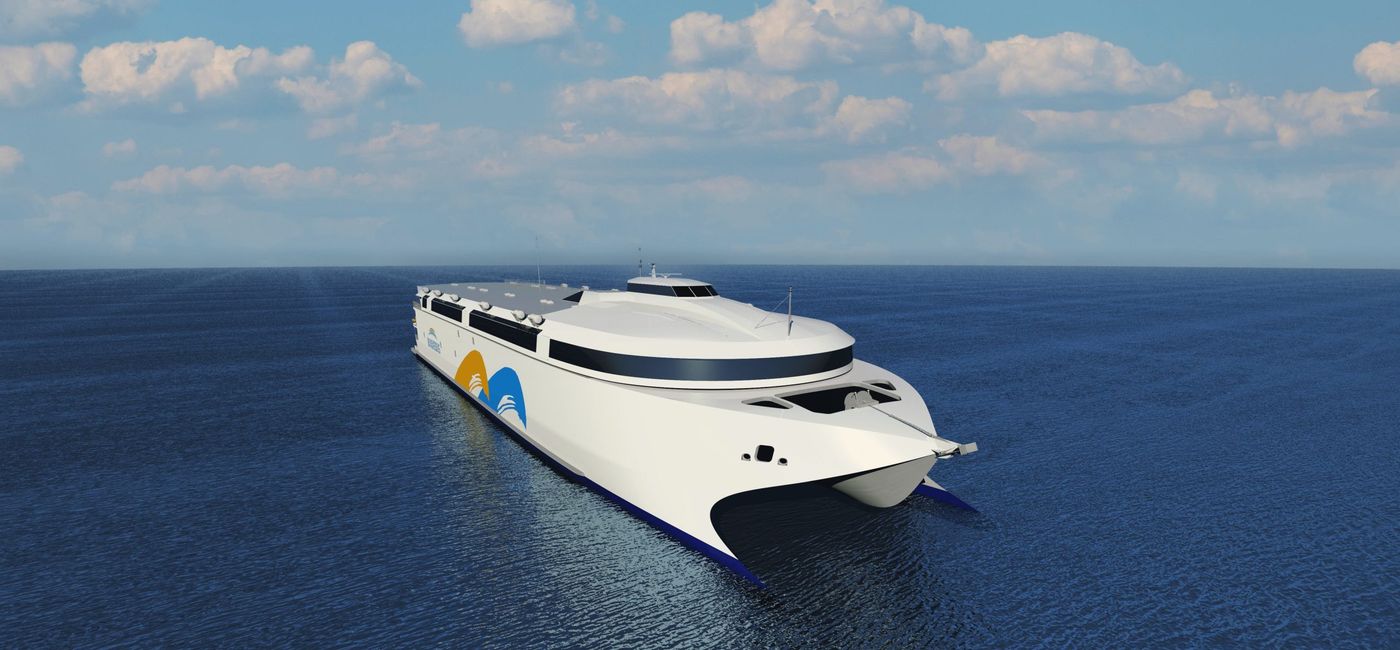
Tasmanian shipbuilder Incat has secured an order for two high-speed electric ferries destined for one of Denmark's most travelled maritime routes. The vessels will operate on the Kattegat crossing between Jutland and Zealand, forming the centrepiece of what is being described as the world's largest maritime electrification project.
Each ferry stretches 129 metres and draws power from a 45,000 kWh battery system, capable of carrying 1,483 passengers and 500 cars at speeds exceeding 40 knots. Each vessel is expected to eliminate thousands of tonnes of CO₂ annually from a route that currently relies on conventional propulsion.
Incat Chairman Robert Clifford says the agreement signals a fundamental shift for shipping worldwide.
“These new vessels for Molslinjen mark a turning point not just for Incat but for the global maritime industry,” Clifford said. “They are part of a new class of high-speed, low-emission ships that are redefining what’s possible at sea. We’re honoured to again partner with Molslinjen, and proud to help them deliver real environmental change on one of Europe’s busiest ferry routes.”
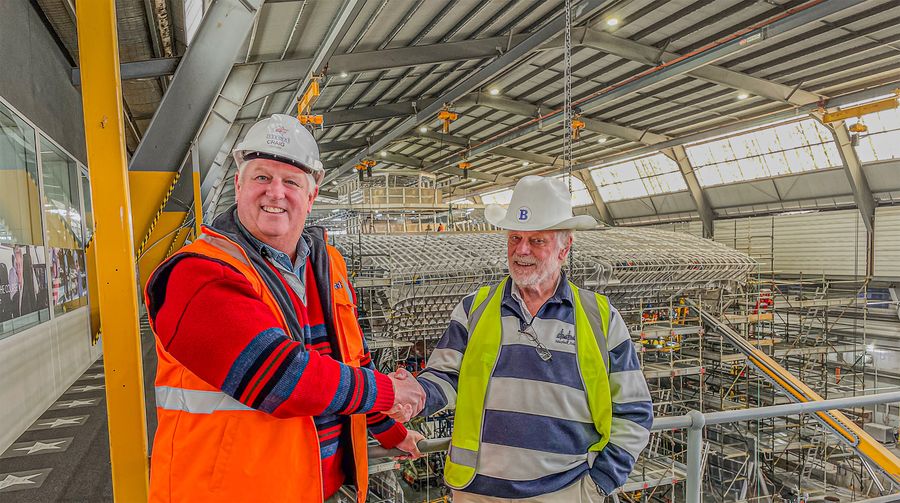
The order arrives as Incat advances work on Hull 096, the world's largest battery-electric ship, alongside Hull 100, a next-generation 78-metre hybrid ferry. Together, these projects place Incat firmly at the front of zero-emissions shipbuilding.
Construction on the two Danish ferries is set to begin within the coming months, with the first vessel due for delivery in late 2027. To handle the growing pipeline of work, Incat plans to expand its Prince of Wales Bay production facility in Tasmania. The development is expected to double both output capacity and workforce within three years, enabling the yard to take on a greater volume of large vessel deliveries.
“This project aligns perfectly with our strategic vision,” Clifford said. “As global demand for sustainable ferries accelerates, our expanded facilities will ensure we’re ready to lead the way in both innovation and volume.”
The project carries meaning beyond its commercial dimensions. Incat Managing Director Craig Clifford also serves as the Honorary Consul for Denmark in Tasmania, and he views the partnership as a model of international collaboration in clean technology rather than simply a business transaction between two countries with very different coastlines.
“Incat has a long and trusted relationship with Denmark through our work with Molslinjen,” he said. “These vessels will connect communities across the Kattegat with high-speed, clean energy technology, and they’ll be built right here in Tasmania.”
With early-stage construction already underway, Incat is showing once more that a shipyard on a small island at the edge of the Southern Ocean can drive meaningful change across the global maritime industry.