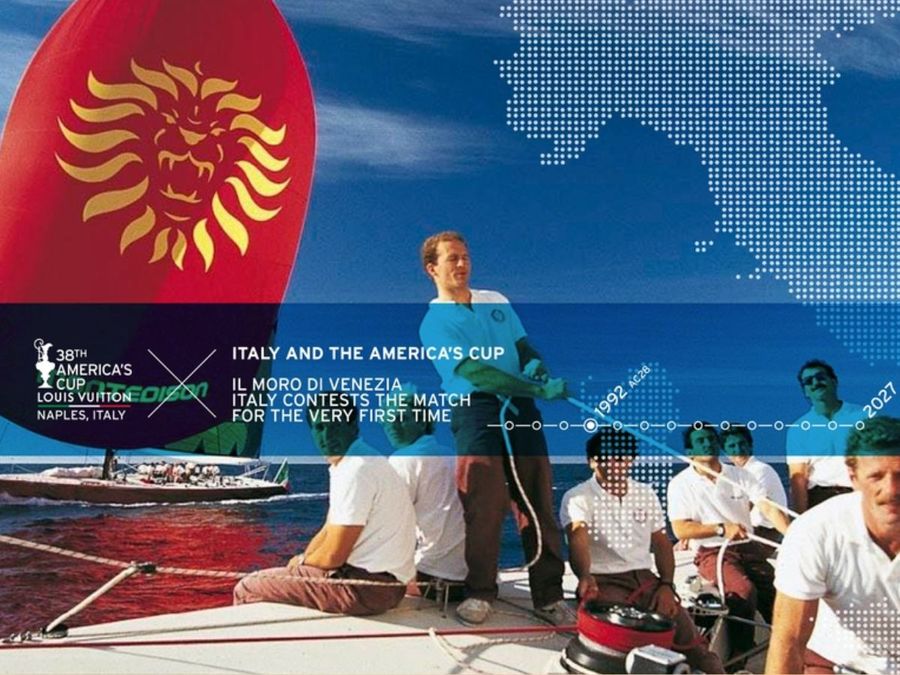
Few moments in America's Cup history carry the weight of Italy's transition from celebrated challenger to genuine contender. The spirited campaigns of 1983 and 1987 had built a foundation, but it was the decision by agri and chemicals businessman Raul Gardini to throw the full force of his ambition behind an assault on the XXVIII America's Cup in San Diego that changed the game for Italian sailing. Competing under the burgee of the Compagnia della Vela di Venezia, Gardini drew on the groundwork laid by the Azzurra and Italia syndicates, as well as considerable success in the offshore maxi boat scene, to construct a five-boat programme under the name Il Moro di Venezia. Nothing was left to chance.
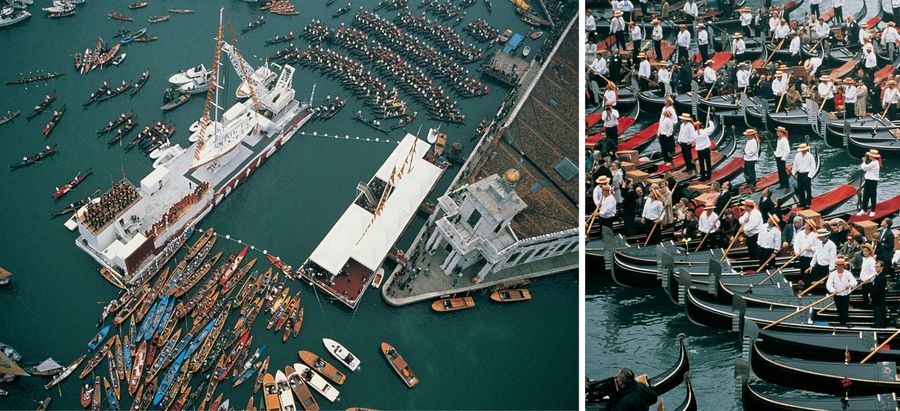
Gardini understood that the new International America's Cup Class, built from carbon fibre and advanced sail materials, represented a levelling of the playing field. In his view, the technology-driven nature of the new class made a full-scale tilt at the oldest trophy in international sport not just possible but necessary. The campaign was announced to the world in unforgettable fashion: a lavish $3m launch party held in Venice, directed by film director Franco Zeffirelli, which closed off the city and produced some of the most memorable images ever associated with Italian sailing. From the very beginning, the Italian public was gripped, and the ambition and flair of the programme gave them every reason to stay that way.
At the helm was 29-year-old Paul Cayard, who had previously been involved with the Consorzio Italia team and had caught Gardini's attention by leading his crew to victory at the Maxi World Championships in San Francisco in 1989. No official budget was ever published, though estimates placed the total expenditure at around $100m, a staggering figure for 1992. Gardini himself framed the challenge in terms that went beyond sport: "This challenge arises from the understanding I have of sailing and the sea, and I have faced it both in sports and in the field of technology. With Il Moro we want to bring to fruition a pilot project in the area of technologically advanced materials."
As it turned out, material science would prove central to the outcome of the 1992 America's Cup, but the contest was first shaped on the design board. German Frers was appointed as designer for the Il Moro di Venezia programme, working through a world where designers such as Bruce Farr were wrestling with the new IACC rule and navigating trade-offs between heavy and light displacement, narrow and wide hull forms, and varying approaches to keel, trim tab, and rudder configuration. The first two boats produced, ITA-1 and ITA-7, were invaluable learning tools. ITA-1 represented a moderate displacement approach, while ITA-7 pushed toward the ultra-lightweight end of the spectrum, an experiment the team abandoned after just three weeks on the water.
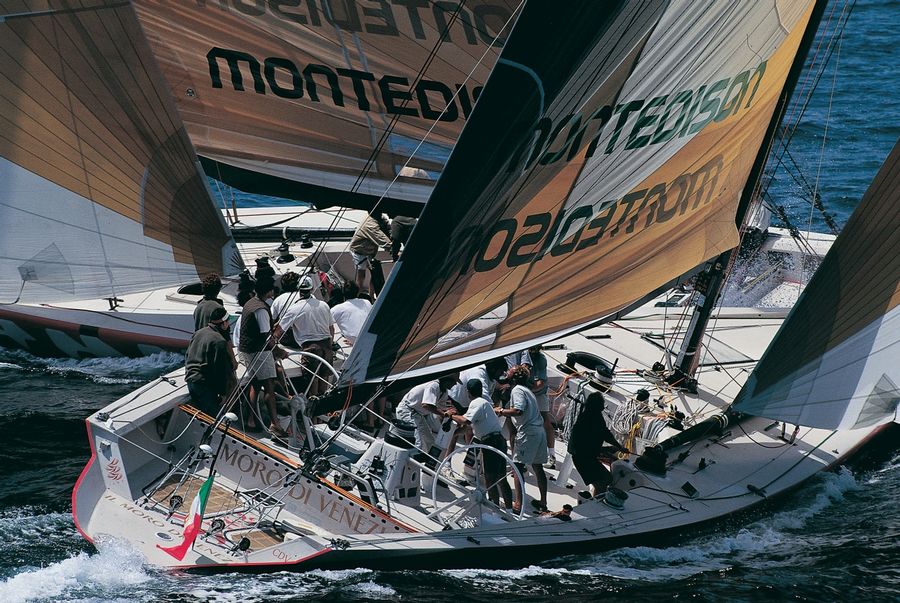
The programme shifted firmly toward heavier displacement with the next two hulls, ITA-15 and ITA-16, which became platforms for intensive sail development and appendage testing. The data and confidence gathered from those boats ultimately shaped the final race boat, ITA-25. Throughout the campaign, Gardini proved an energetic and colourful team principal, adept at drawing attention to himself and away from the sailors, giving them the space and stability to focus on performance.
On arriving in San Diego and establishing their base on Shelter Island near Point Loma, it quickly became clear that two syndicates stood apart from the field of eight Challengers: Il Moro di Venezia and the radical New Zealand entry NZL-20, which featured a 9-ton tandem keel with flaps off the trailing edges, a Bruce Farr design that was electrifying in the right conditions. The Kiwis led the standings through the first two Round Robins of the Louis Vuitton Cup, and although upwind weaknesses in Il Moro di Venezia were identified and corrected before the end of the third Round Robin, Gardini remained publicly confident throughout. Returning to Italy ahead of the finals, he declared: "Yes, I will come back, but only for the finals. With Il Moro we will have the opportunity to go into the final and I am pretty confident that we will be there."
The Louis Vuitton Cup Final between New Zealand and Il Moro di Venezia featured some of the closest racing the competition had ever seen, but a dispute away from the water may well have decided the outcome. After the fifth match of the Final, Il Moro crossed the finishing line flying a red protest flag, triggering a question before the International Jury about whether the Kiwis' spinnaker pole and bowsprit arrangement, used to fly the enormous gennakers carried by IACC boats, was legal. Though the arrangement had not been explicitly outlawed under the separate Louis Vuitton Cup rules, it would have fallen foul of the America's Cup Match regulations. One race was annulled against the Kiwis as a result, leaving the scoreline at 3-1 in their favour. It was a deciding moment.
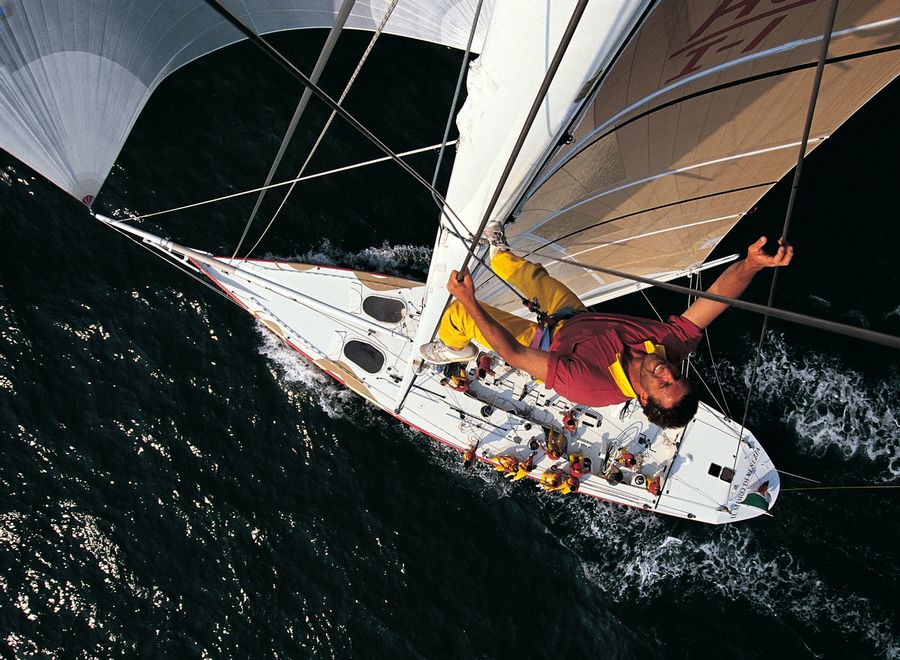
Italy responded with euphoria when, two races later, Il Moro had clawed the scoreline back to 3-3 with two outstanding performances in lighter airs that left the New Zealand team visibly rattled. Despite a determined fightback from the young Kiwi crew, Cayard held his composure and secured two further victories, winning the Louis Vuitton Cup 5-3 and sending Italy into the America's Cup Match for the first time in the nation's history. At home, the front pages of newspapers and the lead stories on television news channels all carried the same message: Italian history was being made in San Diego.
[IMAGE:4]
The opponent waiting in the America's Cup Match was a formidable one. Bill Koch's America3 syndicate had pursued material science with equal rigour, recruiting MIT technicians to examine every facet of the IACC rule in search of an advantage. Designer Doug Petersen absorbed the lessons visible in the Il Moro campaign and made two decisions: a significantly narrower hull form and a reduction in foil surface area. Together, those choices proved decisive. Il Moro di Venezia won the second race of the Match by just 3 seconds, but the final scoreline was 4-1, and the America's Cup stayed in American hands.
Looking back on the defeat, Cayard was candid: "We had to sail very well to win, and I don't think we sailed as good as we did against New Zealand in the Challenger Finals." There is an argument that the sheer emotional and physical toll of such a gruelling Louis Vuitton Cup campaign left the team without the reserves needed when it mattered most. Even so, Il Moro di Venezia had brought Italian sailing to the very pinnacle of the sport, and those involved left San Diego knowing the greatest prize in sailing was genuinely within their reach.
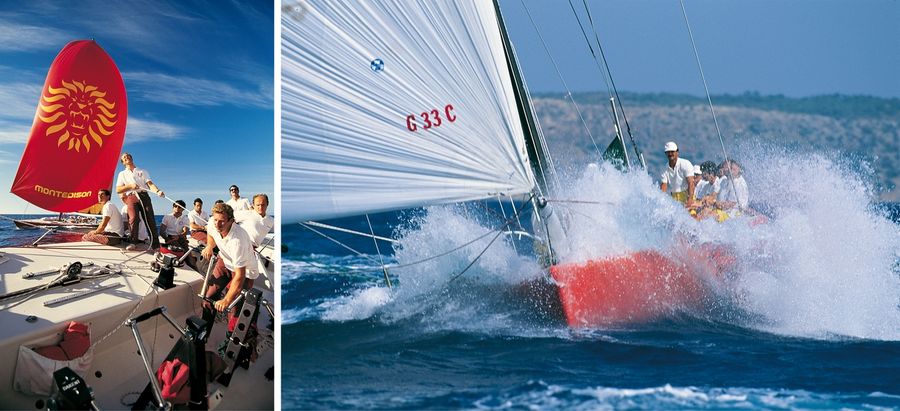
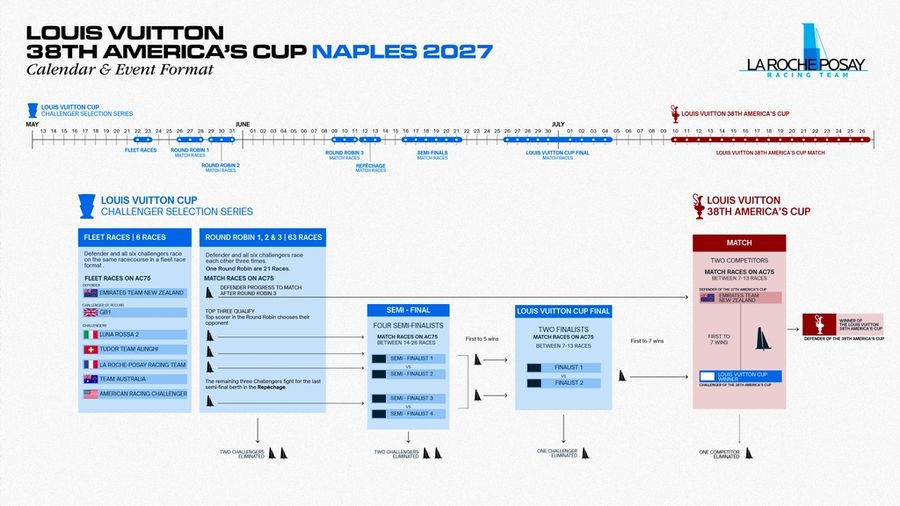
That legacy endures today. The Louis Vuitton 38th America's Cup is set to be held in Naples in 2027, and Italy will not only be the host nation but will field a strong challenge through the Luna Rossa team, the direct inheritors of the Il Moro di Venezia tradition, who have already reached the America's Cup Match in both 2000 and 2021. The question now is whether Luna Rossa can go one step further. Many believe they can.
For the first time in the competition's history, both the Louis Vuitton Cup and the America's Cup Match will be sailed in Italy. In 2027, the world's attention will turn to Naples, capital of the Campania region, a UNESCO World Heritage Site and one of the most ancient cities in Europe. Racing will unfold in the shadow of Mt Vesuvius, off the waterfront of one of the most vibrant cities on earth. With its proud heritage and rich history, Italy and Naples offer the Louis Vuitton 38th America's Cup an unparalleled experience that is certain to add another chapter to the myth, obsession, rivalry, and innovation that define this extraordinary competition.