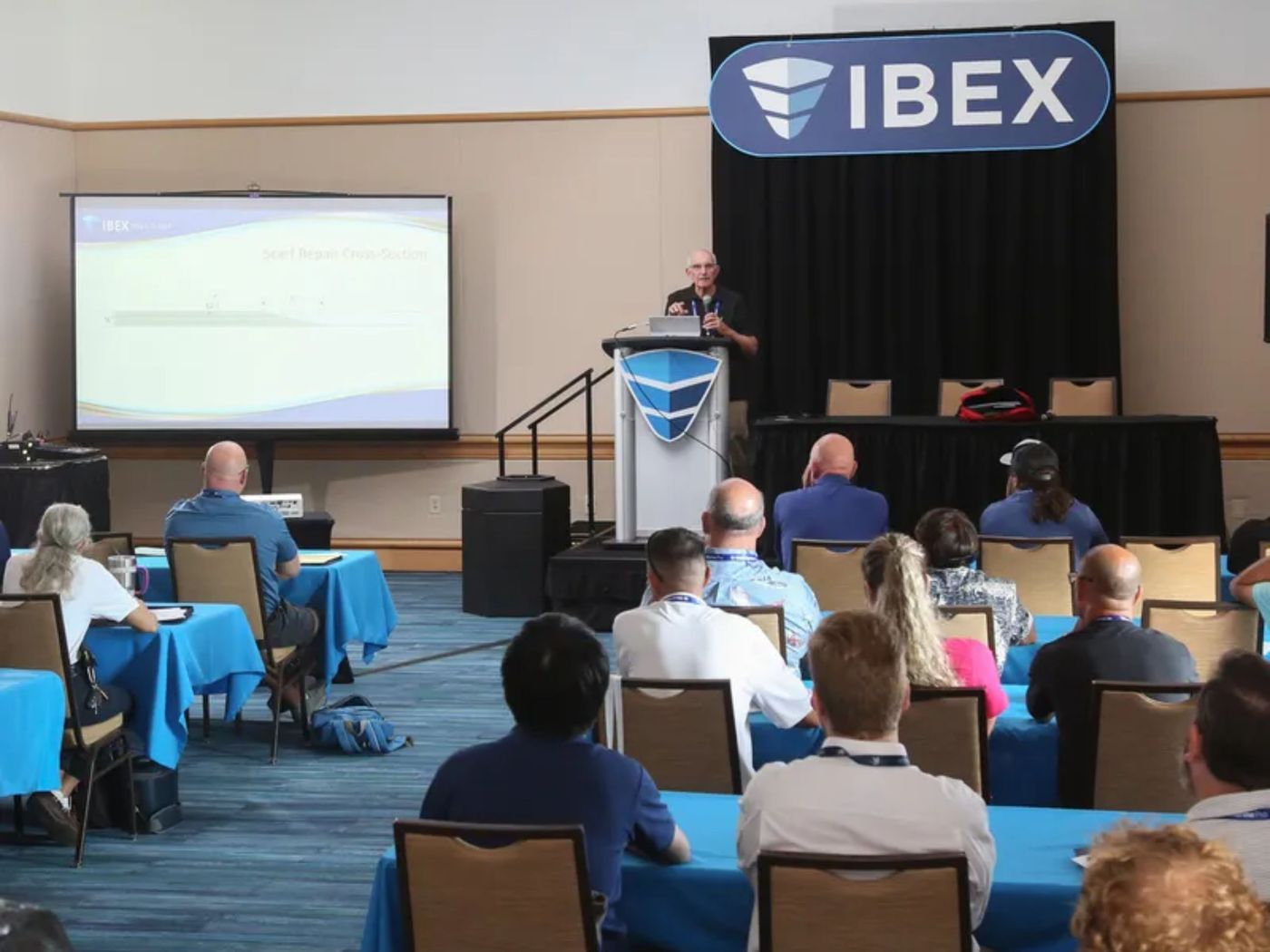
The International BoatBuilders' Exhibition and Conference, better known as IBEX, returns to Tampa Bay this October. While the exhibition floor draws plenty of attention, it is the IBEX Education Conference that pulls serious industry insiders from across the globe. Three full days of seminars, workshops, and keynote discussions dig into the practical and strategic challenges facing modern boatbuilding and the wider marine business.
The Main Stage sits at the centre of it all, drawing some of the most recognised voices in the industry. Robyn Boerstling from NMMA, former NMMA president Dr Thomas Dammrich, Cecil Cohn of Freedom Boat Club, and NMEA's Mark Reedenauer are among those taking the podium. Their conversations will cover tariffs, trade policy, supply chain pressures, and the persistent challenge of building a skilled workforce. These sessions are less about polished presentations and more about honest dialogue on the issues that matter most right now.
“IBEX serves as a central hub for collaboration and real-time problem solving,” says show director Mary Velline. “The best way to face industry challenges is by learning and working together.”
The Seminar Series runs to more than 50 sessions, covering everything from workshop-level practical skills to advanced design theory. Several sessions stand out as particularly compelling.
Hydrofoils have long since moved beyond the America's Cup circuit, appearing now on ferries, workboats, and recreational craft. A dedicated session on developing full foils for recreational boats will examine what designers face as they try to reconcile speed with safety and efficiency. Another session takes a harder look at one of boating's most sobering events, the sinking. Using case studies and photographs, it breaks down how specific design decisions and operational habits contribute to, or help prevent, catastrophic loss.
Satellite connectivity has changed expectations aboard vessels of all sizes, and a session focused on Starlink and flat-panel antenna systems will address the practical integration challenges that boatbuilders and owners now face. Elsewhere, naval architects will explore what happens when gaming engine technology is applied to the design spiral, with the promise of faster iteration and smarter modelling. Artificial intelligence also gets its own session, looking at how AI tools might predict mechanical failures, boost operational efficiency, and edge vessels closer to autonomous capability.
Two further sessions tackle themes that rarely get examined so directly. One puts real numbers to the trade-offs involved in weight-saving composite construction, offering a behind-the-scenes look at the daily decisions builders make. Another moves past the usual generational marketing talk and into concrete strategies for attracting younger people to boating. All seminar sessions contribute toward Continuing Education Units, giving attendees recognised credit alongside the knowledge.
Running on the show floor itself, the Tech Talk Theater offers shorter, free sessions that have built a loyal following. Marcy Offner and Michele Goldsmith will lead a discussion on how women are reshaping leadership and innovation across the industry. A separate talk examines the legislative pressure currently facing wake boat manufacturers in the United States, exploring how the industry might defend design innovation while genuinely engaging with environmental and community concerns.
Other Tech Talks venture into less familiar territory. One addresses the cumulative neurological risks of repeated high-speed impacts, drawing a direct connection between hull performance and traumatic brain injury. Another looks at how CNC machining is transforming boatbuilding processes, reducing waste and unlocking new design possibilities. A session on uGLOF technology will demonstrate how glowing oil films can reveal skin friction across a hull surface in real time, a genuinely novel approach to efficiency research. The electrification of marine powertrains also features, focusing on platform-agnostic designs that could speed the transition to hybrid and electric propulsion. Rounding out the programme is a session on how artificial intelligence, cloud platforms, and mobile tools are changing what a marina can offer its customers.
Those wanting to arrive at IBEX with skills already sharpened will find the Pre-Conference programme worth considering. Full-day and half-day courses run before the main event opens. SNAME's course on electric and hybrid propulsion systems works through the design of small-craft power systems using real-world case studies. An Orca3D computational fluid dynamics workshop gives participants hands-on time with one of the more powerful hull-optimisation tools available. A combined e-learning, review, and exam session provides a fast path to ABYC certification, one of the industry's most respected credentials. An ACMA composites course rounds things out with a practical grounding in fibre, resin, and laminating techniques suited to technicians earlier in their careers.
IBEX has built its reputation on being something more than a trade exhibition. It is where the industry's assumptions get questioned and its direction gets argued over, from the ethics of yard management to the promise of AI-assisted navigation. This year's education programme is notably wide in its ambitions and consistent in its emphasis on practical application. For boatbuilders, designers, and anyone with a stake in where the industry is headed, Tampa Bay this October is where those conversations will happen.