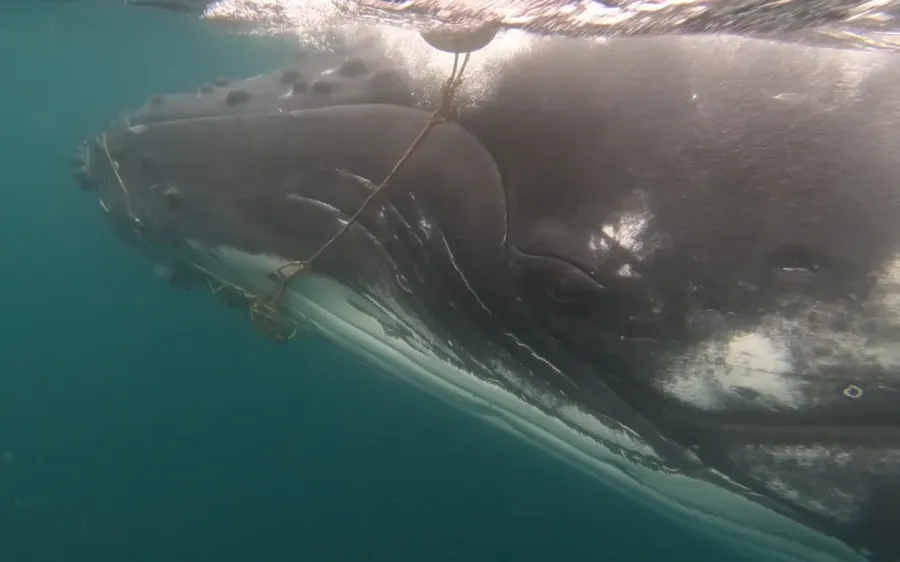
A humpback whale has died after becoming entangled in a crayfish pot buoy rope off the Northland coast, marking the first recorded death of a humpback in New Zealand caused by entanglement with rock lobster pot gear.
The fatality came to light through a report prepared for Fisheries New Zealand covering accidental captures of seabirds and protected marine species between 1 July and 30 September. Fisheries New Zealand declined to disclose the precise location or date, confirming only that the death occurred in September. The entanglement is understood to have taken place off Northland's east coast.
Simon Lawrence, Fisheries New Zealand's science and information director, confirmed the whale had died. It was the first recorded death of a humpback whale due to entanglement with a rock lobster (crayfish) pot buoy rope in New Zealand, he said. The fisher involved reported the incident to both the Department of Conservation (DOC) and Fisheries New Zealand, as required.
Whale deaths connected to crayfish pot gear are uncommon, but entanglements in buoy ropes and other fishing equipment occur with some regularity. In November, DOC staff freed a humpback whale that had spent 18 hours tangled in a cray pot rope at Kaikoura. A comparable situation arose off the Otago coast in June. In February 2023, a humpback spotted off Northland's Doubtless Bay with a crayfish pot rope wrapped around its tail triggered an extensive search by air and sea. In February, a rare Arnoux's beaked whale became caught in oyster bag lines in Northland's Whangaroa Harbour.
Lawrence said there was no evidence that whale populations were being affected by entanglements with rock lobster pot buoy ropes, and humpback numbers migrating through New Zealand waters appeared to be increasing. DOC and the New Zealand Rock Lobster Industry Council have been promoting a range of measures to reduce the risk that pot fishing gear poses to whales. These include education around responsible gear management, such as retrieving lost or abandoned equipment, keeping clear of areas where whales are present, understanding the correct response if a whale becomes entangled, and reporting any sightings promptly and accurately.
The same quarterly report revealed that 75 seabirds were caught during the September quarter, among them 15 albatross, up from nine recorded during the equivalent period the previous year. Two Hector's dolphins were also caught, one off the South Island's west coast and another off Banks Peninsula.
Six endangered sea lions were taken during the period. Three were caught by scampi fishers operating near the sub-Antarctic Auckland Islands, and one was caught in a set net at Stewart Island. The New Zealand sea lion is the world's rarest species of sea lion, with an estimated population of just 10,000. Just under 300 New Zealand fur seals were caught in the September quarter, compared with 247 over the same period the previous year. Six sea turtles were also caught, though all were released alive.
Fisheries New Zealand advises anyone who spots an entangled whale not to approach the animal or attempt to free it. Observers should note the whale's location, its direction of travel, and any identifying features, then contact DOC as soon as possible on the 24-hour hotline 0800 DOC HOT.