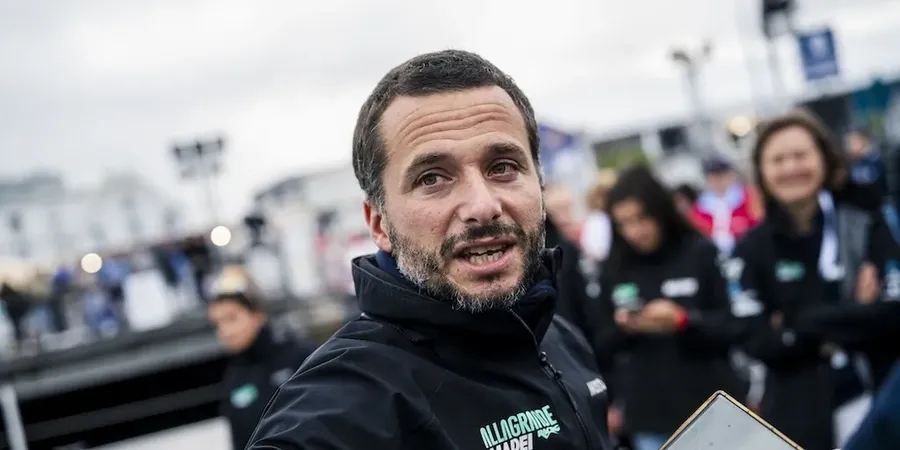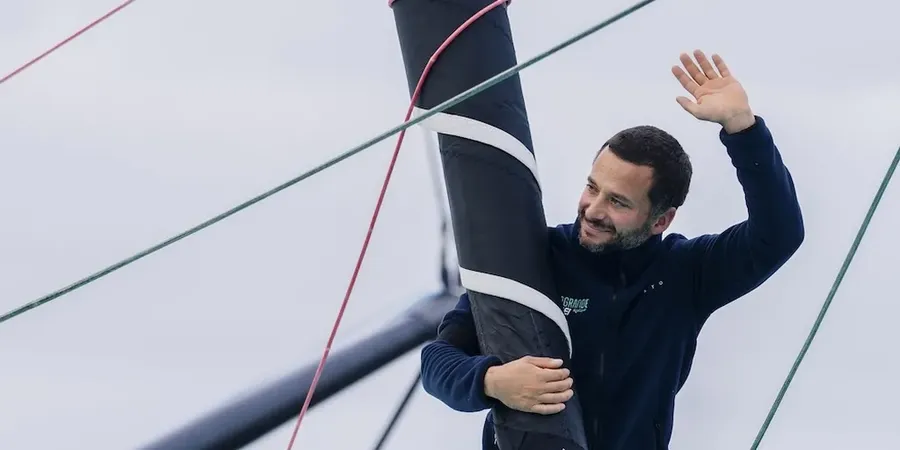
Ambrogio Beccaria coaxed every last fraction of advantage from a treacherous final approach before Allagrande Mapei crossed the Vendée Arctique finish line. The victory came not from clean, dominant sailing but from nerve and precision, the resolution of an overnight battle that began on Monday evening and dragged through to the small hours of Tuesday, with two rivals remaining live threats until almost the very end.
The Bay of Biscay was where the race was truly decided. Forecasters had flagged a sprawling windless zone earlier in the week and made clear it would shape the result, a prediction that proved entirely correct. Sam Goodchild on MACIF Santé Prévoyance was the first to sail into the airless expanse, left to drift helplessly while Beccaria and Violette Dorange aboard Initiatives-Cœur steadily clawed their way back into contention. Race director Alan Roberts had been characteristically direct about how events would play out: Goodchild would be consumed by the doldrums first, and his rivals would reel him in.

That is precisely what happened. What followed was less a sailing race in any conventional sense than a drawn-out test of patience, composure, and tactical instinct. A tense afternoon gave way to an anxious evening, and still no result came. The early hours of Tuesday arrived with three skippers becalmed on glassy water off Les Sables-d'Olonne, each waiting and hunting for whatever faint movement of air might tip the balance in their favour.
Dorange came agonisingly close to winning it. Her tactical position was strong, and her boat gave her everything she could have asked for. Beccaria proved fractionally better at reading the faint, unpredictable shifts that determine races in such conditions, finding marginal advantages that placed him across the line ahead of a rival who finished somewhere in the grey of Tuesday morning. There was nothing inevitable about this victory. It was dragged from the Biscay through sheer willpower and sharp, instinctive judgement.

What made the finish particularly cruel was how foreseeable it had all been without being in any way avoidable. The doldrums had appeared on forecast models since the weekend prior, and every sailor in the fleet knew what was waiting. Knowing where a trap lies, however, offers no certain path around it. Three elite IMOCA competitors faced the same hostile, windless stretch of ocean and emerged with strikingly different fates. That divergence is what separated Beccaria's elation from Dorange's heartbreak and from Goodchild's grim exit from a race he had led convincingly until the breeze died beneath him.
For New Zealand sailors who know the brutal final stages of the Vendée Globe well, none of this will come as any great surprise. The Biscay has a long habit of punishing those who have otherwise done everything right. Beccaria, like Dorange, simply refused to become its next victim.