
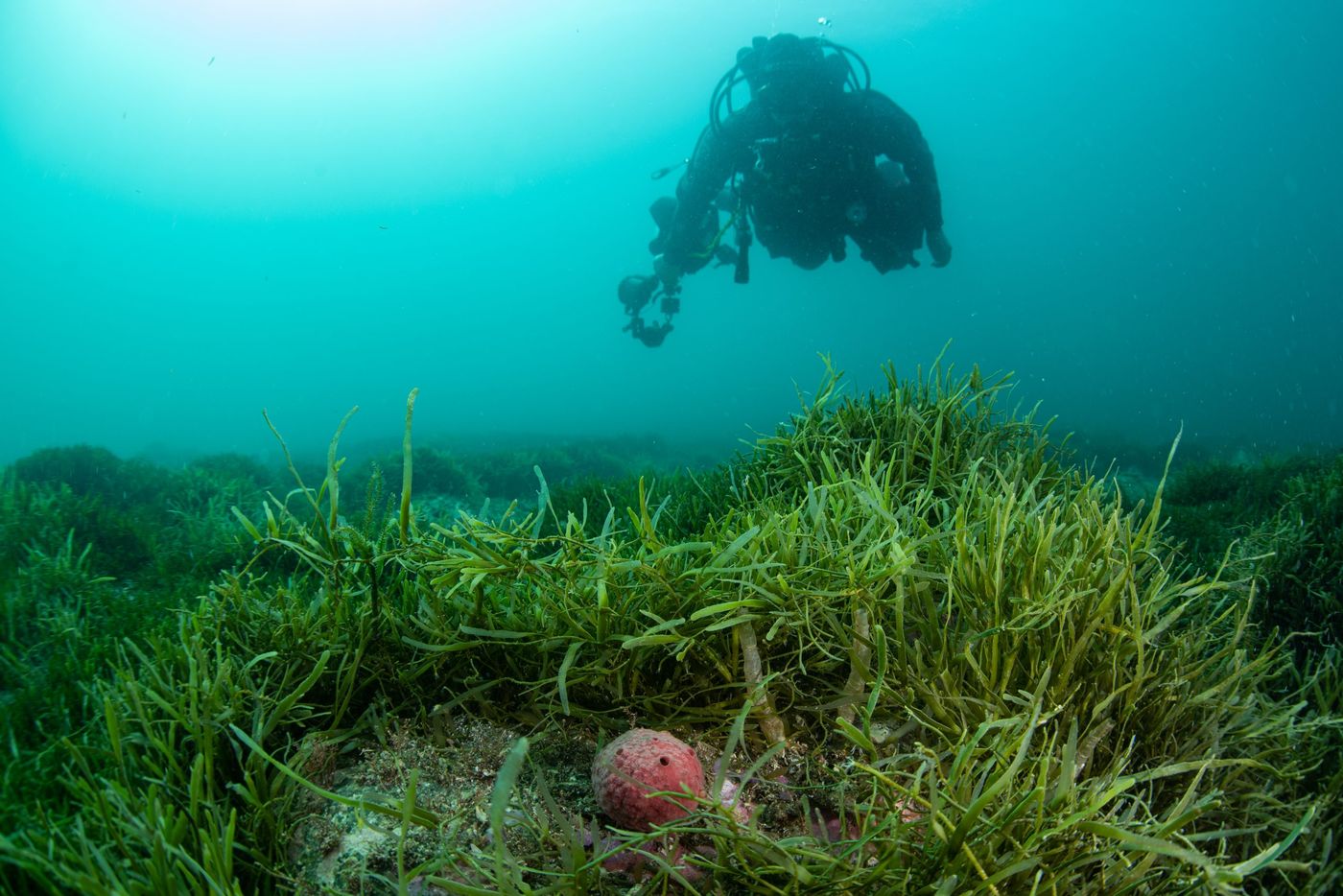
Divers conducting routine surveillance at Smugglers Bay, close to the harbour entrance, made an unwelcome discovery: a one-metre-wide patch of exotic caulerpa on the seabed. Northland regional councillor Jack Craw confirmed the find was made on 4 June, with treatment carried out the following day.
The standard response for small infestations was applied, covering the patch with a mat and treating it with chlorine. Follow-up dives have since shown no further spread, though additional surveillance is being conducted as a precaution.
For Craw, the speed of detection was itself encouraging. It demonstrated that the ongoing surveillance work carried out in partnership with DOC was paying off, and it reinforced the practical case for maintaining a dedicated in-house dive team.
"Our teams acted quickly to contain and treat the site using proven methods. Taking a cautious approach is critical with caulerpa, which can spread from even very small fragments," Craw said.
He was equally clear about how the weed most likely arrived at Smugglers Bay. "We know caulerpa doesn't move long distances on its own. This is most likely a human-assisted spread, which highlights how important it is that everyone using our coastal waters plays their part."
Coastal central councillor Amy Macdonald echoed that message, noting that fragments of the invasive seaweed can be carried on anchors, chains, and fishing or dive gear. "Protecting our harbour is a shared responsibility, and simple steps from boaties and fishers can make a real difference," she said.
The steps involved are straightforward: check anchors, chains, and all equipment before leaving a site, remove any seaweed and secure it in a bag so fragments cannot return to the water, then dispose of it in a rubbish bin on land.
The Smugglers Bay detection adds to a troubling picture of caulerpa advancing around northern New Zealand. The fast-growing seaweed is already well established around Aotea Great Barrier, where it was first found in 2021, and in the Bay of Islands, where a hapū kaitiaki identified it in 2023. Left unchecked, it can rapidly cover large areas of seabed, smothering shellfish beds and altering ecosystems.
Efforts to combat the spread continue on several fronts. A large-scale removal trial is underway in the Bay of Islands, deploying a remotely controlled underwater vehicle fitted with a suction dredge head. Last summer brought an unexpected development when a major die-off occurred across both the Hauraki Gulf and the Bay of Islands, though Biosecurity NZ pest management director John Walsh has noted that the weed is showing signs of coming back. The reduction in biomass did at least provide those fighting the spread with a welcome breathing space. The precise cause of the die-off remains unknown, though in the Bay of Islands it is thought to be connected to Cyclone Tam, which battered the area in April 2025.
| This story was first published on rnz.co.nz |  |