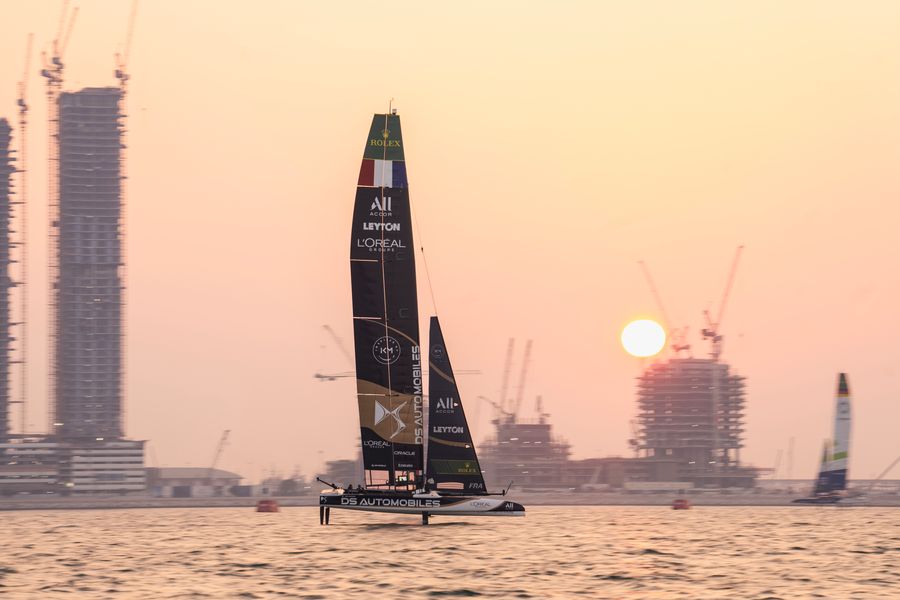
At first glance, an AC75 looks like brute carbon-fibre spectacle. Look closer and it's something else entirely: a floating laboratory bristling with sensors that most spectators will never notice.
Balancing on a single submerged foil wing to leeward generates extraordinary aerodynamic and hydrodynamic loads. Understanding those forces is fundamental to extracting performance, and sensors are what let designers, engineers and sailors push the boundaries further each day.
It starts with the basics: speed and position. High-precision GPS systems measure velocity, heading and trajectory, while inertial measurement units, packed with accelerometers and gyroscopes, track pitch, roll, yaw and acceleration. Ride-height sensors measure how far the boat sits above the water, and wind instruments record apparent wind speed and direction.
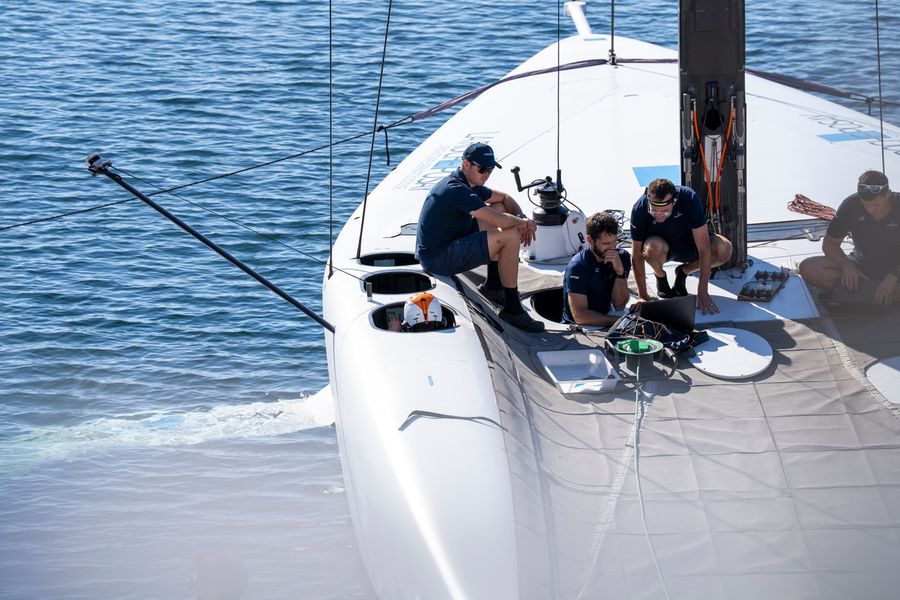
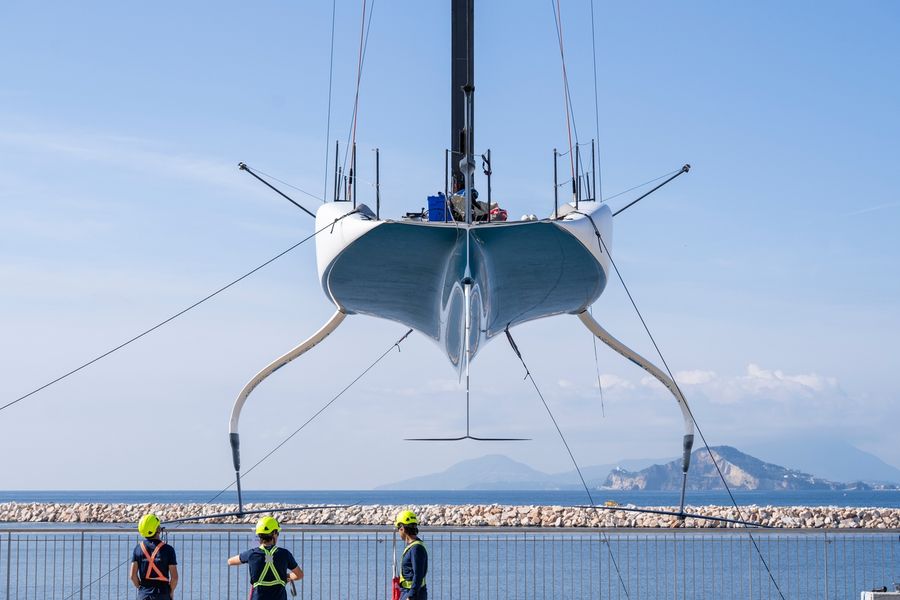
The Naples Recon team noticed La Roche-Posay Racing Team holding their boat on a crane about 20cm above the water at launch, purely to calibrate the ride-height sensor accurately. Both Emirates Team New Zealand in this cycle and the British in the last have been spotted running Pitot tubes on their foil bulbs.
GPS speed alone doesn't tell the full story, though. Specialist speed-through-water instruments separate the yacht's movement relative to the surrounding water from its movement over the seabed, helping engineers assess leeway, currents and genuine foil efficiency.
Below the waterline is where it gets properly interesting. Fibre-optic strain sensors and other load-measuring devices sit inside structural components, reading bending, deformation and the forces the foils generate. Some teams have gone as far as using ultrasound microphones to listen for carbon fibres splitting. The aim is always the same: does the physical boat match the computer model.
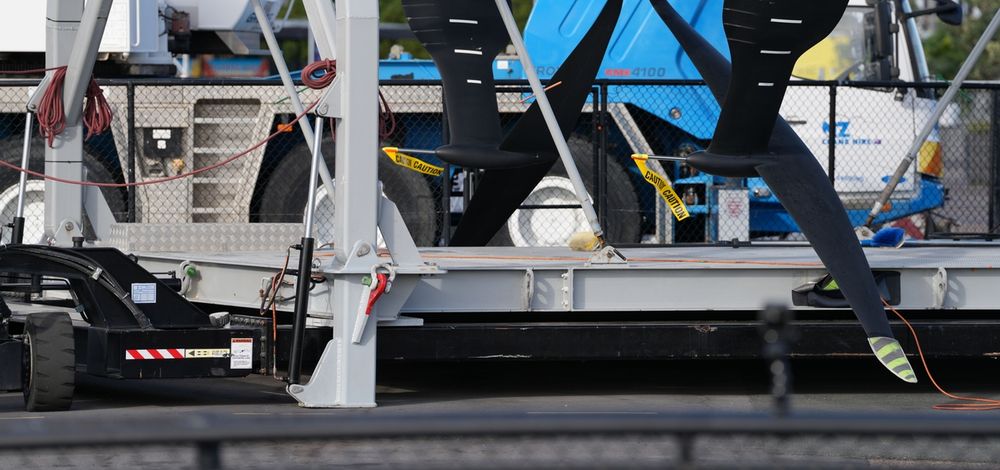
Cameras around the foil arms add another layer. They pick up flap movement, vibration, twisting, ventilation and, in the right conditions, cavitation. La Roche-Posay Racing Team run bulb-shaped cameras on the leading edge of both foil arms, with white reference marks painted on the outer wings to track wing deflection.
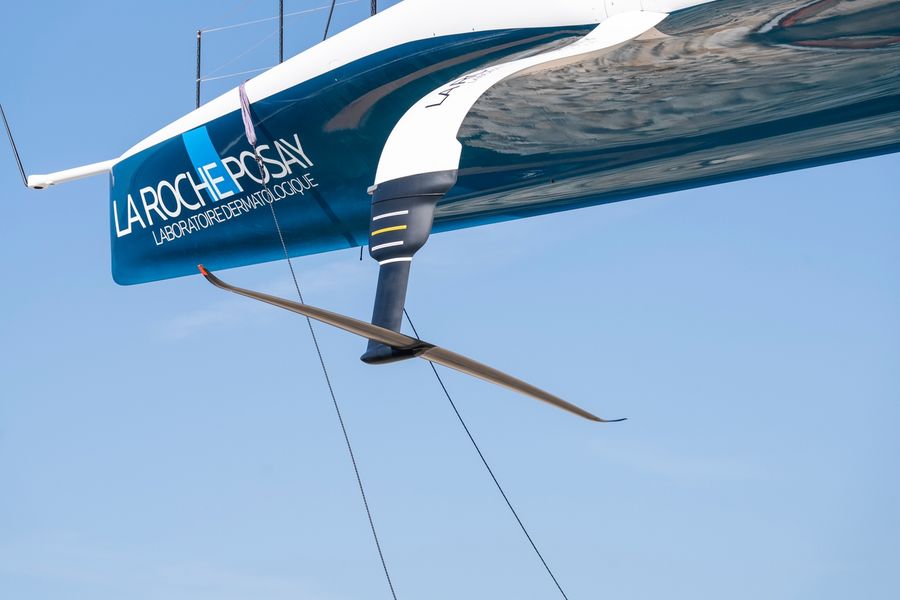
Emirates Team New Zealand have taken a similar approach on the port foil, running a camera and telltales to study flow around the T-junction, with a dual-sensor setup on the starboard foil covering both the T-section and the tip. Luna Rossa, meanwhile, have mounted GoPro cameras mid-span on the wing pointing at the bulb, plus a camera built into the hull skin near the rudder's leading edge.
Above deck, the rig is just as heavily instrumented. Load cells and strain-measuring systems monitor the huge tensions running through the shrouds and other structural components.
One thing to flag: the rigging is one-design, and the mast tubes are built to a common spec under class rule 17. So the gains aren't coming from the tube itself, they're coming from how each team tunes and measures it. La Roche-Posay Racing Team have had fibre-optic lines running along their shrouds since Lorient.
These measurements let designers work out mast compression, bend and rake, all of which shape the aerodynamics of the double-skinned mainsail. A tiny shift in mast bend can mean a meaningful change in sail performance, and that's precisely why teams chase these numbers so relentlessly.
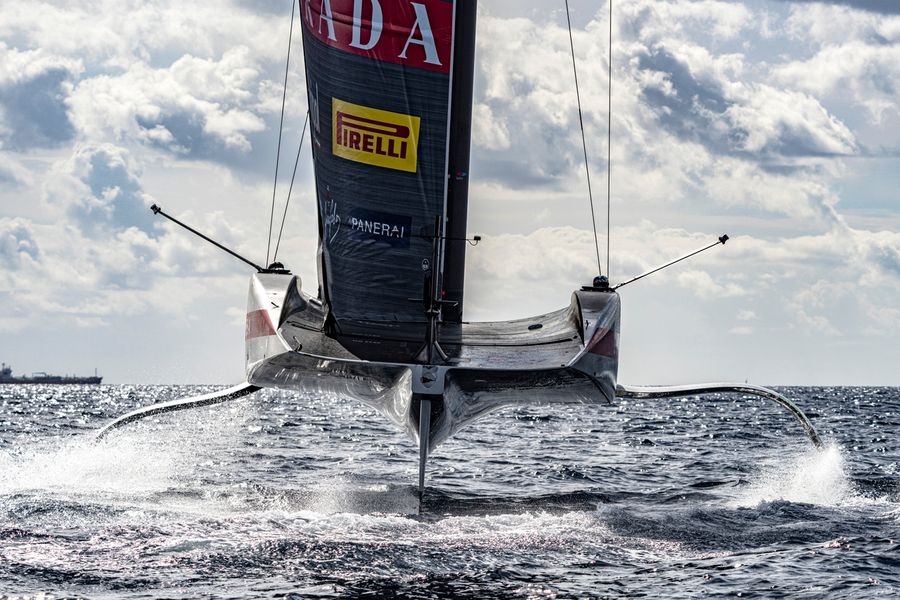
La Roche-Posay Racing Team's recent instrumented rig-tuning sessions in Naples are a good example, with independent load cells deployed to investigate cap-shroud loading and mast behaviour.
Inside the hull, a separate network keeps watch on mechanical health. Pressure, temperature and position sensors track hydraulic systems, actuators, valves and other critical gear, flagging unusual temperatures or pressure changes before they become failures.
For the Louis Vuitton 38th America's Cup, limited battery-powered systems have replaced the cyclors used in Barcelona, with output modelled on the best power figures recorded from those Barcelona cyclors. That shift makes electrical monitoring and energy management more important than ever, especially for the fifth crew member, known as P5, who oversees power usage and performance.
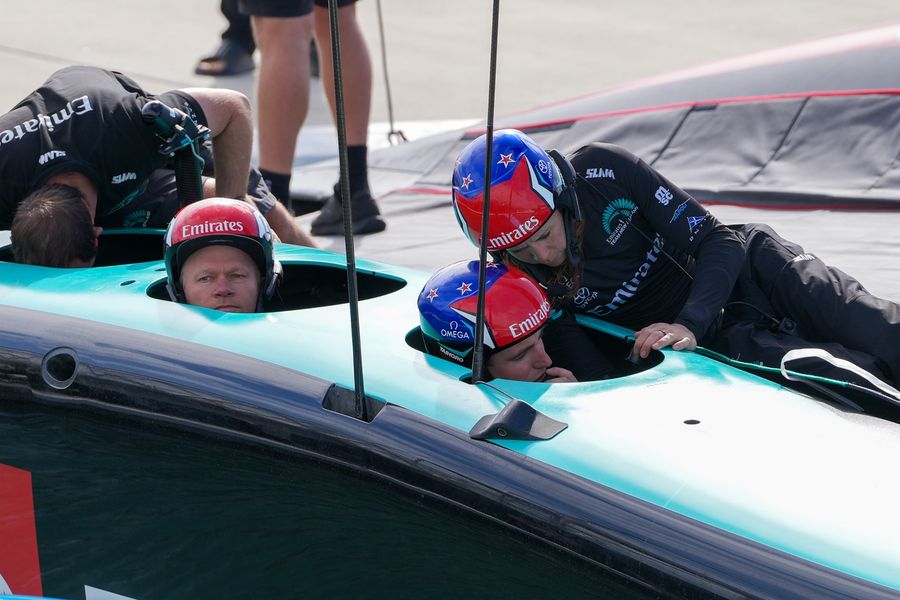
In testing, Jo Aleh of Emirates Team New Zealand has spent most of a session with her head below the sheerline, focused on systems control and performance monitoring. That was confirmed in a Recon interview with skipper Nathan Outteridge.
All of this data funnels through sophisticated instrumentation and logging systems before specialists get to work with performance software, statistical modelling and, increasingly, artificial intelligence.
But an AC75 is not an autonomous yacht.
Class rules deliberately restrict how sensor information can interact with control systems, keeping racing decisions firmly in the sailors' hands. Data and audio links to the chase boat and shore base are permitted under rule 23.1, which is why every team invests heavily in live telemetry. Emirates Team New Zealand added an extra Starlink unit to their comms pod back in April, and others have since followed suit.
The line between recording, displaying and controlling is strictly drawn. Control systems can only take a defined list of sensor inputs under rule 24, and the crew command system can't measure yacht state at all under rule 25. Data only flows one way, from the crew's buttons through to the control systems via a bridge, and that one-way flow is the real boundary the class rule protects.
The biggest gains tend to arrive after the sailing stops, when engineers sit down and compare thousands of measurements against predicted performance, hunting for discrepancies to refine the next day's settings.
The America's Cup has always been a contest of design and innovation. That hasn't changed.
What has changed is how invisible the decisive edge has become: a sensor catching an unexpected load, a camera revealing a sliver of foil deformation, a model flagging an improvement worth just a few hundredths of a knot. Across a full America's Cup race, those small margins can decide everything. While the teams quietly build out this hidden network of data, the Recon units are out there every day doing the opposite job, spotting the visible clues that help paint an accurate picture of who's hot and who's not in the Louis Vuitton 38th America's Cup.