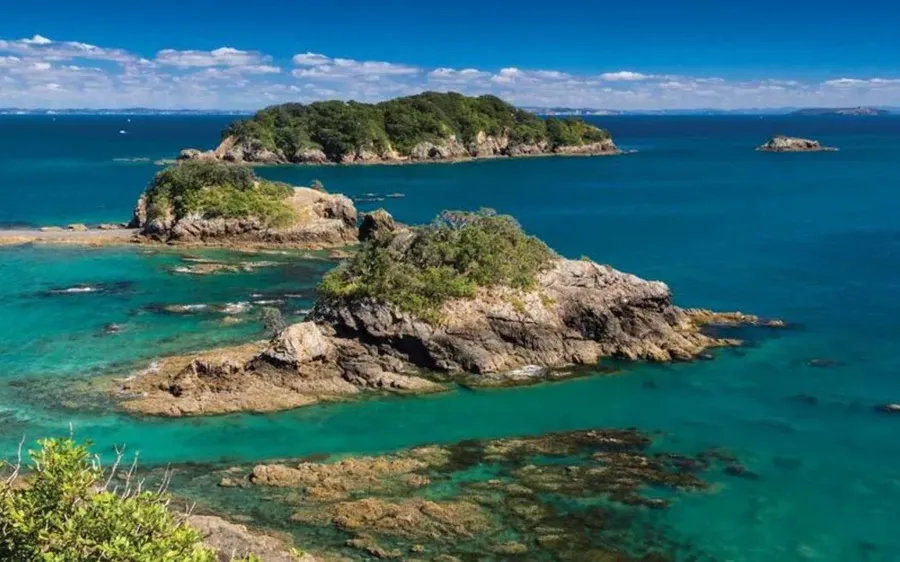
New legislation protecting the Hauraki Gulf, officially known as the Hauraki Gulf / Tīkapa Moana Marine Protection Act, takes effect this weekend, but recreational fishing advocates are warning that political interference has significantly weakened what it can achieve.
LegaSea, the recreational fishing advocacy group, has raised pointed concerns about the act's provisions, arguing that the government has effectively handed commercial operators exclusive access to certain protected waters. The legislation permits some commercial fishing activity within two of its 12 designated high protection areas (HPAs) from 25 October. Outside of customary take, all fishing and shellfish gathering within HPAs is otherwise prohibited.
LegaSea spokesman Sam Woolford described his unease in direct terms. "I'm really nervous about these HPAs because they actually create a dangerous precedent," he said. "The government has said it's okay for commercial fishing to continue inside a high protected area. Not only have we created that precedent, we've actually created exclusive commercial fishing zones."
Conservation Minister Tama Potaka has pushed back on that characterisation, maintaining that the legislation strikes a workable balance between community needs, environmental protection, and economic realities. Potaka has described the act as ushering in a bold new era of marine protection for one of the country's most majestic seascapes.
"For years, communities and people across the political divide have despaired at the effects of the Gulf's long-standing ecological decline leading to desolate kina barrens and habitat loss," he said earlier this month.
He expressed confidence that the public would see tāmure (snapper) and kōura (rock lobster) stocks begin to rebuild over the coming decades, alongside richer kelp forests and seabird colonies.
Beyond the 12 high protection areas, the act also extends two existing marine reserves and introduces five sea floor protection areas, broadening the overall scope of the Gulf's protected footprint.
LegaSea remains unconvinced the measures will do enough to turn around the health of fish populations within the gulf. Woolford argued that the core pressures driving ecological decline have not been meaningfully tackled. "The fundamental issues with what's happening to the Hauraki Gulf haven't really been addressed, so land base runoff, overfishing, and destructive fishing techniques are the main stresses. What we're seeing is that, we haven't seen any changes to how fishing can occur both recreationally and commercially."
His concern is that designating HPAs will simply shift effort rather than reduce it. "They're just gonna fish on the edges of the marine reserves. We've just displaced that pressure. We haven't addressed how we're fishing or the amount of fish coming out of the water. We've just simply said you can't fish here."
From the scientific community, the mood is more optimistic. Conrad Pilditch, Professor of Marine Science at Auckland University and director of the Leigh Marine Laboratory at the Goat Island Marine Reserve, believes well-designed protection can yield meaningful results, even if patience is required. Under the new act, the area of that reserve will almost quadruple.
Drawing on decades of observation at Leigh, Pilditch pointed to evidence that protected zones generate genuine benefits for surrounding fisheries. "The experience at Leigh has shown that if the large snapper come back into the reserve and they remain resident then they can have a significant contribution to the fish stocks outside of the reserve. It's been shown for the little area around Goat Island, it generates as much fish as 10 times of the area outside the reserve."
On the Coromandel coast, the practical consequences of the new rules are already landing on local businesses. Anglers Lodge, situated just north of Coromandel town, runs fishing charters and accommodation, frequently taking guests to the nearby Motukawao island group, also known as the Happy Jacks. From Saturday, the northernmost of those islands will fall within a high protection area.
Lodge manager Jen Morgan told First Up last week that she had not known the act was so close to coming into force when contacted. "We're pretty disappointed that it went through and seems to have had last minute changes that are positive for commercial fishermen but bad for local community and operators like us."
Morgan acknowledged there are still fishable waters nearby, but she is concerned her clientele may not realise that. "We will have to pivot to make sure that we're following the rules. I think the challenge is that with such confusion around what the rules are, maybe that people think it's not a possibility at all. So we'll have to try and communicate that and make sure people know that it is still an option on some of the islands."
Responsibility for enforcing the high protection areas falls to the Department of Conservation, with fisheries officers providing additional support. DOC marine operations manager Kirsty Prior confirmed the department has taken on 15 new permanent staff members and 13 seasonal staff, with a primary focus on public education during the early stage of the act's operation.
Prior also noted that DOC is working with electronic chart providers to have the Hauraki Protection Area and Seafloor Protection Area boundaries incorporated into chart plotters and associated apps. Signage is being installed at boat ramps and entry points to the protection areas to help on-the-water users understand where the new boundaries apply.