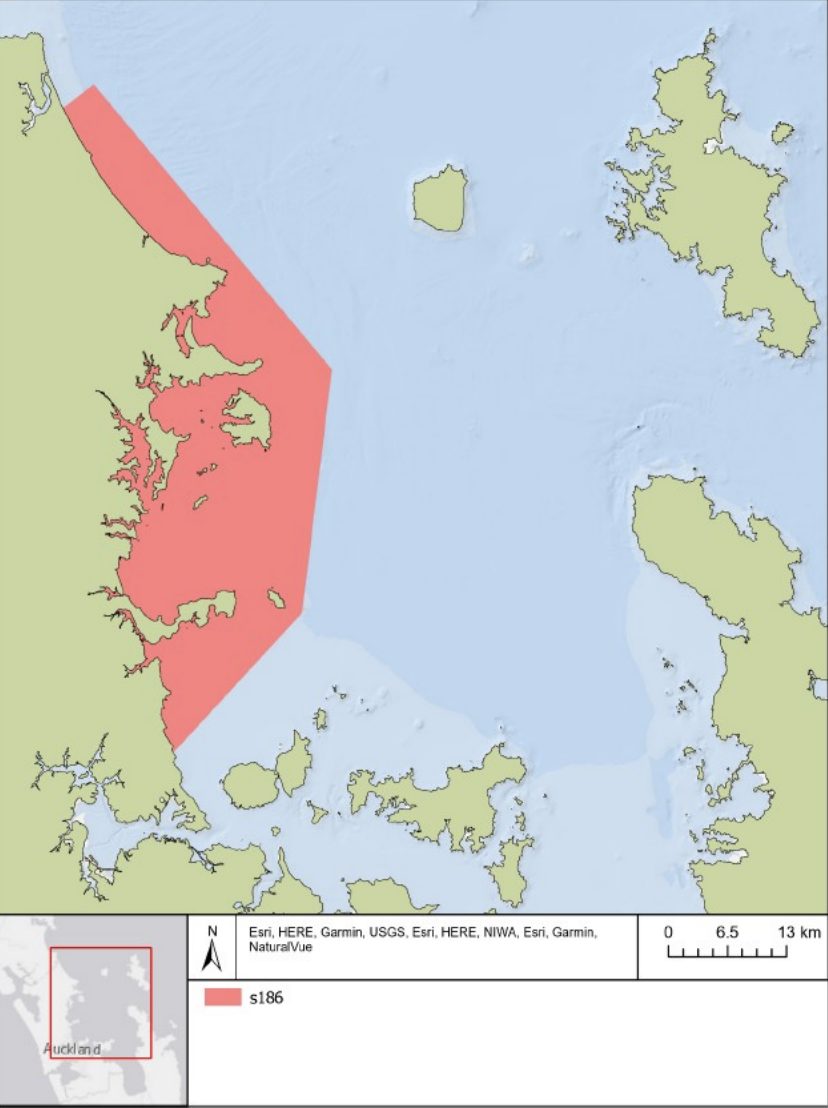
A two-year closure of certain Hauraki Gulf fisheries has been confirmed, targeting the near-shore coastal fringe and rockpools north of Auckland. Shane Jones, Minister for Oceans and Fisheries, announced the decision in a 15 February update following consultation run by Fisheries New Zealand. The closure takes effect on 12 March 2026.
This is not a restriction on boating access, and it does not affect finfish. Snapper and other finfish remain available under the usual rules, and anchoring, diving, and cruising are all unaffected. What has changed is what people may collect from the shoreline and the shallow coastal edges within the defined zones.
Mr. Jones said:
“I have approved a two-year ban on the taking of a range of invertebrate and seaweed species.”

Three distinct stretches of coastline are covered, each extending generally 200 metres offshore. In Ōmaha Bay, the restricted area runs between the Cape Rodney Okakari Point Marine Reserve and the Tāwharanui Marine Reserve, and also takes in a 200 metre radius around Panetiki Island, also known as The Outpost, along with the island in Te Kohuroa at Mathesons Bay. Kawau Bay is covered between the Tāwharanui Marine Reserve and the Kawau Bay High Protection Area, again to 200 metres offshore. Around the Whangaparāoa Peninsula, the closure stretches from the mouth of the Ōrewa River to the Long Bay Okura Marine Reserve, and encompasses all of Ōkoromai Bay and Te Haruhi Bay. For anyone planning a trip, the practical test is straightforward. If you are working the rocks or gathering from the beach in these areas, the answer is now to leave it alone.
The list of prohibited species is deliberately broad. All seaweed and invertebrate species within the closure zones may not be harvested. MPI's documentation specifies this includes shellfish and molluscs such as cat's eyes, cockles, mussels, oysters, pāua, pipi, sea snails, and tuatua, as well as crustaceans including barnacles and crabs. Jellyfish, sea anemones, sea squirts, sponges, and starfish are also covered. The breadth of the list matters because a day on the coast, particularly around sheltered bays and rock platforms, often involves picking up a range of species rather than targeting a single one.
Three carve-outs are worth knowing about, because a quick read of the headlines could easily leave people with the wrong impression. Spiny rock lobster and scallops are excluded from this closure, as separate management measures already apply to both species. Kina is also excluded, and the reason is explicit. The Minister chose to keep kina available because reducing kina barrens remains a management priority. In his words: "I decided to allow kina to continue to be taken as managing kina barrens is a priority for me." Recreational limits for kina therefore continue to apply as normal. The third exclusion covers aquaculture activities, including marine farming and spat collection, which fall outside the closure. For anyone heading out to collect a feed from the rocks, though, the core message holds. Leave the shellfish and the seaweed where they are in these areas.
The closure follows a request lodged by Ngāti Manuhiri Settlement Trust under section 186A of the Fisheries Act, with the aim of easing pressure on intertidal ecosystems that are easily reached from shore. The Beehive release frames the decision as a direct response to heavy collection from rockpools and the surrounding coastline, and it signals that further work is on the way. Officials are developing broader intertidal management proposals for the Auckland and Coromandel regions, with public consultation expected within the coming months.
There is also a community dimension to implementation. Under secretary Jenny Marcroft is quoted in the release noting that officials will look at ways to support community volunteers, and that Fisheries New Zealand will produce multilingual resources to help visitors understand the new rules.
The Gulf remains a good cruising and fishing ground, but the near-shore zone is under real pressure, and this closure gives that reality legal weight. For anyone fishing the region regularly, the habit worth building is a simple one. Check the rules before launching, then check again when shifting areas, because on a coastline this varied, where you are makes all the difference.