There is no room for error in conditions like these. Minor lapses in preparation can escalate into costly damage within minutes, and the window to fix things safely narrows fast once a storm takes hold.
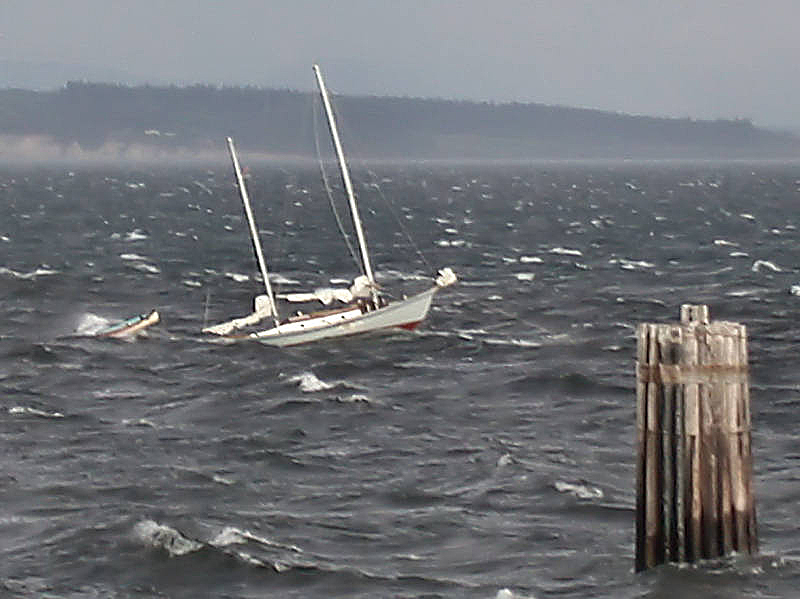
A video received from the Coromandel Peninsula moments ago illustrates the point sharply. It shows a yacht with its headsail partially unfurled and flogging hard in strong wind. The chances of that sail surviving intact are low. Once canvas begins snapping violently under load, the damage tends to compound rather than stabilise.
Note from editor: if this is your yacht at Whangamata, it is currently needing urgent help!
A genoa or jib left even slightly unrolled places severe strain on the sailcloth, the stitching, the UV strips, and every piece of hardware connected to the furling system. Foils, forestays, and deck fittings all absorb loads that were never intended for a stationary boat in a gale. The deterioration can begin within minutes of gusts building. Beyond the damage to the sail itself, there is a risk to neighbouring boats. Torn canvas can foul rigging, tangle in lifelines, or swing into boats on adjacent berths. In a crowded marina or on pole moorings, one vessel's problem rarely stays contained.
[video width="1024" height="576" mp4="
The Coromandel footage shows how quickly exposure becomes a crisis when weather accelerates faster than owners expect.
Sails are not the only vulnerability worth thinking about right now. Swing moorings, marina berths, and pole setups all come under heavy load when wind builds and direction shifts. Boats on swing moorings require adequate scope and proper chafe protection on every line. Lines led at poor angles or left without chafe gear can fail faster than expected under repeated snatch loading.
For boats on poles, the angle and lead of each line matters significantly. As wind direction shifts through the day, poor leads create chafe points and reduce clearance between the hull and the pole. Marina berths present their own challenges. Boats need to sit clear of fingers and piles while allowing for natural movement in the chop. Fender placement should be based on where the wind will drive the boat, not where it happens to sit in flat conditions. Loose covers, unsecured canvas, and unattended deck gear all add windage unnecessarily. Anything capable of lifting, flapping, or catching a gust should be tied down properly or taken off entirely.
The marine forecasts issued this morning describe a genuinely demanding weather picture. Gale force conditions are widespread, with gusts reaching well above 40 knots across several regions. Seas are expected to build to rough or very rough, heavy rain is reducing visibility at times, and wind direction is forecast to shift over short periods.
That combination is hard on unattended boats. Situations develop fast, and by the time conditions are at their worst, getting to a vessel safely to deal with a problem may not be an option.
Yacht owners receive the first part of this message because yachts typically remain in the water year-round, continuously exposed to whatever the weather delivers. Sails, furling gear, and rigging carry load even when a boat is sitting idle, and any existing weakness tends to reveal itself quickly once conditions strengthen.
That said, this is far from a sailing-only concern.
Larger power and sail vessels face the same exposure when strong winds arrive. Mooring lines, cleats, marina fingers, fenders, and poles all come under strain as gusts build and directions change. Boats that normally sit quietly can be pushed into contact or begin chafing on fittings they have never touched before.
For owners of smaller vessels, including fishing boats and trailer boats, the message is straightforward. Look hard at the forecast before committing to going out. With gale warnings widespread, heavy rain reducing visibility, and seas running rough, today is unlikely to be a suitable day for a casual run or a fishing trip. Conditions near shore can deteriorate just as quickly as those further out.
The underlying principle is the same regardless of what you own. Secure what can be secured, check on your vessel when it is safe to do so, and take the conservative option when in doubt. Weather like this rewards thorough preparation and sound judgement, and it has little patience for complacency.