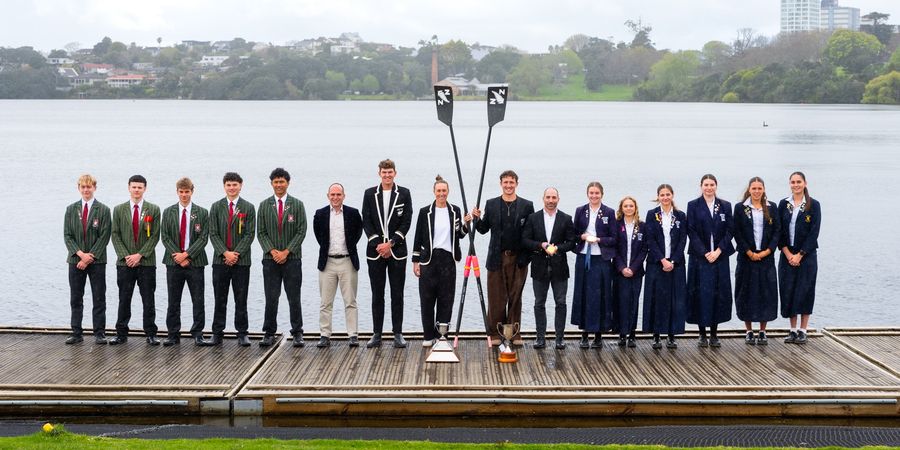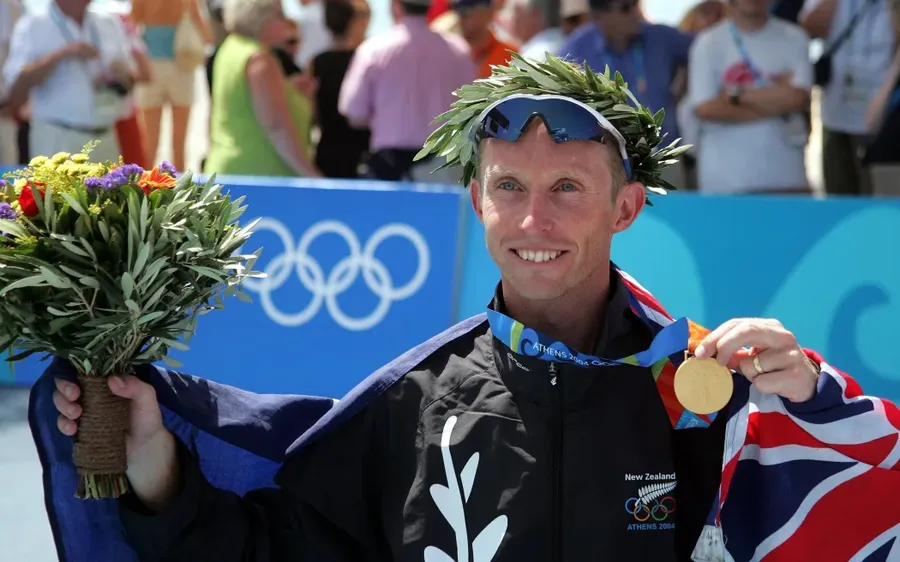
Hamish Carter is remembered by most New Zealanders as the man who won triathlon gold at the Athens 2004 Olympics. Fewer know that the groundwork for that achievement was laid years earlier, in a school rowing boat on the Tāmaki Estuary.
Carter rowed for Auckland Grammar in the late 1980s, picking up a pair of Maadi Cup silver medals along the way. He's adamant the experience shaped everything that came after.
"My time rowing and working towards the Maadi Regatta each season really shaped me as a person," Carter says. "Everything I took into training, the foundations were laid when I was a rower. It was an incredible experience to go through. I still think I trained harder for the Maadi Cup than I did for the Olympic Games."
He took up the sport at 13, following his older brother Tom into the Auckland Grammar boatshed. The discipline suited him instantly, even the 4.30am starts.
"We were travelling to this nasty piece of water in the school vans in the dark on cold mornings, but it didn't faze us at all. We just got stuck in."
Rowing, he says, "is incredibly intense and really takes over your life." The crews pushed themselves daily and learned where their limits sat.
Carter credits coaches Bryan Goss and Barry Cleal with much of what followed, pointing out the patience it took to guide a group of novices through such a technical sport. "The coaches are with you every step of the way and their guidance and coaching is a massive part of what shapes the whole experience," he says.
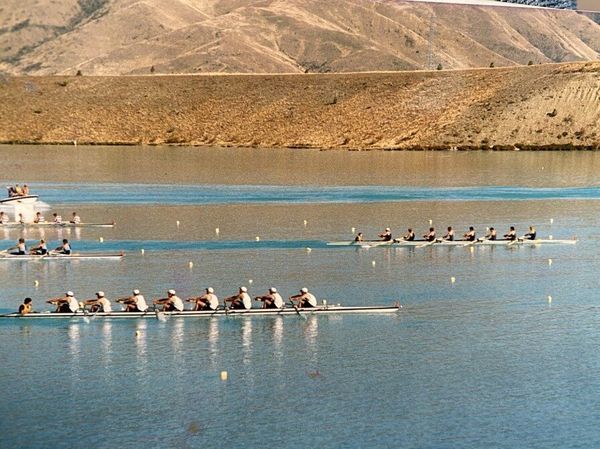
His first Maadi Regatta came in 1986, racing in a wooden boat named Sir Williamson Stevenson. He still talks about the scale of the event with something close to wonder.
"The size and energy of the event is something else. You have this huge range of abilities, from novices to rowers competing in the Maadi Regatta. It is phenomenal to watch. We had a lot of fun, but there were also a lot of tears and blow-ups. It stirs up the full range of emotions."
Gold came in the Boys U17 Eight at the 1987 Maadi Regatta on Lake Karāpiro. As a senior, Carter stroked the Auckland Grammar eight into the Maadi Cup final in both 1988 and 1989, chasing the top prize both times.
Christ's College beat them on both occasions. Silver, not gold.
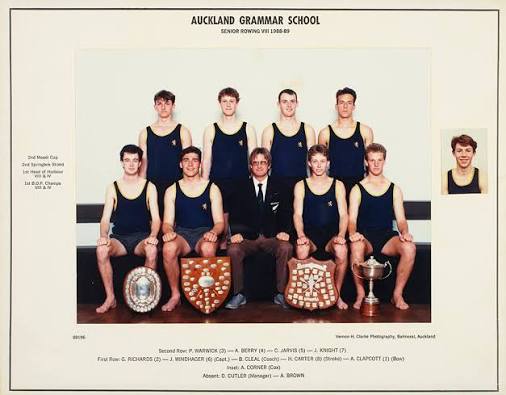
"It was devastating," Carter admits. "We wanted to win and, after we didn't, it felt like the world had dropped from underneath us. It had been ingrained in us for so long that we were going to win. But we weren't fast enough and we had to accept that we got second. We came to respect what Christ's had achieved, but we were gutted we didn't win. It took a long time to get over."
He rowed on for one more season before his size pushed him towards lightweight rowing, a shift that didn't appeal. With Olympic ambitions already forming, he walked away from rowing to chase triathlon instead.
It proved the right call, though Carter is clear about where the engine for that career was built.
"I took the six minutes of intensity of a rowing race into a two-hour triathlon race," he explains. "That drive and commitment from rowing had become naturally ingrained in me, and that then flowed through triathlon. It formed an amazing foundation and, for that reason, rowing is a very special sport."
Now 55, Carter encourages young rowers to embrace the Maadi journey for what it offers beyond the water.
"It is so much more than the rowing on water. It gives you a holistic experience which allows you to grow as a young person. It is a huge challenge, but kids who throw themselves into it get so much from it."