Working from his Paris workshop in the final decades of the 19th century, Gustave Trouvé produced an astonishing range of creations: wearable headlights, medical instruments, and, in 1881, the first outboard motor ever built. Daimler followed shortly after with petrol-powered boats, but Trouvé had already demonstrated something quieter and arguably more radical. His electrically driven vessel Le Téléphone glided along the Seine at a moment when steam and sail were the unquestioned masters of the water. More than 140 years on, that restless inventive energy is honoured through the Gustave Trouvé Awards for Excellence in Electric Boats and Boating, known throughout the boating world simply as The Gussies.
The Gussies hold a singular distinction: they are the only international awards dedicated entirely to electric boats. Since their founding in 2020, the programme has expanded into a genuinely global event, celebrating design ambition, engineering progress, and environmental responsibility in equal measure. Last year, more than 150 boats were nominated from 25 countries, underlining just how rapidly the electric boating movement has gathered momentum.
*Winners of The 2024 Gustave Trouvé Awards*
Electric Boats Up to 8m / 26ft
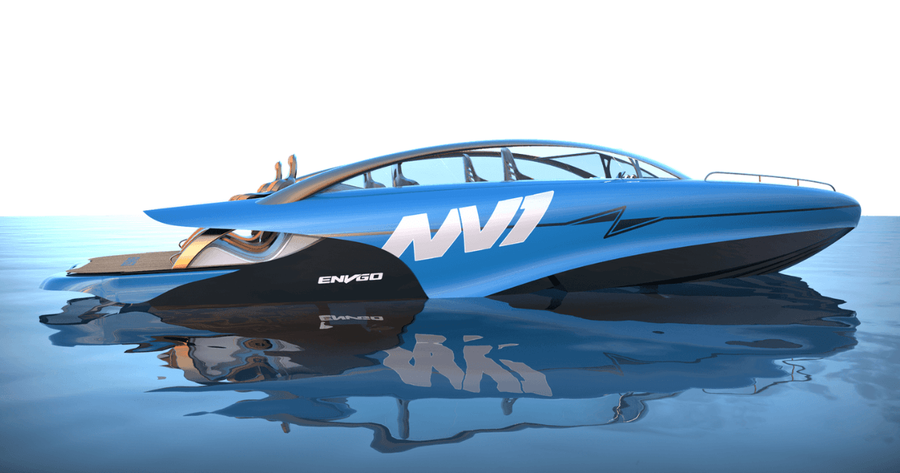
- Production Boat: Sun Concept EVO 7.0 Cruise by Sun Concept, Portugal - Concept/In Development Boat: ENVGO NV1 by ENVGO, Canada
Electric Boats Over 8m / 26ft (presented by Aqua superPower)
- Production Boat: Sialia 45 Sport by Sialia Yachts, Poland - Concept/In Development Boat: Optima e14 by Optima Electric Yachts, UK
Electric Sailboat (presented by Oceanvolt)
- Fountaine Pajot Aura 51 by Fountaine Pajot, France
Retrofitted / Customised / DIY Electric Boat (presented by BlueNav)
- Vital Spark Paul Sparrow V3 by PlusZero / Paul Sparrow, UK
Electric Workboat
- EF12 Workboat by Artemis Technologies, UK
Electric Commercial Passenger Vessels
- In Operation: hyke Shuttle 0001 by hyke, Norway - In Development: Wada Hoppah 58 by Wada Hoppah, USA
Nominations for the 2025 edition are now open, and this year the field has been widened further with new categories that include electric personal watercraft and water toys. The range of early nominees already signals the breadth of what electric propulsion has become, stretching from sub-8-metre runabouts to futuristic catamarans of superyacht scale. The first five nominees confirmed for 2025 span several European countries and reflect strikingly different approaches to the challenge of building better electric boats.
In the Production Electric Boats up to 8m category, German builder NERO Yachts has put forward the 645 Voltara. Led by Moritz Pfaller, the company has designed a compact electric cruiser with the stated ambition of redefining elegance in the small-boat space. Hull and deck lines have been carefully engineered to give the 645 Voltara a presence that belies its sub-8-metre length, and the combination of strong design language and technical focus positions it as evidence that stylish, practical electric boating is no longer confined to larger platforms.
Also nominated in the same category is SeaZen's Solar Boat SRE, developed on the Côte d'Azur. Entirely solar-powered and whisper-quiet underway, the Solar Boat SRE has been shaped around the pleasures of a relaxed day on the water. Guests can lounge across the open bow with their feet trailing in the water or settle under the shade canopy with a glass of champagne. Practical details have not been overlooked either: the decking is easy to clean, a consideration particularly relevant in water-scarce regions. The Solar Boat SRE has already proven itself as a workable platform for everyday electric boating.
The new Personal Watercraft, e-Foils, e-Boards, Scooters and Water Toys category has drawn Sweden's Roxen Innovations, which brings the Roxen PWC to the competition. The concept is deliberately disruptive: an ultra-light electric jetski tipping the scales at just 57kg and running on a swappable battery pack. Despite its minimal weight, the Roxen PWC reaches 30 knots and offers a run-time of 1.5 hours. Designed and built entirely in Linköping, every component, from the modular battery system to the companion smartphone app, has been developed in-house.
In the Concept and Development Electric Boats over 8m category, Bulgaria's CROOZE Yachts has entered the EZ 28, a development-stage platform conceived around flexibility. Its evergreen styling and adaptable deck layout accommodate six distinct outdoor configurations, covering everything from social cruising to family outings. Onboard technology runs to a built-in infotainment system, premium audio, and full smartphone connectivity, while range management, live battery data, and over-the-air software updates are all integrated into the package. CROOZE describes the EZ 28 as "not just a boat, but an innovative electric experience," a phrase that captures how thoroughly electric technology is reshaping what buyers expect from a modern vessel.
The Electric Sailboats category features a nominee of considerable scale. The MODX 70 catamaran, the work of Ocean Developpement in France, is the product of a decade of research and, at 70 feet, ranks among the largest yachts ever nominated for the Gussies. Its propulsion relies on a fully retractable and automated Aeroforce wing system paired with an all-electric drive, while onboard systems have been eco-designed to support genuine autonomy at sea. The interior is fully customisable to individual owner specifications. At this scale, the MODX 70 brings together performance, sustainability, and luxury in a serious attempt to set a new benchmark for large cruising multihulls.
These five nominees offer a vivid cross-section of where boatbuilders are directing their energy as electrification becomes the defining challenge of the era.
The awards are decided through a process that balances expert opinion with public participation. An international judging panel, drawn from past winners, electric boat associations, and events including Foiling Week and the Monaco Energy Boat Challenge, evaluates entries and selects the finalists. Results are then determined by combining the panel's scores with input from the wider public, weighted at 75% panel and 25% public for the 2025 edition.
Nominations remain open until 19 October 2025. Finalists will be announced later that month, with public voting commencing on 27 October. The winners will be revealed on 19 November.