Groupe Beneteau's strategic overhaul has left few corners of American recreational boating untouched. The French manufacturing giant has completed a sweeping restructure that includes closing its long-established production facility in Cadillac, Michigan, and parting ways with three brands whose histories are woven into the fabric of boating culture in the United States. Four Winns, Glastron, and Scarab Jet have all been divested as the group consolidates its operations firmly within Europe.
The three departing brands carry legacies that run far deeper than showroom catalogues and marina berths.
Scarab's origins trace back to 1974, when engineer Larry Smith introduced a high-performance deep-V hull design that revived the racing name of sportsman Lance Reventlow. The construction approach leaned heavily on Kevlar laminates, and the results on the water were compelling. By 1977, Betty Cook had piloted Kaama to the UIM World Offshore Championship, becoming the first woman in history to claim that title and securing Scarab's reputation in offshore racing for good. Pop-culture recognition arrived not long after: in 1985, the Scarab 38KV was chosen as Sonny Crockett's vessel in Miami Vice, its look inseparable from the show's neon-soaked identity. Actor Don Johnson eventually took that association well beyond the screen, competing at the wheel of a 46-foot Scarab variant and claiming an APBA world championship in 1988.
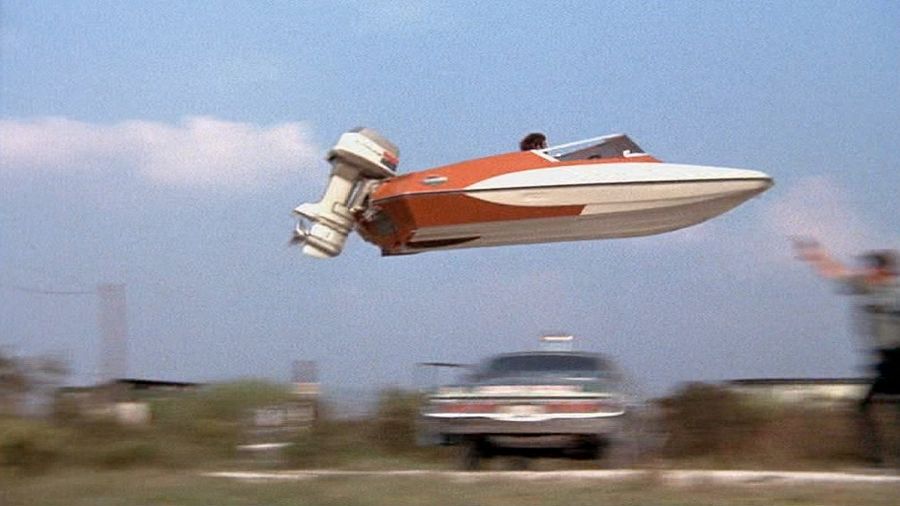
Glastron earned its own enduring fame through a single cinematic moment. In the 1973 James Bond film Live and Let Die, a Glastron GT-150 launched clear across a Louisiana highway, clearing a police car beneath it and covering 110 feet of air before touching down. No advertising campaign could have bought the global recognition that sequence delivered.
Four Winns has a more modest founding story. Bill Winn Sr. and his three sons established the company in Cadillac in 1975, and across the five decades that followed it became the reliable choice for family day boating throughout America. The brand was a pioneer in bringing bowrider comfort to everyday recreational use, and its most recent achievement, the Four Winns H2e, carries the distinction of being the first mass-production fully electric runabout to reach the market.
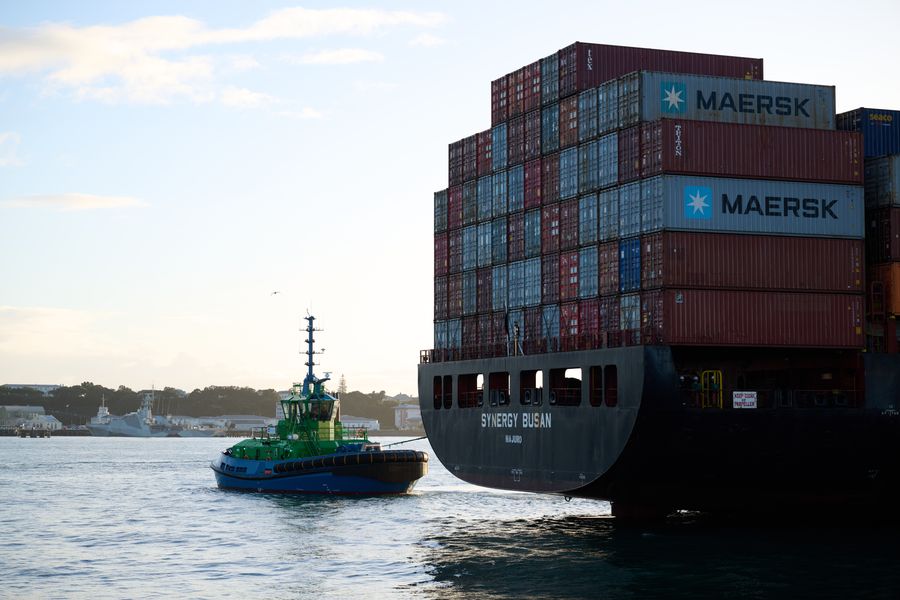
Rather than finding buyers willing to continue manufacturing at Cadillac, Beneteau is redistributing production across its existing European network. Outboard-focused dayboat production in the small-to-midsize segment will move to facilities in Poland, while premium dayboat lines shift to the group's historic yards in Vendée, France, and its facility in Portugal.
Wellcraft stands apart from the three divested brands. Designated as one of Beneteau's seven strategic pillars, it remains within the group, though its operating model is set to change considerably. Offshore commuter and centre-console ranges will be built at the group's Polish and French shipyards going forward, cutting the Cadillac connection entirely.
Building Wellcraft vessels within Beneteau's European supply chain brings a meaningful commercial advantage. The brand gains access to more than 1,200 sales locations around the world, opening up Mediterranean, Baltic, and Asia-Pacific markets in ways previously out of reach. Released from the lower-margin runabout segment, Wellcraft can focus entirely on the high-margin offshore multi-use designs that have always represented its strongest ground.
Closing Cadillac does not signal a retreat from American customers. Beneteau's reasoning is that shipping premium vessels from European yards will ultimately prove more profitable than sustaining domestic assembly lines, and early indicators support that view. International order books have already grown by nearly 10%. To handle the increased movement of larger vessels, the group has invested in new infrastructure, among it a €3.3 million vessel commissioning centre in Les Sables-d'Olonne, France, which will substantially lift annual launch capacity.