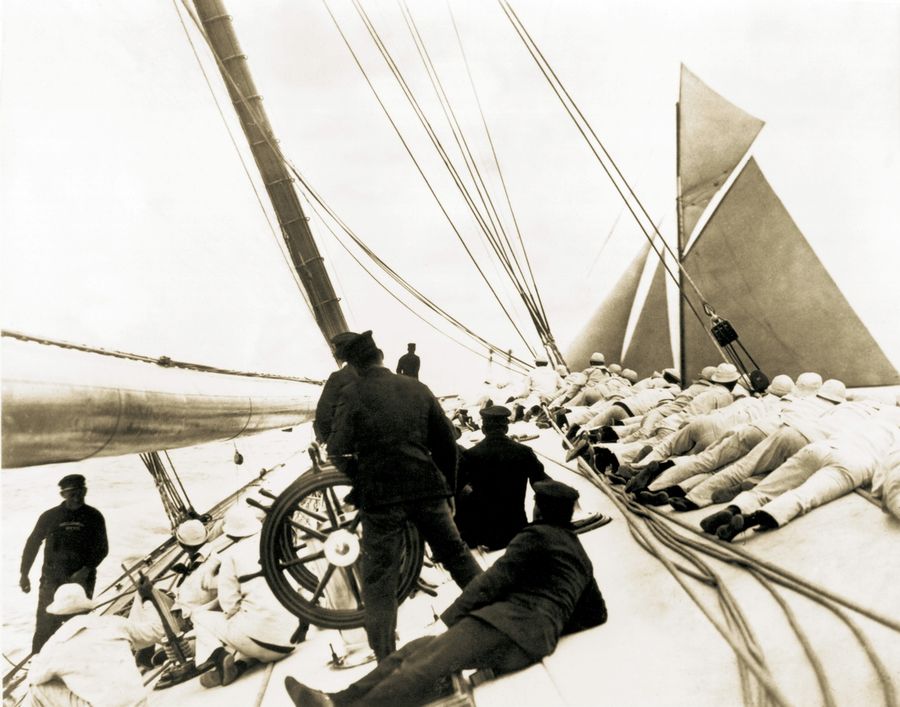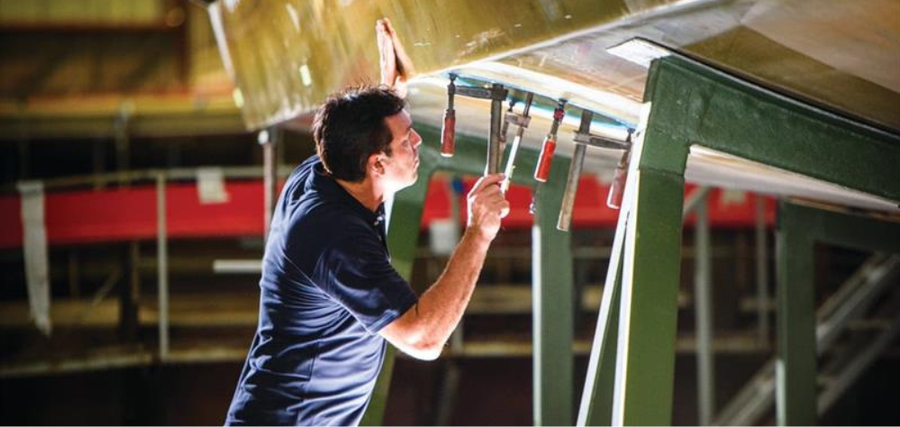
There's a particular kind of authority that comes from an America's Cup winner vouching for how a boat is built, not how it's marketed.
Tom Whidden, an eight-time America's Cup campaigner with Dennis Conner's syndicates, took delivery of a Grand Banks 85 named NorthLight in mid-2025, his fifth yacht from Grand Banks Marine and his second Grand Banks model after two Grand Banks 60s and a pair of Eastbays, according to Boat International. "I believe the 85 is Mark Richards' best design to date," Whidden told the magazine after a 1,100-nautical-mile delivery run from Connecticut to Florida. "I couldn't be more impressed."
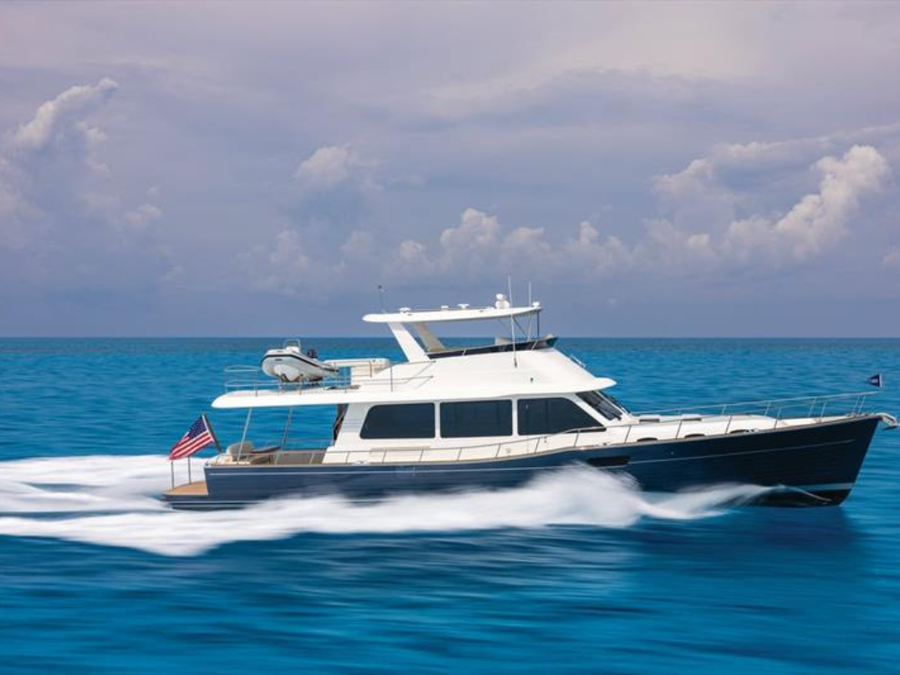
Richards and Whidden are old friends from the sailing world, Richards a fellow America's Cup competitor and nine-time line honours winner of the Rolex Sydney Hobart. It shapes how Whidden talks about the boats. "I like Mark Richards' boats because he approaches powerboat design very much with a sailor's mentality," he says. "He is a top, world-renowned sailor in his own right."
That sailor's mentality is what Grand Banks calls V-WARP®, applied to a yard that's been building long-range cruisers since 1956 and is now closing in on its seventieth year in business. It exists because Richards refused to accept a rule that has governed long-range cruising for decades, that range costs speed. Seven knots was respectable, nine ambitious, twelve extravagant, and anyone wanting to cross an ocean simply throttled back and stayed there. Richards, who brought experience as both an ocean racer and a shipwright to the project, launched V-WARP with the Grand Banks 60 in 2017 and has carried it across the entire range since, the 85 included.
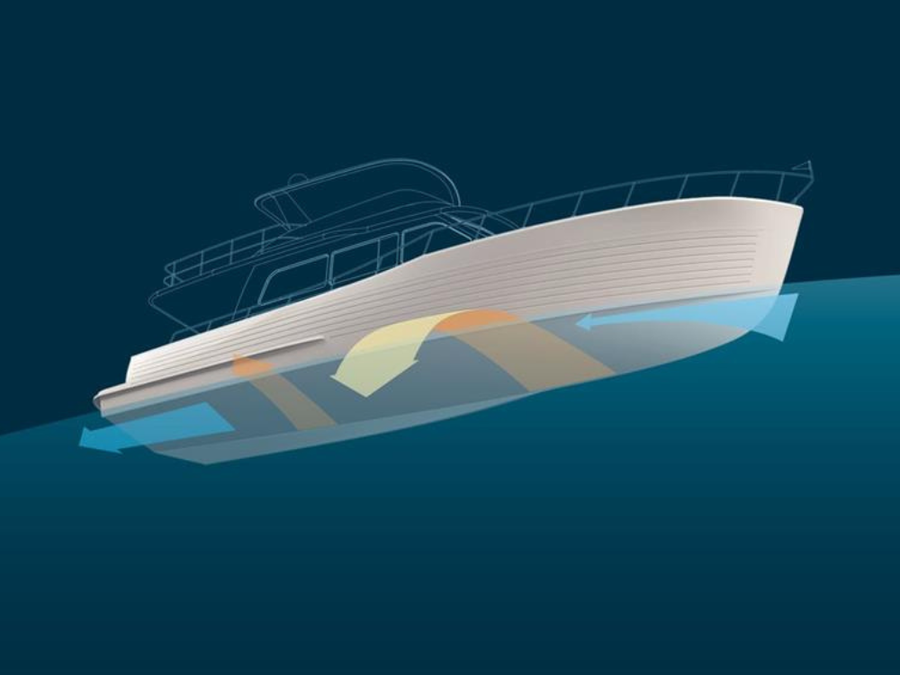
The idea starts below the waterline. Many modern semi-displacement cruisers carry their beam forward to maximise interior space, pushing fuller-bowed hulls through the water rather than slicing it. Richards went the other way, drawing a fine bow entry that tapers into a warped hull, flattening toward the transom, paired with a smaller keel. Grand Banks says the result planes quickly, remains stable at anchor, and becomes more stable as speed increases, unlike a deep-V hull, which can begin to chine-walk past a certain velocity. Boat International reports the hull's efficiency lets a Grand Banks travel 3,000 nautical miles at 10 knots, one of the features that drew Whidden to the model.
Higher up the boat, carbon fibre takes over. Every superstructure is built from it, keeping weight out of the top of the boat and the centre of gravity low. Grand Banks says the carbon components are pre-cut with unidirectional fibre orientation, placing strength precisely where the loads demand it. The company has also worked with composite engineering specialist Gurit.
Construction technique is the third piece. Where most builders in this size and class use plywood bulkheads glued onto flanges, Grand Banks infuses its bulkheads as composite and laminates them directly into the hull, a monocoque method lifted straight from racing sailboats. It costs the yard time. Richards is unambiguous about what it buys in return. "The advantage that V-WARP Technology gives us is unlike anyone else's in the history of powerboating," he says.
Grand Banks' own testimonials, given while Whidden still owned one of his Grand Banks 60s, quote him saying it was his "4th Grand Banks" and that he and his wife lived aboard for 30 to 40 days each August, praise for a boat he has since sold within days of listing it, and traded up from.
A hull, a material and a build method, developed by a racer who kept building boats after he stopped racing them, is what's carried Whidden through five yachts. It's also what's carried a seventy-year-old yard through its own reinvention, and there's a lot more to that story than one owner's fifth boat.