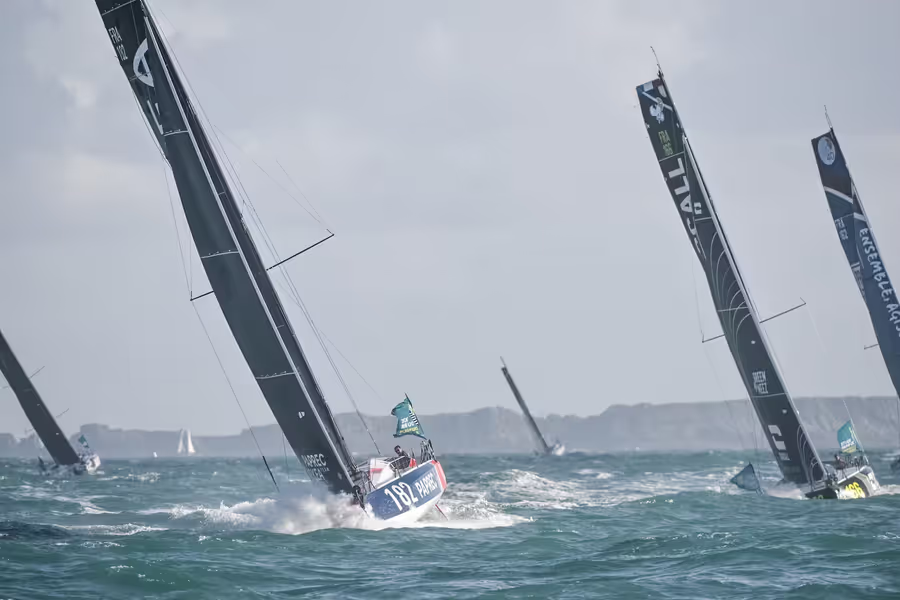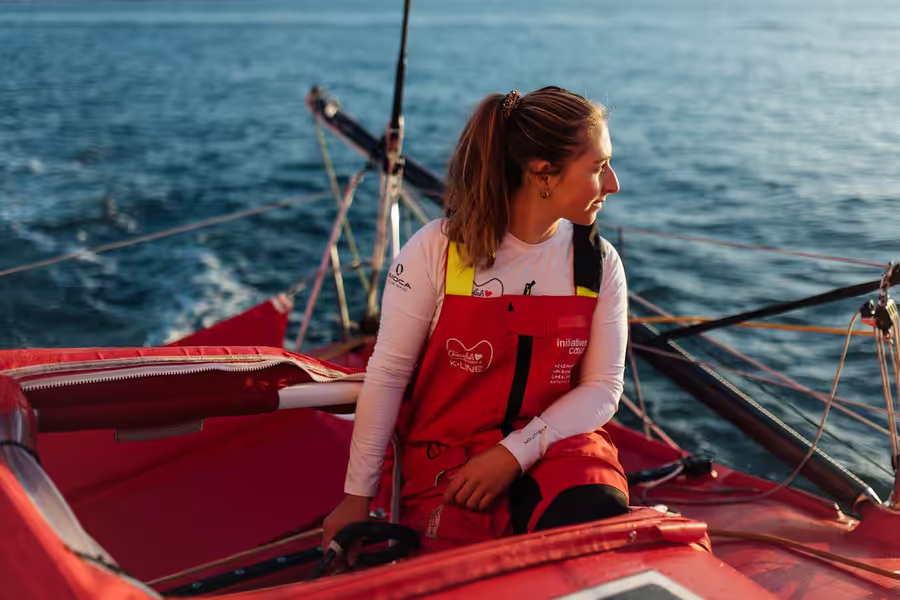
Violette Dorange has spent this season proving she belongs at the sharp end of solo ocean racing, and she arrives at the Route du Rhum start line with the boat, the form and the podium finishes to back it up.
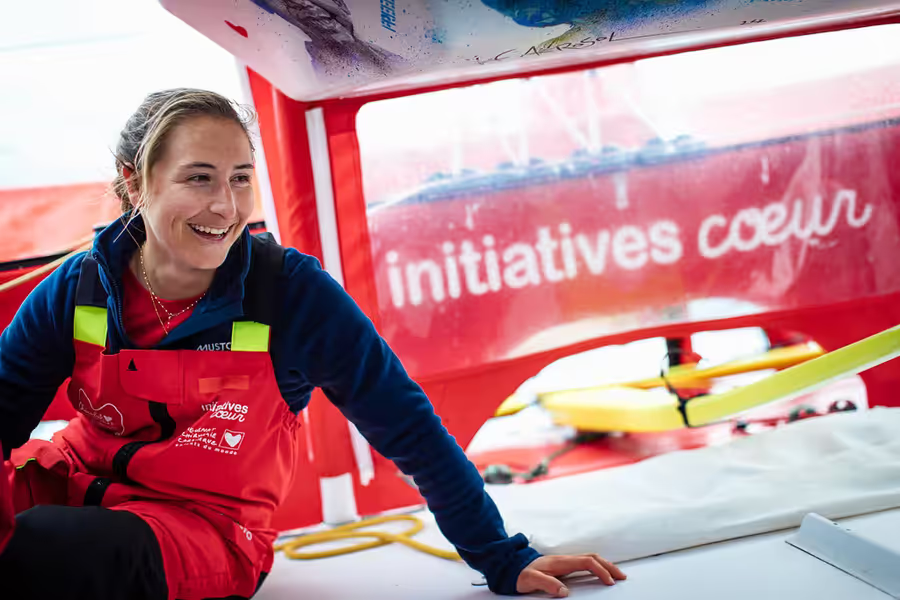
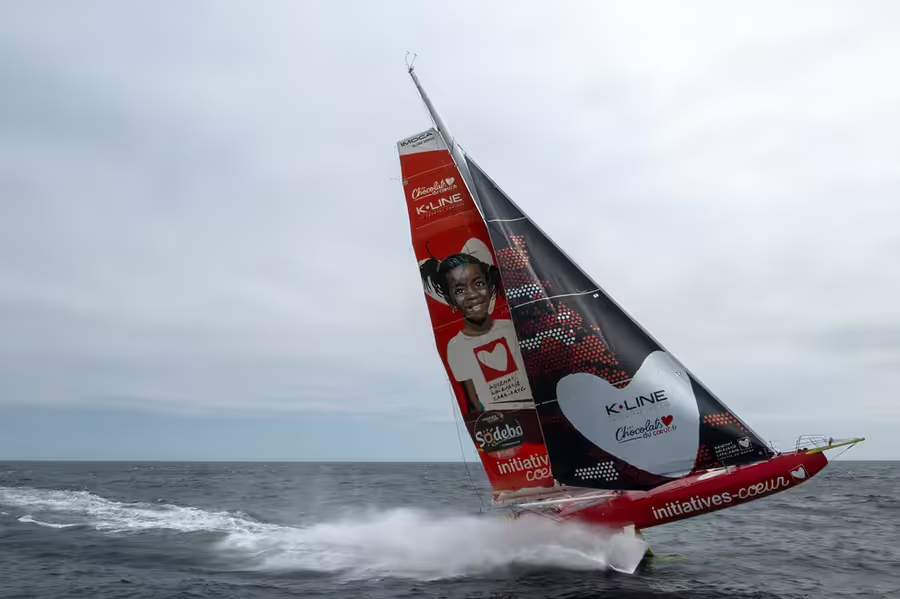
Four years ago she was simply a spectator, wandering the pontoons at Saint-Malo while she chased sponsors for her own campaign. This time she is on the start line herself, skipper of the IMOCA Initiatives-Cœur, and twice on the podium already this season: third at the 1000 Race and third at the Vendée Arctique, where she came agonisingly close to the win.
Dorange became a household name during the last Vendée Globe, when her energy and openness won over the French public. Two years on, that warmth is still there, but she has changed too. She took a break the summer after her round-the-world race to reset, then stepped up into a new league altogether by joining Initiatives-Cœur and learning to sail a foiler.
Sixth in last year's Transat Café L'Or, she has since taken two podiums this season, in her first solo campaign aboard a foiling IMOCA.
"I have the feeling that everything is balancing out well between training, on one hand, and my obligations to sponsors and the rest," she says of life since the Vendée Globe fame. "It's a bit easier because I'm really well supported. And I can't wait for it to keep going like that!"
Her only previous experience of the Rhum was as an outsider looking in. "I was fully focused on finding sponsors, looking for contacts to grow my network, and everything seemed distant and complicated," she recalls. "But I enjoyed experiencing the event from the other side, walking the pontoons. The Route du Rhum is full of legendary stories I was told about: Mike Birch, Florence Arthaud, Laurent Bourgnon."
Now it is her turn. "It's a new course, new competitors, a new starting layout. I know the whole event is going to be particularly intense. I've genuinely never started with this many boats on the line. I'm also going to discover Saint-Malo, which I barely know. What's interesting from a racing point of view is that the course is direct, there are no waypoints, and you can take a route more or less to the north. Anyway, I can't wait to be there!"
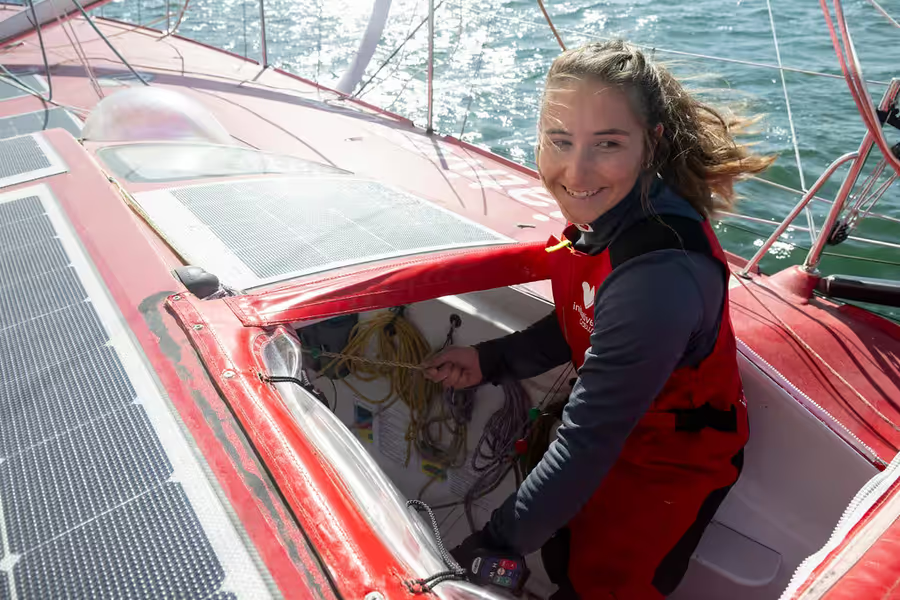
Sailing a foiler solo has been a steep learning curve. "Last year I really felt the boat was very demanding. It was sometimes hard to enjoy sailing it. But the more you sail, the less intimidating it becomes, the less fear there is, and gradually you accept more. Above all, it lets you enjoy it more. It's a pleasure being able to master these incredible boats."
On the new generation of boats now entering the fleet, she is measured. "It's still a bit early to say, but there's no denying technology is moving fast and creating speed gaps that are hard to close. Where I have everything to play for is endurance, the way you sail, weather strategy. I'm lucky to have a very reliable boat, and that changes things."
Her near-miss at the Vendée Arctique in June marked a real turning point. "It's an important year for me, because it's the year I took full control, solo, of a foiling boat. There's a real difference between daggerboard boats and foilers. Same category, but everything changes: the way you sail, the boat's speed, the size of the team, the level of preparation too. But I knew the boat was capable of finishing on the podium."
Was she surprised by the results? "I was quite proud of myself after both races. What's interesting above all is having made very few mistakes, having managed to anticipate manoeuvres well, and having broken almost nothing on board. But it's a collective achievement, I really owe it to the whole team."
-900x300.png)