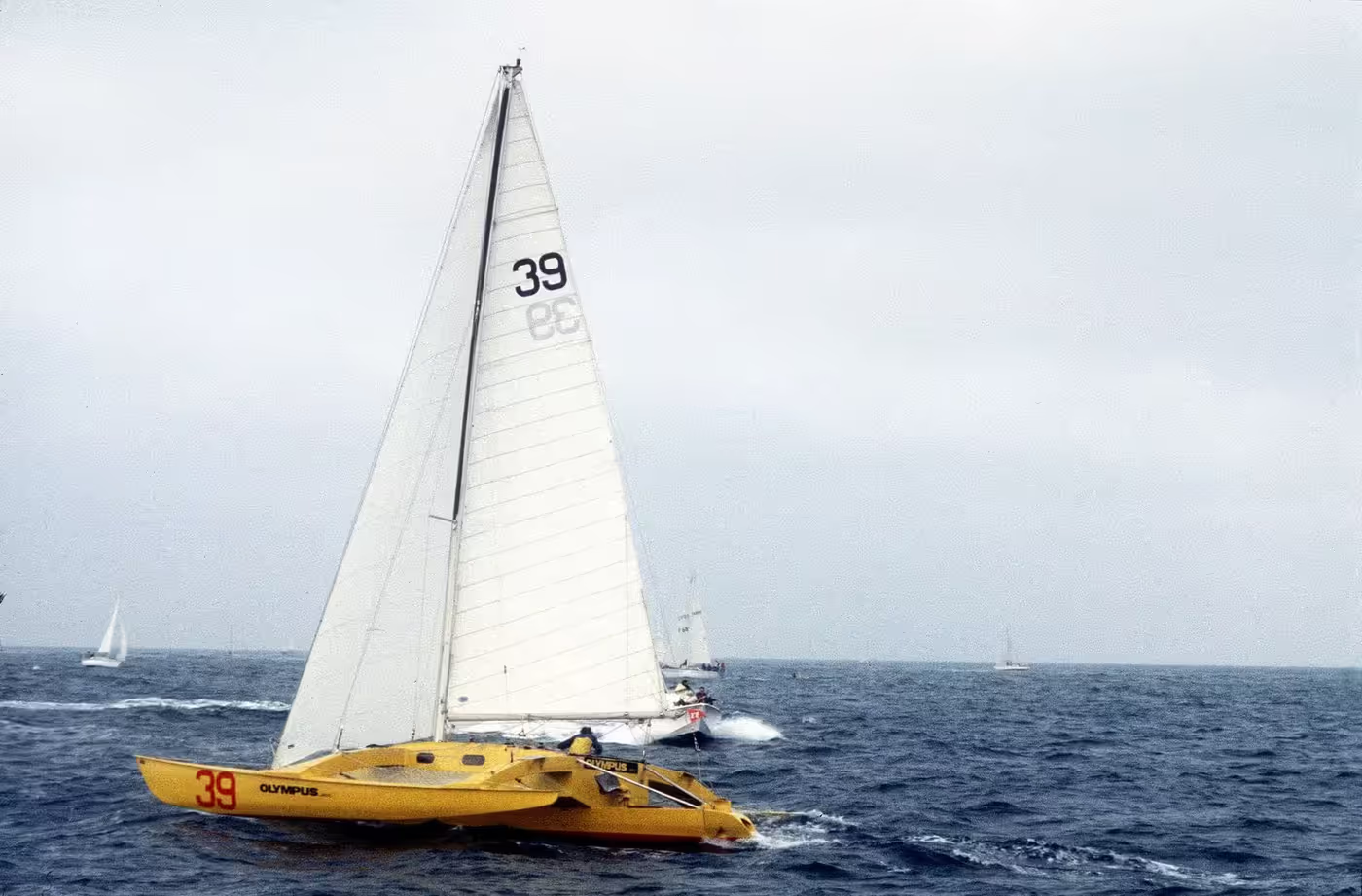
Olympus began life in a garage in Massachusetts, built by Walter Green, a friend of Canadian sailor Mike Birch. Made of plywood and epoxy, the 11.48 metre, 8.26 metre-wide trimaran was simple and rigid, with a long cockpit giving a clear view of the waves. "It's a simple, affordable boat that goes faster than boats three times its size," Birch said at the time. He proved it too, beating Michel Malinovsky's 21 metre monohull Kriter V by just 98 seconds after 23 days at sea, a multihull minnow humbling a monohull giant to open the Route du Rhum legend in 1978.
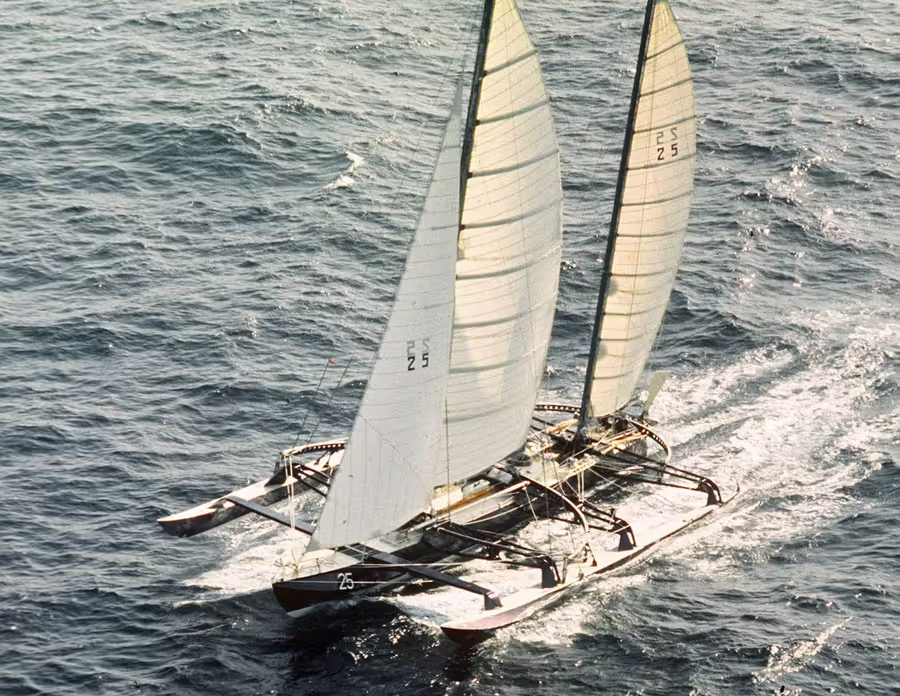
Not every story ended so well. Alain Colas vanished on day 12 of that same 1978 race aboard the ex-Pen Duick IV, a 20.5 metre aluminium trimaran designed by Éric Tabarly with two wing masts, caught in a violent storm near the Azores. No wreckage was ever found.
Four years later, Guy Delage's prao Les Rosières never even got started. Modelled on Pacific outrigger canoes, with the float positioned to windward as a counterweight, the boat suffered autopilot failure and capsized amid the chaos of the start. "The boat folded over, very slowly," Delage said later.
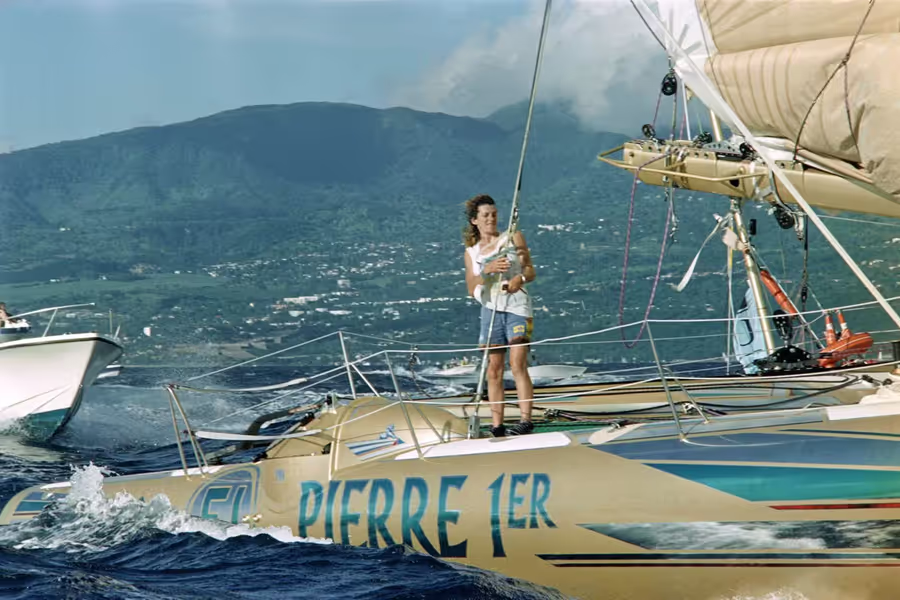
Florence Arthaud finally got the boat she deserved in 1990. Pierre 1er, an 18.28 metre, 15 metre-wide VPLP-designed trimaran drawing on Formula 40 thinking, carried her to victory despite electrical gremlins, autopilot trouble and a miscarriage during the race itself. She remains the only woman to have won the Route du Rhum.
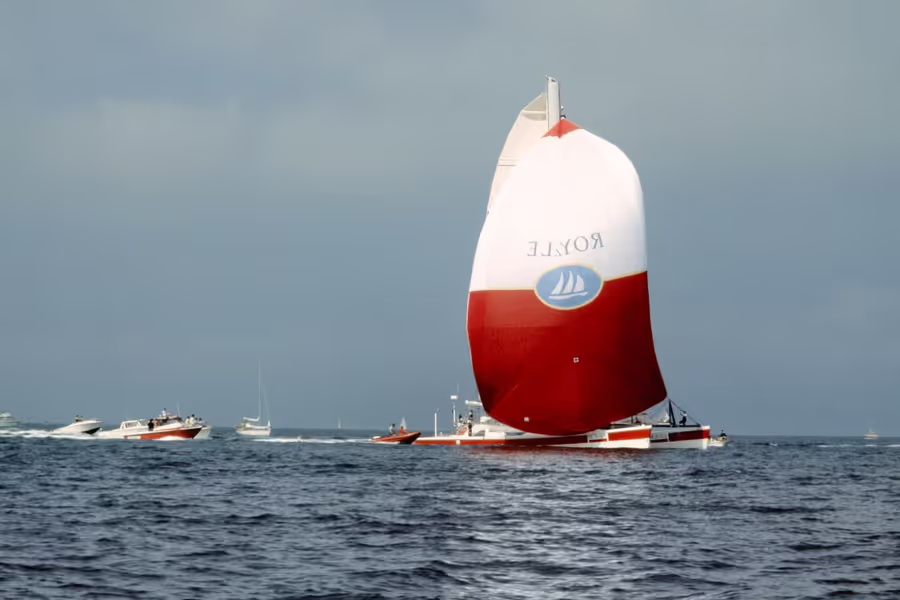
Loïc Caradec's 22.6 metre catamaran Royal II had a troubled start too, colliding with Florence Arthaud's Biotherm II at the very first race it attempted, La Baule-Dakar in 1983. Improved and re-rigged with a wing mast for the 1986 Route du Rhum, it set a North Atlantic crossing record under Caradec. Then, in a fierce gale off the Azores, it dismasted and broke apart. Arthaud diverted to search but never found Caradec. He became the second skipper to lose his life in the race.
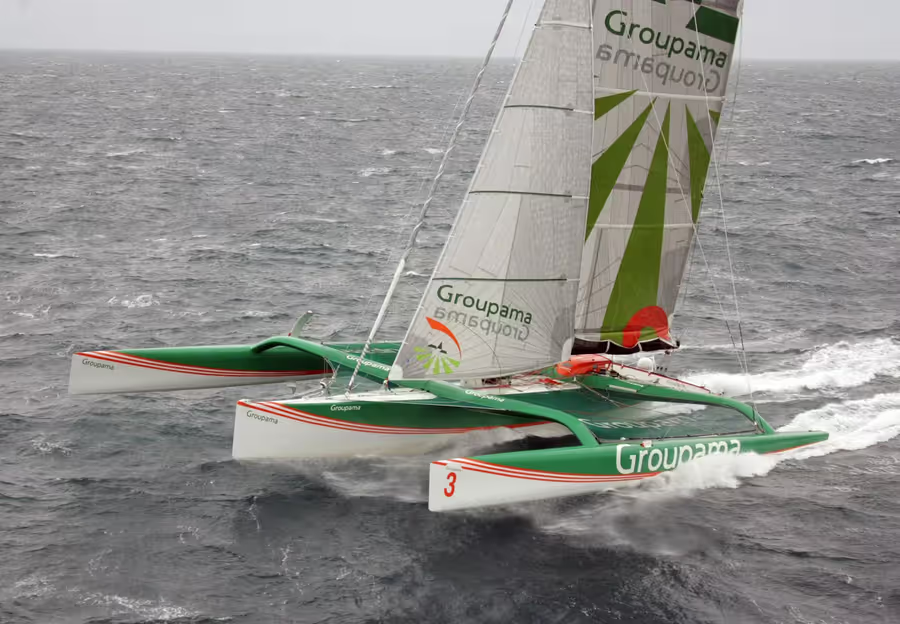
Groupama 3 might be the most dominant boat the race has seen. Franck Cammas and VPLP built it smaller than the Jules Verne record-holder Orange II but wider than the Orma trimarans, aiming for a boat "of medium power, light and long enough to be safe in the Southern Ocean," as Cammas put it. It won the Jules Verne Trophy, then the 2010 Route du Rhum under Cammas, before going on to win again under Loïck Peyron in 2014 and Francis Joyon in 2018, by then renamed IDEC Sport. It remained unbeaten at the Route du Rhum for twelve years. The boat will be back on the pontoons at Saint-Malo this year, with Alexis Barrier at the helm, in the same fleet that will assemble at the Village Départ, which opens its thirteen days of waterfront celebrations on 20 October.
And then there's the future. The Maxi Edmond de Rothschild, known as Gitana 18, carries T-foils that retract between float and central hull, echoing the AC75s of the America's Cup, along with U-shaped rudders built from two vertical arms for extra stiffness. Forty-four hydraulic rams control its flight. Launched in February, it now faces its first transatlantic test under defending champion Charles Caudrelier, a reminder that this race has always been as much about the boats as the sailors who dare to push them.